Food security in danger
As defined by the #WorldFoodSummit (1996), “food security exists when all people, at all times, have physical and economic access to sufficient, safe and nutritious food that meets their dietary needs and food preferences for an active and healthy life.”
The #UN #Food and #Agriculture Organization (FAO) has further elaborated the four key dimensions of food security. Availability of food means availability of sufficient quantity of food of appropriate quality supplied through domestic production or imports (including food aid). Food access means individuals’ resources for acquiring appropriate foods for a nutritious diet. The utilization of food means utilization through adequate diet, #clean #water, sanitation, and healthcare to attain a state of nutritional wellbeing where all physiological needs are met. #Food stability means the ability of a population, household, or individual to have access to sufficient food at all times.
Since the beginning of the global discourse on climate change in the mid- 1980s, increasing attention has been paid to the likely consequences of climate change for food security, especially in the Global South. This is because all the impacts of global warming and anthropogenic climatic variability adversely affect one or more key dimensions of food security.
The impacts of climate change documented by climate scientists and the Intergovernmental Panel on Climate Change (IPCC), established in 1988 to assess climate change trends, their drivers, and impacts as well as responses to alleviate the effects, are relevant for Pakistan. The major impacts are noted below.
Higher surface and ocean temperature in the Arctic causing rising sea levels inundate coastal regions and island states, damage human settlements and salinate fresh water thereby threatening farming and fishing and forcing farmers and fishers to seek alternative homes and livelihoods. This is referred to as climate-induced migration.
The vulnerability of Pakistan’s thousand kilometre long coastline in #Sindh and #Balochistan to rising sea level as well as coastal storms and rains caused by sea level rise has been corroborated by the physical erosion of coastline and growing number of climate migrants. Food production, livestock sector and fisheries in the coastal regions have reportedly suffered mounting loss and damage. It is imperative to carry out further investigations in order to assess the magnitude of the problem.
More frequent, longer lasting, and more intense extreme weather events such as floods, droughts, cyclones and storms, and heatwaves damage water courses and irrigation infrastructure such as beadworks, barrages, bridges, dam reservoirs, lakes and ponds, and wetlands as well as standing crops and livestock. They also damage wetlands and mangrove forests. During the past five decades, the number of extreme weather events has increased exponentially. Superfloods such as those in 2010 and 2022 have caused huge loss and damage, making the agriculture, food, and livestock sector the most climate vulnerable economic sector in Pakistan. The prolonged droughts during 1996-2002 had severe negative effects on our agriculture, food, and livestock sector and overall socio-economic growth.
Rapid melting of snow and ice in the Himalaya-Karakoram-Hindukush mountain glaciers initially cause flash floods and glacial lake outburst floods and after the erosion of glacier mass will cause declining supply of water to the rivers fed by the glaciers. The Indus River Basin depends for over half of its water assets on the orderly melting of the snow and ice of the HKH glaciers.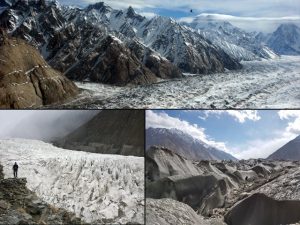
There is disruption of the timing, duration, and intensity of the twice- yearly monsoon winds causing precipitation in summer and winter leading to floods and droughts. The monsoon rains are vital for supplementing river flows in the Indus Basin and sustaining lakes and wetlands as well as recharging the Indus aquifer, our most reliable water storage.
Increased evapotranspiration caused by higher temperature, heatwaves, and droughts drastically reduce surface water stored in dam reservoirs, lakes, and watercourses.
Climate change induced floods and droughts degrade the land soil and cause increased insect-pest and other disease infestation. They also affect milk production and poultry.
The cumulative effect of all climate change impacts is a net reduction of freshwater resources. While the reduction cannot be predicted in precise quantitative terms, some studies mention a decrease of 25-30 per cent in the flows of the Indus Basin Rivers. The critical dependence of our agriculture on perennial irrigation due to our predominantly hot and humid weather and our mainly arid soil, and extremely low average annual precipitation level of 200 -290 cm, highlights the acute vulnerability of our food production and security to the effects of climate change.
Pakistan’s food security is also threatened by the adverse effects of the higher temperature on the quantity and quality of crop yields due to the shorter growth season. Some studies have mentioned reduction of crop yields by as much as 50 per cent in an extreme climate scenario.
Economic development and poverty eradication initiatives are major victims of the physical loss and damage caused by climate induced events such as superfloods.
‘Pakistan Floods 2022: Post- Disaster Needs Assessment’, published in October 2022 by the Ministry of Planning, Development and Special Initiatives of Pakistan and compiled by ministries of the government of Pakistan in collaboration with the Asian Development Bank, World Bank, EU, and the UN agencies facilitated by the UNDP, comprehensively describes the sector- wise loss and damage caused by the June-August superfloods. It mentions that Pakistan’s poverty rate is estimated to increase by 3.7 per cent to 4 per cent, pushing between 8.4 million and 9.1 million people into poverty.
The damage inflicted by the floods on the agriculture, food, livestock and fisheries sector — the most crucial sector for food security — is estimated at Rs800 billion; the losses are estimated at Rs1986 billion. The damage suffered by agriculture, food, and fisheries amounts to 24.99 per cent of the total whereas the losses constitute 60.68 per cent of the total.
The generous project funding pledged by the Islamic Development Bank, Asian Development Bank, Infrastructure Bank of China as well as friendly governments for the flood affected communities and economic sectors and infrastructure has raised hopes of massive reconstruction and rehabilitation efforts for, among others, our agriculture, food and livestock sector.
A propitious coincidence is the progress made by our Ministry of Climate Change in compiling Pakistan’s first ever National Adaptation Plan (NAP) in pursuance of Pakistan’s obligation under the UN Framework Convention on Climate Change (UNFCCC). The NAP document contains proposals aimed at reducing the country’s vulnerability to the negative effects of climate change. This comprehensive plan covers the six major sectors that are particularly sensitive to climate change impacts as well as the cross- cutting issue of gender. Unsurprisingly, water resources, agriculture and livestock are among the sectors addressed in the #NAP.
Hopefully, the government will be able to enhance the country’s institutional capacity to implement the climate resilient measures included in the NAP to rehabilitate and resuscitate the infrastructure and the sectors damaged by the horrendous floods.
The writer is a retired ambassador and former UN assistant secretary-general.