
SPAR6C Workshop Sparks Climate Finance Momentum in Pakistan’s Carbon Market Journey
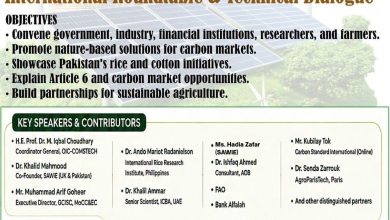
The SPAR6C workshop in Karachi brings national and international stakeholders together to boost climate finance and build a robust carbon market in Pakistan under Article 6 of the Paris Agreement.
SPAR6C is a five-year international initiative funded by Germany’s Federal Ministry for Economic Affairs and Climate Action (BMWK) via the International Climate Initiative (IKI). The Global Green Growth Institute (GGGI) leads the global rollout, while UNEP-CCC and GFA Consulting Group oversee the project’s activities in Pakistan.
The initiative supports four countries—Pakistan, Colombia, Thailand, and Zambia—to actively engage in carbon market readiness under the framework of Article 6 of the Paris Agreement.
“Pakistan is at a turning point in its climate journey,” noted Mr. Zubair Ahmed Channa, Secretary, Environment, Climate Change & Coastal Development Department. “Carbon markets are vital to our net-zero ambitions.”
Key Stakeholders and Strategic Objectives
The Karachi workshop brought together climate change officers, policymakers, finance experts, private sector representatives, and academia to strengthen collaboration on carbon finance opportunities.
Key attendees included:
-
Ms. Nadia Rehman, Member for Climate Change, MoPDSI
-
Denis Machnik, Senior Advisor, UNEP-CCC
-
Jonas Hagen, Principal Expert, GFA International
-
Ahsan Kamran, Senior Carbon Markets Consultant
-
Urwah Khan, Advisor, Climate & Energy, UNEP-CCC
The focus was on understanding carbon project lifecycles, building technical capacity, and exploring the role of the private sector in climate finance mobilization.
Workshop Highlights: Insights from Experts
The training began with an overview of Article 6 mechanisms and their implementation pathways. Denis Machnik introduced the SPAR6C framework and emphasized how it supports emerging economies like Pakistan in accessing international climate markets.
Key Sessions Included:
-
Project Cycle Basics:
Ahsan Kamran broke down the carbon credit project cycle, covering baseline setting, validation, monitoring, issuance, and Internationally Transferred Mitigation Outcomes (ITMOs). -
Sectoral Opportunities:
Jonas Hagen outlined high-potential sectors for carbon credit projects, including:-
Transport
-
Cement
-
Waste Management
-
-
Market Readiness:
Urwah Khan analyzed Pakistan’s institutional and private sector readiness to transact in global carbon markets.
“The key is to integrate carbon pricing and emissions trading systems into Pakistan’s investment strategy,” said Urwah Khan.
Carbon Market in Pakistan: Regional Opportunities
Two powerful presentations from Punjab highlighted provincial-level momentum:
-
Nadia Shafiq, Senior Chief at P&D Punjab, emphasized that green investments and public-private partnerships are essential for carbon finance success.
-
Babar Sahib Din, CEO, Lahore Waste Management Company, presented waste-to-energy models and how they can become carbon credit generators.
These case studies underline the scalability and replicability of local-level projects across provinces to participate in the Carbon Market in Pakistan.
Future Pathways: Scaling Climate Finance Through Carbon Markets
A dynamic panel discussion brought together stakeholders from commercial banks, development finance institutions, and the State Bank of Pakistan. The discussion revolved around:
-
Innovative financing models
-
Carbon credit pricing structures
-
Green bond integration
-
Risk management for low-carbon investments
The panelists stressed the urgent need to embed carbon finance into mainstream investment portfolios.
“We must move beyond policy and into practice. Blending carbon finance with national development plans is our best bet,” noted a panelist from a leading investment bank.
Conclusion
The SPAR6C Workshop in Karachi was not just another event—it was a catalyst for bold action on the Carbon Market in Pakistan. It demonstrated that with the right training, coordination, and financial instruments, Pakistan can unlock millions in climate finance and transition towards a resilient, net-zero economy.
Key Takeaways:
-
Pakistan is building technical readiness to join global carbon markets.
-
Article 6 offers a powerful tool for international climate finance mobilization.
-
Provincial and private sector engagement is essential for project success.
-
Banks and DFIs must integrate carbon finance into their investment strategies.
With SPAR6C’s continued efforts, Pakistan is well on its way to becoming a regional leader in carbon market engagement and climate-smart development.