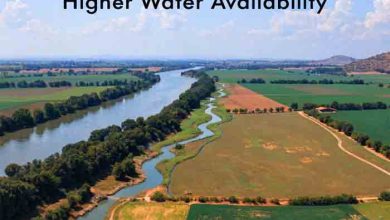

Trans-Boundary Water Resources Cooperation Brings Strategic Hope to Pakistan-China Relations in 2025
Trans-boundary water resources cooperation emerges as a strategic priority as Pakistan and China signal readiness to collaborate under international law, mutual benefit, and regional stability frameworks.
Trans-boundary water resources cooperation took center stage as Pakistan and China signaled renewed readiness to jointly develop shared water resources under the principles of equality, mutual benefit, and international legal compliance.
The commitment was formally articulated in a Joint Press Communiqué issued by Pakistan’s Foreign Office following the 7th Pakistan-China Foreign Ministers’ Strategic Dialogue held in Beijing. Deputy Prime Minister and Foreign Minister Ishaq Dar represented Pakistan during the high-level engagement.
This development marks a strategically hopeful moment for regional water diplomacy at a time when climate change, glacial melt, and water scarcity are intensifying across South and Central Asia.
Pakistan-China Strategic Dialogue: Water Diplomacy Gains Momentum
The joint communiqué explicitly emphasized:
“The two sides expressed readiness to conduct trans-boundary water resources cooperation under the principle of equality and mutual benefit, and emphasized the imperative of fulfilling international legal obligations.”
This statement reflects a growing recognition that shared river basins, climate-driven hydrological risks, and regional stability are deeply interconnected.
China and Pakistan share complex upstream–downstream dynamics, particularly in the Indus River system and its tributaries originating in the Himalayan and Karakoram ranges.
External Resource: UN Water – Transboundary Waters
Why Trans-Boundary Water Resources Cooperation Matters for Pakistan
For Pakistan, trans-boundary water resources cooperation is not merely diplomatic—it is existential.
Pakistan is among the top 10 most climate-vulnerable countries, facing:
- Rapid glacier melt
- Declining per capita water availability
- Increased flood–drought cycles
- Rising tensions over water governance
Cooperation with China offers opportunities for:
- Joint hydrological data sharing
- Early warning systems for floods
- Climate-resilient water infrastructure
- Sustainable irrigation and storage planning
International Legal Obligations and Water Governance
A key highlight of the statement was the emphasis on international legal obligations, aligning cooperation with established norms such as:
- UN Convention on the Law of the Non-Navigational Uses of International Watercourses
- Principles of equitable and reasonable utilization
- Obligation to avoid significant harm
This approach contrasts with unilateral water strategies seen elsewhere in South Asia, reinforcing Pakistan-China cooperation as rules-based rather than power-based.
Water Cooperation, Terrorism, and Regional Stability
The dialogue also addressed regional security, particularly threats emanating from Afghanistan. Both sides called for:
- Visible and verifiable action against terrorist organizations
- Preventing Afghan territory from being used against neighboring states
Water security and terrorism are increasingly linked, as instability disrupts:
- River monitoring
- Infrastructure protection
- Cross-border environmental cooperation
China commended Pakistan’s sacrifices and comprehensive counterterrorism measures, particularly to protect Chinese personnel and CPEC projects.
CPEC 2.0 and the Water–Energy–Food Nexus
Under CPEC 2.0, Pakistan and China agreed to align development strategies, prioritizing:
- Agriculture
- Industry
- Mining
Water plays a central role in all three.
Accelerated development of Gwadar Port, uninterrupted connectivity via the Karakoram Highway, and improved irrigation systems depend on integrated water planning.
Afghanistan, Trilateral Dialogues, and Shared Water Futures
The two sides reaffirmed engagement through:
- China-Afghanistan-Pakistan Trilateral Foreign Ministers’ Dialogue
- China-Bangladesh-Pakistan cooperation mechanism
Stability in Afghanistan is essential for:
- Regional river basin management
- Preventing water infrastructure sabotage
- Enabling climate adaptation investments
Inclusive governance in Kabul, as urged by both sides, is thus also a water security imperative.
Multilateralism, SCO, and Global Governance Reform
Pakistan and China expressed satisfaction with cooperation under:
- United Nations
- Shanghai Cooperation Organization (SCO)
They reaffirmed opposition to:
- Hegemonism
- Bloc politics
- Economic coercion
Both countries pledged to strengthen coordination under:
- Global Development Initiative (GDI)
- Global Security Initiative (GSI)
- Global Civilization Initiative
These frameworks increasingly recognize water as a strategic global commons rather than a zero-sum resource.
Implications for South Asia’s Water Politics
This renewed emphasis on trans-boundary water resources cooperation carries broader regional implications:
- Sets a positive precedent for cooperative water diplomacy
- Reinforces legal, multilateral approaches to water disputes
- Counters securitized and unilateral water narratives
For Pakistan, the partnership strengthens its diplomatic position amid ongoing water tensions in South Asia.
Conclusion: A Hopeful Yet Vigilant Path Forward
The renewed Pakistan-China commitment to trans-boundary water resources cooperation represents a hopeful but cautious step toward sustainable regional water governance.
While challenges remain—climate volatility, geopolitical tensions, and security risks—the dialogue signals that cooperation, legality, and mutual benefit can still guide water diplomacy in an increasingly fractured world.
For Pakistan, this partnership is not just strategic—it is vital for climate resilience, food security, and long-term national stability.