EDF, IUCN, IWMI Launch Joint Statement on Groundwater Crisis
EDF, IUCN and IWMI launch a Joint Statement on Global Groundwater Resilience at Climate Week NYC, urging action ahead of the December UN Water Conference.
EDF, IUCN and IWMI Launch Joint Statement Calling for Urgent Action on Global Groundwater Crisis
New York, September 23, 2026 — The Environmental Defense Fund (EDF), the International Union for Conservation of Nature (IUCN), and the International Water Management Institute (IWMI) launched a Joint Statement on Global Groundwater Resilience at Climate Week NYC today, calling for greater action and investment to address a worsening global groundwater crisis ahead of the UN Water Conference in December.
Background
Groundwater serves as a critical water supply buffer as droughts and desertification intensify around the world, resulting in shrinking surface water from rivers and streams. Yet despite its paramount importance to agriculture, rural economies, community health and ecosystems, this hidden underground resource is rarely mentioned in global discussions about climate change, water and food security — a policy blind spot the three organizations are now working to correct.
Groundwater has become the most extracted natural resource in the world, even as it remains critical to climate resilience. As surface water sources become increasingly unreliable under climate stress, communities, farmers and industries are turning more heavily to groundwater — placing mounting pressure on a resource that is often poorly measured, poorly governed, and poorly protected.
The Joint Statement
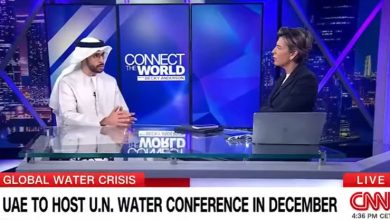
EDF, IUCN and IWMI are inviting Member States and other institutions to endorse the Joint Statement in advance of the UN Water Conference, scheduled for December in Abu Dhabi, United Arab Emirates. The organizations envision the statement as a critical first step leading up to the Conference, aimed at catalyzing political coordination, commitment and action to reverse the worsening groundwater crisis, ensure greater resilience, and support climate adaptation on a global scale.
Ann Hayden, Vice President of Environmental Defense Fund’s Water Program, underscored the urgency of the moment: “Groundwater is critical to climate resilience but is now the most extracted natural resource in the world. We know solutions exist: EDF has been working on the ground to support communities with more robust data, stronger groundwater governance, and capacity building, but we must do more on a global scale to implement solutions more quickly and durably. It’s time to stop this cycle of groundwater depletion and catalyze action and financing now. The health of people, economies, ecosystems and our planet depend on it.”
The statement also emphasizes the fundamental link between measurement, governance and protection, framed around the principle that governance and protection of groundwater depend on first understanding and tracking the resource — a warning that current data and monitoring gaps leave many countries unable to manage groundwater sustainably even where the political will exists.
Timing Ahead of the UN Water Conference
The launch of the Joint Statement at Climate Week NYC is deliberately timed to build momentum ahead of the 2026 UN Water Conference in Abu Dhabi this December, positioning groundwater resilience as a priority issue for governments and institutions to address as part of that broader conference agenda. By inviting endorsements in the months leading up to the Conference, the three organizations aim to secure early political commitment that can translate into concrete outcomes once negotiations begin.
Conclusion
The Joint Statement on Global Groundwater Resilience represents a coordinated push by three influential environmental and water organizations to elevate an often-overlooked resource onto the global climate and water agenda. With groundwater depletion accelerating even as its role in climate adaptation grows more critical, the statement’s call for stronger data, governance and financing sets a clear marker for what EDF, IUCN and IWMI hope to see translated into binding commitments when governments convene in Abu Dhabi this December.