
Qatar Charity Delivers Vital Relief to 300 Flood-Affected Families in Jhang, Punjab
Qatar Charity flood relief Jhang Punjab non-food items — with the generous support of the people of Qatar, Qatar Charity has distributed essential non-food items among 300 vulnerable flood-affected families in district Jhang, bringing critical humanitarian assistance to those who need it most.
Qatar Charity flood relief Jhang Punjab non-food items — these words represent something far more than a humanitarian headline. They represent 300 families — mothers, fathers, children, elderly — who lost their homes, their belongings, and their sense of security to floodwaters, and who are now receiving the essential supplies they need to begin rebuilding their lives.
Qatar Charity, one of the Arab world’s most active international humanitarian organizations, has distributed Non-Food Items (NFIs) among 300 flood-affected families in District Jhang, Punjab — made possible through the generous support of the people of Qatar for vulnerable communities across the world.
The distribution targeted the most vulnerable households affected by flooding in one of Punjab’s most flood-prone districts — bringing blankets, hygiene kits, household essentials, and other critical supplies directly to families in urgent need.
What Are Non-Food Items and Why Are They Essential?
In humanitarian response, Non-Food Items (NFIs) are the essential household goods that displaced or disaster-affected families need immediately after losing their homes — but which are not food.
A standard NFI package for flood-affected families typically includes:
| Item Category | Examples |
|---|---|
| Shelter and warmth | Blankets, tarpaulins, sleeping mats |
| Hygiene and sanitation | Soap, toothbrushes, sanitary items, buckets |
| Cooking and water | Cooking pots, jerrycans, water purification |
| Clothing | Clothing sets for adults and children |
| Lighting | Candles, solar lanterns |
When a flood sweeps through a community, families often escape with nothing but the clothes on their backs. Food aid addresses hunger — but NFIs address the full spectrum of immediate survival needs. Without blankets, a family exposed to cold nights is at risk of hypothermia. Without hygiene supplies, disease spreads rapidly in crowded displacement settings. Without cooking equipment, even food aid cannot be prepared.
NFI distribution is therefore not a secondary or supplementary form of humanitarian assistance — it is frontline, life-saving relief.
District Jhang: A Recurring Victim of Pakistan’s Flood Crisis
District Jhang sits in central Punjab, traversed by the Chenab River — one of the western rivers of the Indus system. This geographic positioning makes Jhang a perennial flood risk zone.
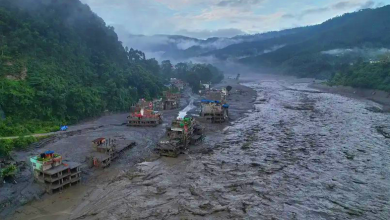
When the Chenab runs high — driven by monsoon rains, upstream snowmelt, or the kind of extreme precipitation events that are becoming more frequent under climate change — Jhang’s low-lying agricultural lands and rural communities are among the first to be inundated.
Flood-affected families in Jhang face a particular set of vulnerabilities:
- Agricultural livelihoods destroyed as standing crops are washed away
- Homes damaged or collapsed — particularly mud-brick structures that cannot withstand sustained waterlogging
- Livestock lost — a catastrophic blow for rural families whose animals represent their primary capital
- Displacement into temporary shelters, schools, or roadsides
- Waterborne disease risk as floodwaters contaminate drinking sources
For the 300 families reached by Qatar Charity’s NFI distribution, the assistance comes at precisely the moment when they have the least and need the most.
Qatar Charity’s Humanitarian Mission in Pakistan
Qatar Charity (قطر چیریٹی) is one of the Gulf region’s largest and most reputable international humanitarian and development organizations. Founded in 1992 and headquartered in Doha, Qatar, it operates across dozens of countries — providing emergency relief, development programming, and long-term community support.
In Pakistan, Qatar Charity has been an active humanitarian partner for years — responding to floods, earthquakes, and other disasters while also investing in longer-term development initiatives in water, education, and livelihood support.
Pakistan’s recurring flood crisis — which worsened dramatically with the catastrophic 2022 floods and has continued with significant flood events since — has made the country a priority focus for Qatar Charity’s South Asia operations.
The Jhang NFI distribution is part of this sustained commitment: ensuring that when disaster strikes Pakistan’s most vulnerable communities, international solidarity is swift, practical, and dignified.
For more information on Qatar Charity’s work, visit www.qcharity.org.
The People of Qatar: Generosity That Crosses Borders
It is significant that Qatar Charity’s Jhang distribution was conducted with the support of the people of Qatar — not merely the organisation’s institutional funding.
Qatar Charity’s model is deeply rooted in public engagement. Qatari citizens donate to humanitarian causes through the organisation, trusting that their contributions will reach the most vulnerable communities across the world with transparency and accountability.
The 300 families in Jhang receiving NFIs are the direct beneficiaries of this individual generosity — Qatari donors who gave so that a mother in flood-affected Punjab could have a blanket for her children, a bucket to carry clean water, or a bar of soap to prevent illness.
This human-to-human dimension of humanitarian aid — the invisible connection between donor and recipient across thousands of kilometres — is one of the most powerful aspects of international solidarity. It demonstrates that compassion for those suffering from disaster transcends borders, languages, and cultures.
Pakistan’s Flood Vulnerability: The Wider Picture
The Qatar Charity flood relief Jhang Punjab non-food items distribution takes place within a deeply concerning national context.
Pakistan is one of the world’s most flood-vulnerable countries. The statistics are stark:
- The 2022 super-floods submerged one-third of Pakistan’s territory, killed over 1,700 people, displaced millions, and caused approximately USD28 billion in economic damage
- 2025 floods caused an additional USD1.5 billion in losses
- Pakistan is ranked the 15th most climate-affected country globally between 1995 and 2024
- Flood events are becoming more frequent and more severe as climate change intensifies monsoon variability and accelerates glacial melt
The State Bank of Pakistan’s 2026 climate finance report estimates that Pakistan needs USD331 billion in climate financing between 2024 and 2030 — but receives only USD1.4 to USD2 billion annually.
In this context, international humanitarian organisations like Qatar Charity serve a critical gap-filling function — providing immediate relief to flood-affected communities while Pakistan’s own institutional response and long-term climate resilience investments remain insufficient to fully protect its most vulnerable populations.
How NFI Distribution Supports Recovery
NFI distributions like Qatar Charity’s Jhang operation do more than address immediate needs — they play a structured role in the recovery continuum.
Phase 1 — Emergency Relief (Days 1–2 weeks post-disaster): NFIs address acute survival needs — warmth, hygiene, water storage — in the critical window immediately following displacement.
Phase 2 — Early Recovery (Weeks 2–8): Continued NFI support, combined with food aid and temporary shelter, stabilises affected households and prevents the secondary health crises (diarrhoeal disease, respiratory illness, skin infections) that commonly follow floods.
Phase 3 — Transition to Reconstruction: As families begin repairing or rebuilding homes, NFIs support their return — reducing the period of displacement and helping children get back to school, adults back to work, and communities back to functioning.
By reaching 300 families with NFIs in Jhang, Qatar Charity is supporting all three phases — providing immediate relief while laying the foundation for longer-term recovery.
Qatar and Pakistan: A Strong Humanitarian Partnership
Qatar and Pakistan share a strong bilateral relationship — diplomatic, economic, and increasingly humanitarian.
Pakistan is home to one of the largest Pakistani diaspora communities in Qatar, with hundreds of thousands of Pakistani workers contributing to Qatar’s economy. This human connection creates a natural bridge between the two countries’ people.
At the institutional level, Qatar Charity’s sustained presence in Pakistan — through flood response, earthquake relief, and development programming — reflects the organisation’s recognition of Pakistan as both a high-need and high-priority humanitarian context.
The Jhang NFI distribution builds on this foundation — adding another chapter to a partnership that has delivered meaningful support to vulnerable Pakistani communities across multiple disasters and crises.
How to Support Qatar Charity’s Relief Work
Qatar Charity’s flood relief operations in Pakistan — including the Jhang NFI distribution — are made possible by public donations. Anyone wishing to contribute to relief efforts for Pakistan’s flood-affected communities can do so through:
- Qatar Charity’s official website: www.qcharity.org
- Designated Pakistan flood relief campaigns listed on the QCharity donation portal
- Social media engagement to raise awareness of Pakistan’s ongoing flood vulnerability and humanitarian needs
Sharing this story is itself a form of advocacy — helping to ensure that Pakistan’s recurring humanitarian crisis remains visible to international audiences and continues to attract the support it urgently needs.
Conclusion: Solidarity in the Face of Disaster
The Qatar Charity flood relief Jhang Punjab non-food items distribution — 300 families, 300 sets of essential supplies, 300 households with a slightly firmer foundation for survival and recovery — may seem modest against the scale of Pakistan’s flood challenge.
But for the families who received those supplies, it is everything.
A blanket that keeps a child warm through a monsoon night. A hygiene kit that prevents a mother from contracting a waterborne illness. A jerrycan that allows a family to store clean water. These are not abstractions — they are the concrete, tangible expressions of international solidarity landing where they are most needed.
Qatar Charity and the generous people of Qatar who funded this distribution have demonstrated, once again, that when disaster strikes the vulnerable, compassion has no borders.
Pakistan’s flood-affected communities need sustained support — immediate relief, longer-term recovery, and ultimately the structural climate resilience investments that can reduce their vulnerability to future disasters. Qatar Charity’s work in Jhang is a vital part of that larger picture.