
Pakistan Disaster Crisis 2026: Shocking Failures Behind Glacier Surges and Landslides
Pakistan disaster management failure exposed as glacier surges, landslides, and GLOFs reveal systemic gaps, weak governance, and lack of technical expertise.
Pakistan sits at the collision zone of the Indian and Eurasian tectonic plates, making it highly vulnerable to earthquakes, floods, landslides, and glacier-related hazards.
However, the growing frequency of disasters highlights a deeper issue—Pakistan disaster management failure driven by weak governance, lack of technical expertise, and poor implementation of policies.
Murree Landslides: A Preventable Tragedy
The recent landslides in Murree, particularly at Jhika Gali Chowk in April 2026, highlight the consequences of Pakistan disaster management failure.
Families were displaced, roads destroyed, and slopes collapsed—events that experts argue were entirely predictable.
Engineering Reality Behind Slope Failures
From an engineering perspective, landslides occur when slopes exceed their angle of stability, known as the angle of repose.
- Vegetation removal weakens soil structure
- Monsoon rains saturate clay soils
- Weak geological formations collapse easily
In regions like Murree, saturated clay behaves like fluid, making slope failure inevitable and reinforcing Pakistan disaster management failure.
Decades of Environmental Degradation
Since the 1970s, human activities have intensified slope instability:
- Deforestation
- Unregulated construction
- Unsafe road cutting
- Blasting without engineering controls
These practices have destabilised entire regions, worsening Pakistan disaster management failure.
Glacier Surges and the Karakoram Anomaly
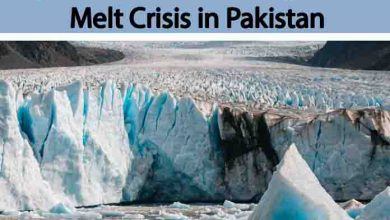
Pakistan’s northern glaciers present a unique challenge. Unlike global trends, many glaciers in the Karakoram are advancing and surging.
This phenomenon, known as the Karakoram Anomaly, requires specialized scientific understanding, which is often missing in policy decisions.
The Gayari Avalanche: A Missed Warning
The 2012 Gayari avalanche, which killed 140 soldiers, exposed major gaps in hazard monitoring.
Despite its scale, no comprehensive reassessment followed—highlighting ongoing Pakistan disaster management failure.
Disconnect Between Policy and Field Science
Pakistan’s climate discourse is often dominated by theoretical models rather than field-based research.
This disconnect leads to poor decision-making and ineffective disaster mitigation strategies.
Institutional Failure in Disaster Governance
Institutions responsible for disaster management face several challenges:
- Lack of technical leadership
- Focus on administration over execution
- Poor coordination between agencies
This institutional weakness is a key driver of Pakistan disaster management failure.
Role of International Funding
Significant funding has been allocated for disaster risk reduction, but much of it has been spent on:
- Reports
- Workshops
- Policy documentation
Instead of real, on-ground solutions—further contributing to Pakistan disaster management failure.
Engineering Solutions Pakistan Is Ignoring
Experts recommend practical solutions:
- Slope stabilisation techniques
- Proper drainage systems
- Retaining walls and reinforcements
- Glacier monitoring systems
These proven methods remain underutilised.
Need for Real-Time Monitoring Systems
Real-time monitoring can transform disaster management by:
-
- Providing early warnings
- Tracking environmental changes
- Ensuring accountability
This is essential to reduce Pakistan disaster management failure.
Conclusion
Pakistan disaster management failure is a growing national crisis. Disasters are no longer unpredictable—they are preventable.
Pakistan has the expertise and knowledge required to address these challenges. However, without strong political will and technical leadership, the cycle of disasters will continue.
The time for reports is over. The time for real action is now.