

Hopeful Momentum: Pakistan–Denmark Climate Action and Science Diplomacy Alliance 2026
Pakistan Denmark Climate Action enters a hopeful new phase as Islamabad and Copenhagen strengthen cooperation on science diplomacy, green finance, and climate resilience.
Pakistan Denmark Climate Action has entered a hopeful and strategically significant phase following renewed diplomatic engagement between Islamabad and Copenhagen. At a time when global climate politics are increasingly fragmented, the reaffirmation of bilateral cooperation signals a constructive and solution-oriented approach to one of humanity’s most urgent crises.
The partnership reflects a shared understanding that climate change is not only an environmental issue but also a scientific, diplomatic, and socio-economic challenge requiring sustained collaboration.
High-Level Diplomatic Engagement in Islamabad
The Ambassador of Denmark to Pakistan, Maja Mortensen, met with Federal Minister for Climate Change and Environmental Coordination, Dr. Musadik Malik, in Islamabad to discuss deepening cooperation under the Pakistan Denmark Climate Action framework.
The meeting focused on strengthening ties in climate action, environmental governance, and science diplomacy. Both sides emphasized the importance of trust-based partnerships that move beyond rhetoric toward actionable outcomes.
Why Science Diplomacy Matters in a Fragmented World
Science diplomacy has emerged as a powerful tool in addressing transboundary climate challenges. During the discussion, both sides explored how scientific collaboration can bridge political divides, foster innovation, and support evidence-based policymaking.
Pakistan Denmark Climate Action places science diplomacy at its core, recognizing that shared research, open data, and academic mobility can accelerate climate solutions at scale.
Climate Inequality and the Global South’s Burden
Dr. Musadik Malik highlighted a stark and uncomfortable reality: countries in the Global South, including Pakistan, suffer the most severe impacts of climate change despite contributing minimally to global emissions.
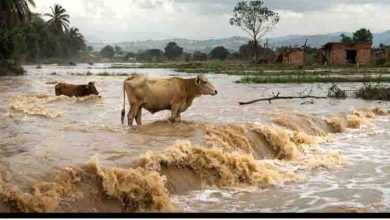
He noted that nearly 70 percent of global greenhouse gas emissions originate from just ten countries, while vulnerable nations face floods, heatwaves, food insecurity, and economic instability. This imbalance underscores the moral urgency behind Pakistan Denmark Climate Action.
Green Finance Imbalance: A Critical Challenge
Another key concern raised during the meeting was the unequal distribution of international green finance. According to Dr. Malik, around 85 percent of global green financing flows to a small group of high-emitting countries.
This reality limits the adaptive capacity of climate-vulnerable nations. Through Pakistan Denmark Climate Action, both countries aim to advocate for fairer climate finance mechanisms and inclusive funding models.
For further context, readers can explore the UNFCCC climate finance framework: https://unfccc.int
Nordic Environmental Leadership and Pakistan’s Learning Curve
Dr. Malik praised the Nordic countries for their strong social welfare systems and progressive environmental values. Denmark, in particular, is widely recognized for its leadership in renewable energy, climate legislation, and sustainable urban planning.
Pakistan Denmark Climate Action provides an opportunity for Pakistan to adapt Nordic best practices to local contexts, especially in renewable energy integration, climate governance, and community resilience.
Learn more about Denmark’s climate strategy via the Danish Ministry of Climate, Energy and Utilities : https://en.kefm.dk
Pakistan’s Green University Initiative: A Transformative Step
One of the most forward-looking elements discussed was Pakistan’s plan to establish a Green University. Dr. Malik briefed the Danish Ambassador on this ambitious initiative, which aims to serve as a hub for climate research, innovation, and policy development.
Under the Pakistan Denmark Climate Action agenda, the proposed university will collaborate with leading international institutions to promote interdisciplinary climate education.
Academic Exchanges and Joint Climate Research
Student and faculty exchange programs form a cornerstone of the renewed partnership. These initiatives will enable Pakistani researchers to access advanced climate science expertise while allowing Danish scholars to engage directly with climate realities in South Asia.
Such exchanges strengthen Pakistan Denmark Climate Action by building long-term institutional relationships and nurturing the next generation of climate leaders.
For related initiatives, see Pakistan’s higher education collaborations on climate via the Higher Education Commission of Pakistan.
Denmark’s Role in Global Climate Governance
Denmark has consistently played a constructive role in international climate negotiations, including the Paris Agreement and COP processes. Its emphasis on science-based targets aligns closely with Pakistan’s call for climate justice.
Through Pakistan Denmark Climate Action, both countries aim to amplify Global South perspectives in multilateral climate forums.
Readers may also explore Pakistan’s climate vulnerability profile on the Ministry of Climate Change website (internal link suggestion).
Bilateral Cooperation Beyond Symbolism
What makes Pakistan Denmark Climate Action particularly powerful is its emphasis on implementation. Rather than symbolic declarations, the partnership focuses on tangible outcomes such as joint research, institutional capacity-building, and policy alignment.
This pragmatic approach enhances credibility and ensures that climate diplomacy translates into real-world impact.
Regional and Global Implications of the Partnership
The renewed cooperation sends a strong signal to the international community: meaningful climate action requires equitable partnerships between developed and developing nations.
Pakistan Denmark Climate Action can serve as a model for North–South cooperation rooted in mutual respect, scientific collaboration, and shared responsibility.
A Forward-Looking Climate Alliance
As climate risks intensify globally, the reaffirmation of Pakistan Denmark Climate Action represents a hopeful and necessary step forward. By combining Denmark’s scientific leadership with Pakistan’s on-the-ground climate experience, the partnership offers a balanced and justice-oriented pathway.
In an era of geopolitical uncertainty, this alliance demonstrates that climate action and science diplomacy remain powerful tools for cooperation, resilience, and sustainable development.