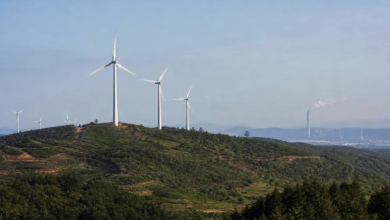


FAO Empowers Women Farmers in Multan to Champion Climate Action and Safe Food Everywhere
FAO climate action food safety women farmers Multan — a landmark seminar under the Green Climate Fund project brought together Punjab Food Authority, EPA Punjab, and women farmer facilitators to build climate-resilient, safe food systems from farm to table.
FAO climate action food safety women farmers Multan — this combination of themes came powerfully together at an awareness seminar that brought institutional partners, agricultural experts, and grassroots changemakers into one room to tackle two of the world’s most urgent challenges simultaneously.
In a landmark event held in Multan, the Food and Agriculture Organization of the United Nations (FAO) convened women farmers, the Punjab Food Authority (PFA), the Environment Protection and Climate Change Department Punjab, and key government partners to mark both World Environment Day and World Food Safety Day 2026.
The unifying theme: “Call for Climate Action and Safe Food Everywhere.”
The message was clear and urgent. Climate change is not only an environmental crisis — it is a food crisis. And food safety is not only a regulatory issue — it is a climate issue. The two are inseparable, and the women who grow, harvest, store, and sell food across Punjab’s fields are at the centre of both.
2. The Event: World Environment Day Meets World Food Safety Day 2026
The seminar was a deliberate act of integration — combining two global observances that are typically celebrated separately but are, in practice, deeply intertwined.
World Environment Day, held annually on June 5, is the United Nations’ principal vehicle for encouraging awareness and action for environmental protection.
World Food Safety Day, observed on June 7, highlights the importance of safe food from production to consumption — recognising that unsafe food causes illness in an estimated 600 million people globally every year.
By bringing both themes together under one roof in Multan, FAO and its partners sent a powerful signal: you cannot have food safety without environmental health, and you cannot protect the environment without safe, sustainable food systems.
The event was held under the Green Climate Fund (GCF)-supported project “Transforming the Indus Basin with Climate Resilient Agriculture and Water Management” — a programme designed specifically to help Pakistan’s farming communities adapt to climate change while improving agricultural productivity and sustainability.
3. Key Speakers and Their Powerful Messages
Three expert voices shaped the seminar’s direction and depth:
Ms. Noella Kamwendo — FAO Punjab Office Incharge
As FAO’s representative in Punjab, Ms. Kamwendo brought the global perspective — connecting Multan’s women farmers to the international frameworks and commitments driving climate and food safety agendas worldwide. Her remarks underscored FAO’s commitment to supporting Pakistan’s most vulnerable agricultural communities.
Dr. Aftab Qamar — Principal Officer, Punjab Food Authority
Dr. Qamar’s contribution focused on the practical realities of food safety at the farm level — from the risks of improper pesticide use to the challenges of safe storage and handling. His presence signalled the PFA’s recognition that food safety begins in the field, not in the processing plant.
Dr. Tahir Abbas — District Officer, Environmental Protection Agency Punjab
Dr. Abbas provided the environmental lens — highlighting how agricultural practices directly affect air, soil, and water quality, and how environmental degradation in turn threatens the safety and nutritional quality of the food produced.
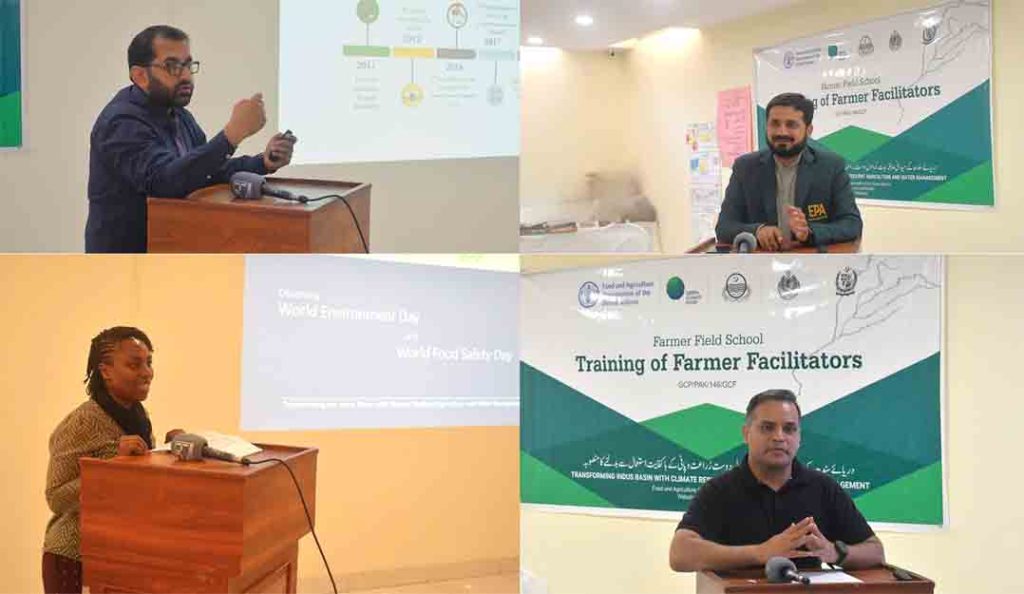
Together, the three speakers wove a coherent narrative: climate, environment, and food safety form a single, interconnected system — and managing them in isolation will not work.
4. Why Climate Action and Food Safety Cannot Be Separated
The conceptual heart of the Multan seminar was the connection between FAO climate action food safety women farmers Multan — and understanding this connection requires looking at how climate change affects what we eat.
Climate change impacts food safety through multiple pathways:
Higher temperatures accelerate the growth of pathogens and mycotoxins in stored grain — making food unsafe faster and reducing shelf life.
Erratic rainfall creates waterlogging and humidity conditions that promote fungal contamination of crops in the field.
Heat stress on crops makes them more susceptible to pests, leading farmers to apply more pesticides — increasing chemical residue risks in food.
Floods — increasingly frequent and severe in Pakistan — contaminate agricultural land with pollutants, heavy metals, and biological hazards.
Drought concentrates naturally occurring contaminants like arsenic and nitrates in groundwater used for irrigation.
Every extreme weather event is therefore also a food safety event. This is why climate action — reducing emissions, building resilience, protecting ecosystems — is simultaneously an investment in food safety.
For more on this connection, see the WHO’s overview of climate change and food safety.
5. Women Farmer Facilitators: The Unsung Heroes of the Food System
One of the seminar’s most important themes was the central role of women in Pakistan’s agricultural food system — and their untapped potential as agents of climate and food safety change.
Women make up a significant proportion of Pakistan’s agricultural labour force. They sow, weed, harvest, sort, store, and process food — often performing the most labour-intensive tasks while receiving the least recognition, training, and institutional support.
The FAO’s model of Women Farmer Facilitators is designed to change this. These are trained community members — women themselves — who serve as peer educators, carrying knowledge of climate-resilient practices, food safety standards, and sustainable agriculture to other women in their communities.
This peer-to-peer model is enormously powerful. It bypasses the social and cultural barriers that often prevent women from accessing formal extension services. It builds trust through shared identity and experience. And it creates a self-reinforcing network of knowledge that outlasts any single training programme.
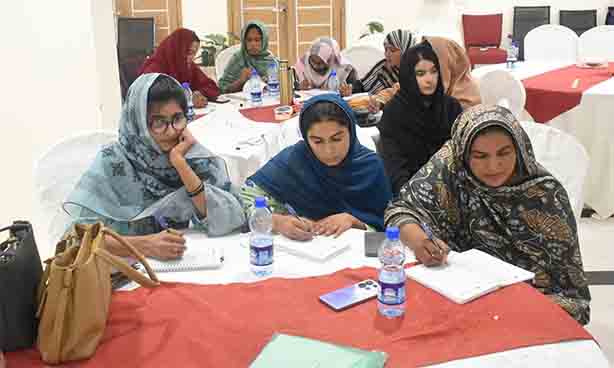
The Multan seminar reinforced this model — recognising Women Farmer Facilitators not as passive beneficiaries of development programmes, but as active leaders of change in their communities.
6. Punjab Food Authority’s Commitment to Women Farmers
The Punjab Food Authority’s participation in the Multan seminar went beyond symbolic presence. PFA representatives made concrete commitments to the women farmers in attendance.
Specifically, PFA committed to providing dedicated training sessions covering:
- Food safety practices at every stage of the farm-to-fork cycle
- PFA licensing — helping women farmers understand and access formal certification frameworks that can open new markets
- Agri-business models — supporting women in transitioning from subsistence production to commercially viable, food-safe enterprises
This is significant. PFA licensing has historically been accessed primarily by larger, male-owned food businesses. By committing to bring licensing knowledge and support directly to women farmers, PFA is taking a meaningful step toward making the formal food safety system more inclusive and accessible.
The commitment also reflects a maturing understanding within Punjab’s regulatory institutions that food safety cannot be enforced at the processing end alone — it must be built from the farm upward.
Learn more about PFA’s mandate and programmes at the Punjab Food Authority official website.
7. The Green Climate Fund Project Behind the Initiative
The Multan seminar was not a standalone event — it was part of a larger, structured programme funded by the Green Climate Fund (GCF): the project titled “Transforming the Indus Basin with Climate Resilient Agriculture and Water Management.”
The Green Climate Fund is the world’s largest dedicated climate fund, established under the UN Framework Convention on Climate Change to support developing countries in limiting and adapting to climate change.
This GCF-supported project targets the Indus Basin — Pakistan’s agricultural heartland and one of the regions most acutely affected by climate variability, glacial melt, and changing monsoon patterns.
The project’s integrated approach — combining climate-resilient agriculture with water management reform — reflects an understanding that food production in the Indus Basin cannot be made sustainable without addressing both how crops are grown and how water is managed across the entire system.
The Multan seminar’s focus on women farmers, food safety, and environmental protection represents the community engagement dimension of this larger transformation effort.
For more on GCF’s work in Pakistan, visit the Green Climate Fund project portal.
8. Farmer Field Schools and Women Open Schools: Learning at the Grassroots
A recurring theme at the Multan seminar was the role of Farmer Field Schools (FFS) and Women Open Schools as community learning platforms — and their potential to scale knowledge of climate-resilient and food-safe practices across rural Punjab.
Farmer Field Schools are a globally proven adult education model developed by FAO in the 1980s. They bring small groups of farmers together — typically 20–25 — to learn through hands-on experimentation in their own fields, guided by a trained facilitator.
Women Open Schools adapt this model specifically for women — creating safe, accessible spaces where women farmers can learn together, share experiences, and build the confidence to adopt new practices and advocate for their rights within the agricultural system.
The seminar highlighted how these platforms are helping women across Multan and the wider Indus Basin:
- Understand the link between climate and crop health
- Adopt responsible pesticide use practices
- Improve post-harvest handling and storage to reduce food safety risks
- Access information about licensing, markets, and agri-business opportunities
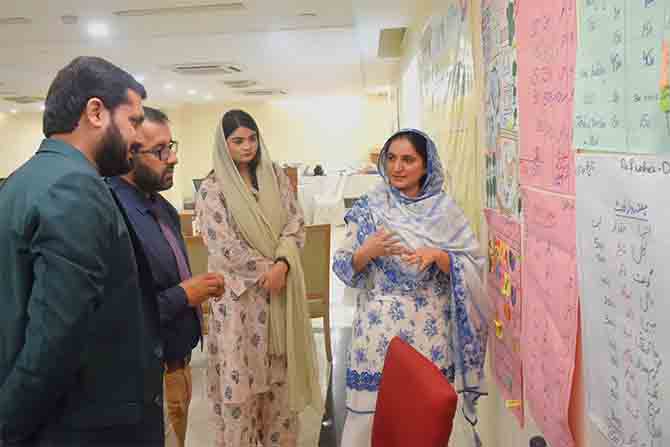
The power of these schools lies in their community rootedness. Knowledge gained in a Farmer Field School does not stay in the school — it travels home, to neighbours, to the next village, multiplying its impact many times over.
9. Reducing Crop Residue Burning: A Critical Climate and Food Safety Issue
Among the specific harmful practices flagged at the Multan seminar, crop residue burning deserves particular attention — as it sits squarely at the intersection of climate, environment, and food safety.
Crop residue burning — the practice of setting fire to the stalks and leaves left in fields after harvest — is widespread across Punjab. Farmers do it because it is the fastest and cheapest way to clear fields before the next planting season.
But the consequences are severe:
For climate: Burning releases carbon dioxide, methane, and black carbon — potent greenhouse gases that contribute to global warming and local air quality degradation.
For the environment: Burning destroys soil organic matter, reducing soil health and long-term agricultural productivity.
For food safety: Smoke and ash contaminate irrigation water, nearby crops, and processing environments — introducing hazards into the food chain.
For health: The toxic smoke from burning fields is a major contributor to the severe air pollution that blankets Punjab — particularly Lahore — during post-harvest months, causing respiratory illness across millions of people.
Speakers at the Multan seminar stressed the urgency of shifting farmers — especially women who are often responsible for post-harvest field management — away from burning and toward alternative practices such as mulching, composting, and soil incorporation of residues.
10. Conclusion: Safe Food and Climate Action Begin at the Farm
The FAO climate action food safety women farmers Multan seminar was more than an awareness event. It was a demonstration of what integrated, community-centred climate and food safety programming can look like — and what it can achieve. t
By bringing women farmers into direct dialogue with regulatory authorities, environmental agencies, and international organizations, the event validated a simple but powerful truth: the people closest to the land are also the people best positioned to protect it.
Women Farmer Facilitators, Farmer Field Schools, and Women Open Schools are not peripheral to Pakistan’s climate and food safety agenda — they are its most promising frontline.
As climate change accelerates and food safety risks multiply, investing in these women — their training, their legal recognition, their access to markets and institutions — is one of the highest-return interventions Pakistan can make.
Safe food and a stable climate will not be achieved through policy papers alone. They will be built, season by season, in the fields of Multan and across the Indus Basin — by the women who have always known that caring for the land means caring for the future.