
Alarming Climate Change Threat to Pakistan Glaciers: Experts Urge Urgent Action
Experts warn that climate change is accelerating glacier melt in Pakistan, threatening water security and ecosystems. Urgent policy reforms and climate action are needed.
Pakistan is home to some of the world’s largest glacier systems outside the polar regions. The glaciers of the Karakoram, Hindu Kush, and Himalaya mountain ranges form a vital part of the country’s natural water storage system.
These glaciers feed major rivers such as the Indus River, which supports agriculture, hydropower, and drinking water supplies for millions of people.
According to experts, glacier melt contributes significantly to Pakistan’s freshwater resources. Any disruption to these natural reservoirs could directly impact water availability for cities, farms, and industries.
Scientists have warned that climate change is increasingly affecting these fragile ecosystems.
Climate Change Threat to Pakistan’s Glaciers
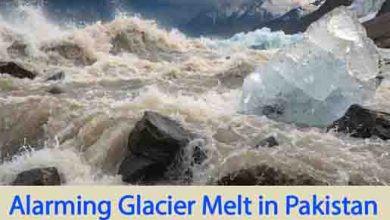
The climate change threat to Pakistan’s glaciers is becoming more evident as temperatures rise and weather patterns shift. Experts say warming trends are accelerating glacier melting in the northern mountainous regions.
Environmental specialists recently highlighted that the rapid melting of glaciers could lead to unpredictable water flows and increased natural hazards.
One major concern is the risk of Glacial Lake Outburst Floods (GLOFs). These floods occur when melting glaciers form lakes that eventually burst, causing sudden and destructive flooding downstream.
Pakistan has already experienced several GLOF incidents in areas like Gilgit-Baltistan and Chitral, affecting local communities and infrastructure.
Experts warn that such events may become more frequent if global warming continues unchecked.
Environmental and Water Security Risks
The consequences of glacier loss go beyond environmental damage. Experts stress that the climate change threat to Pakistan’s glaciers could trigger serious water security challenges.
Pakistan relies heavily on glacier-fed rivers for irrigation. The agricultural sector, which supports a large portion of the country’s economy, depends on stable river flows.
If glaciers melt too quickly, water availability may initially increase but could decline sharply in the long term. This would affect crop production and food security.
Additionally, glacier retreat can disrupt ecosystems and biodiversity in mountainous regions. Alpine habitats that rely on cold climates may disappear as temperatures rise.
International climate experts, including researchers linked to the Intergovernmental Panel on Climate Change, have repeatedly warned that mountain glaciers worldwide are shrinking due to global warming.
For further information on global climate science, readers can explore resources from United Nations Environment Programme.
Experts Call for Policy Reforms
During recent discussions, environmental specialists emphasized the urgent need for stronger policy responses to address the climate change threat to Pakistan’s glaciers.
Participants at the event highlighted that policymakers must prioritize climate adaptation strategies and strengthen environmental governance.
Key recommendations included:
- Expanding glacier monitoring programs
- Improving climate research and data collection
- Strengthening disaster risk management systems
- Integrating climate policies into national planning
Experts also stressed the importance of aligning national climate strategies with international commitments such as the Paris Agreement.
Need for Research and Monitoring
Scientists believe that better research and monitoring systems are essential to understand glacier dynamics.
Pakistan has already initiated several climate research projects through organizations like the Pakistan Meteorological Department and international partnerships.
Experts say advanced monitoring technologies—including satellite imagery and climate modeling—can help track glacier movement and melting patterns.
These tools are crucial for predicting potential disasters and improving preparedness in vulnerable mountain communities.
Community Awareness and Collaboration
Experts also stressed that protecting glaciers requires active participation from local communities.
Communities living in mountainous areas often face the direct impacts of glacier melt, including floods, landslides, and water shortages.
Environmentalists called for public awareness campaigns to educate citizens about climate change risks and sustainable practices.
Collaborative efforts involving government agencies, NGOs, and international partners can play a significant role in addressing the climate change threat to Pakistan’s glaciers.
Organizations such as the World Bank and United Nations Development Programme have previously supported climate resilience projects in Pakistan.
Regional Cooperation and Future Outlook
Experts say regional cooperation is essential for tackling glacier-related climate challenges.
Many glaciers in South Asia extend across national borders, meaning climate impacts in one region can affect neighboring countries.
Collaborative research initiatives involving countries across the Himalayan region could help improve understanding of glacier dynamics and climate risks.
Specialists emphasized that sustained international cooperation, climate finance, and technological support will be crucial for protecting glaciers and ensuring water security in the region.
Conclusion
The climate change threat to Pakistan’s glaciers is a growing environmental crisis that demands urgent attention. Experts warn that rising temperatures, glacier melt, and changing climate patterns could have far-reaching consequences for water security, ecosystems, and disaster risks.
Protecting these critical natural resources requires strong policy action, scientific research, community engagement, and international cooperation.
As climate change continues to reshape the planet’s fragile ecosystems, safeguarding Pakistan’s glaciers will remain essential for ensuring sustainable development and environmental stability in the decades ahead.