


Chairman WAPDA Visits Mohmand Dam Project, Reviews Construction Progress
Chairman WAPDA Lt Gen Muhammad Saeed (Retd) visits Mohmand Dam Hydropower Project, directs teams to speed up construction and meet quality benchmarks.
Chairman WAPDA Visits Mohmand Dam Project, Reviews Construction Progress
-
Chairman WAPDA Lt Gen Muhammad Saeed (Retd) visits Mohmand Dam Hydropower Project, directs teams to speed up construction and meet quality benchmarks.
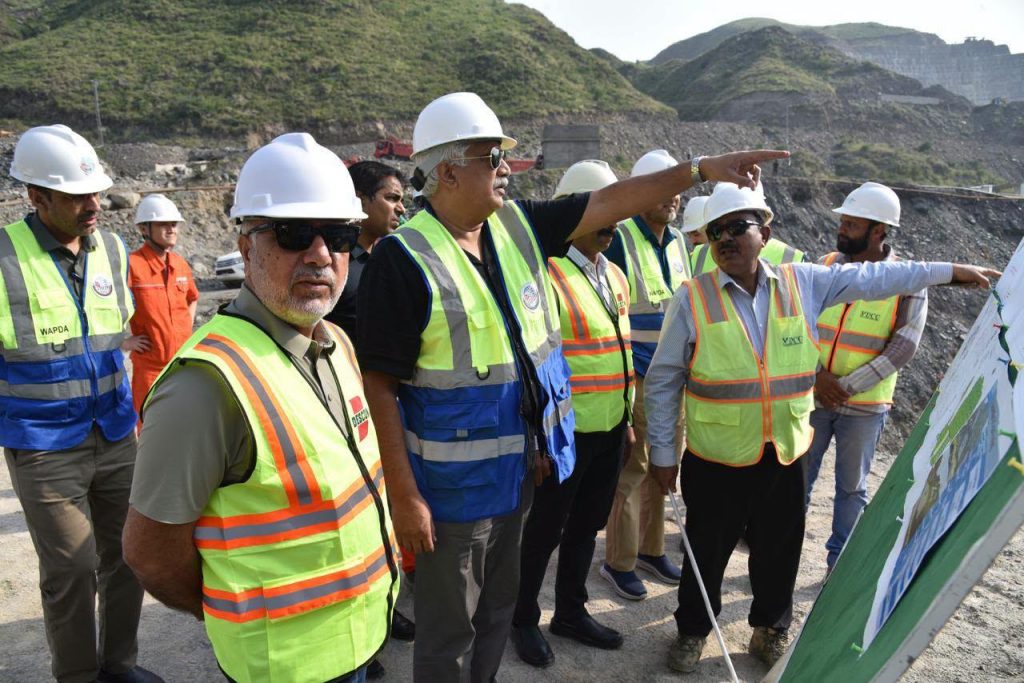
PESHAWAR — Chairman WAPDA, Lt Gen Muhammad Saeed (Retd), on September 3, 2026, visited the Mohmand Dam Hydropower Project, currently under construction across the River Swat in Mohmand District, Khyber Pakhtunkhwa, to review the pace and quality of ongoing construction work.
Member Water, Asim Rauf Khan, accompanied the Chairman during the visit. The two officials toured key project sites, focusing in particular on the Main Dam and Power House, where they assessed civil works and overall construction progress.
Chairman WAPDA Calls Mohmand Dam a Strategic National Project
Speaking on the occasion, the Chairman WAPDA said Mohmand Dam is a strategic national project that will strengthen Pakistan’s water, food and energy security. He directed the Project Team, Consultants and Contractors to accelerate the momentum of construction activities while strictly adhering to technical benchmarks and best quality standards.
He reiterated that timely completion of the project remains critical to Pakistan’s long-term goals for sustained economic growth and stability, urging all stakeholders to remain focused on meeting project deadlines without compromising on quality or safety standards.
Progress Review Meeting Held with Board of Management
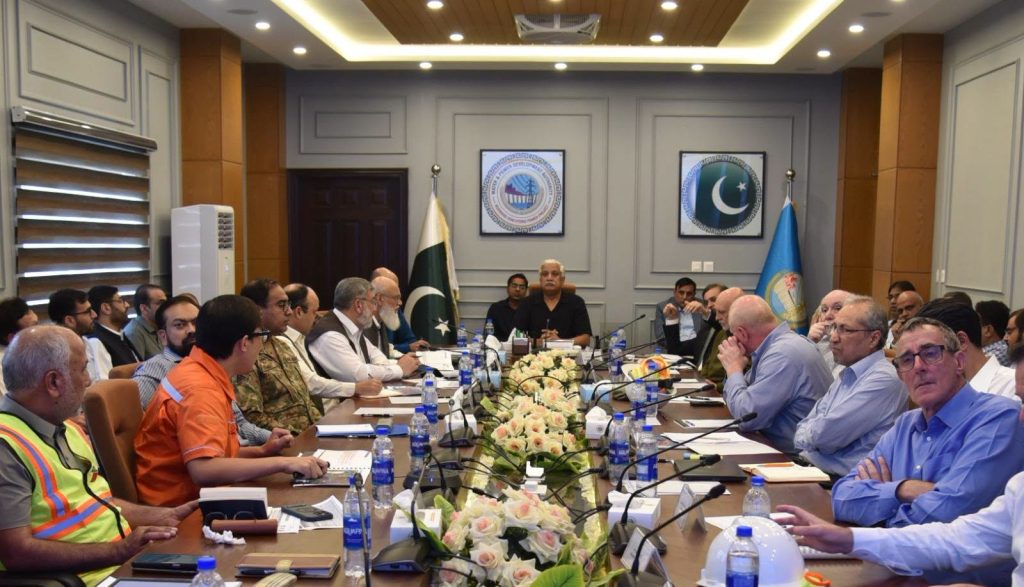
Earlier in the day, the Chairman WAPDA presided over a progress review meeting at the Project Office, attended by the Board of Management, the Mohmand Dam Consulting Group and the Contractors. The meeting assessed the overall status of construction, discussed challenges affecting timelines, and outlined measures to further streamline project execution.
About Mohmand Dam: A Multi-Purpose National Asset
Mohmand Dam is a multi-purpose project designed to deliver significant benefits across water, flood management and energy sectors. Once completed, the dam will:
- Store 1.29 MAF (Million Acre Feet) of gross water storage for irrigation purposes
- Provide flood mitigation for the districts of Charsadda, Mardan and Nowshera
- Supply 300 million gallons per day of drinking water to Peshawar
- Generate 800 MW of electricity
- Contribute 2.86 billion units of clean, affordable hydel electricity to the National Grid annually
WAPDA’s Hydropower Portfolio: Addressing Pakistan’s Water, Food and Energy Needs
Mohmand Dam is part of a wider portfolio of hydropower and water infrastructure projects that WAPDA is developing across the country to meet Pakistan’s rising demand for water, food and clean energy. As population growth, climate change and shrinking water storage capacity place increasing strain on national resources, WAPDA has accelerated work on several major dams and hydropower schemes designed to secure the country’s long-term water and energy future.
Key projects in WAPDA’s ongoing development pipeline include:
- Diamer-Bhasha Dam — A mega multi-purpose project on the Indus River in Gilgit-Baltistan, expected to add 4.5 MAF of water storage and generate 4,500 MW of electricity, making it one of the largest hydropower projects in the country’s history.
- Dasu Hydropower Project — Located on the Indus River in Khyber Pakhtunkhwa, being developed in phases to add 4,320 MW of low-cost hydel electricity to the National Grid.
- Tarbela 5th Extension — An initiative to harness additional generation capacity from water already stored at Tarbela Reservoir, adding around 1,410 MW without requiring new water storage.
- Nai Gaj Dam — A project in Sindh aimed at irrigation support and flood management for the Kachho area, in addition to a modest power generation component.
Collectively, these projects reflect WAPDA’s integrated approach to water and energy planning — expanding reservoir storage to offset the loss of capacity in existing dams due to sedimentation, strengthening flood management systems for vulnerable regions, and increasing the share of clean, low-cost hydel power in the national energy mix to reduce reliance on expensive imported fuel.
By expanding storage capacity through projects like Mohmand and Diamer-Bhasha, and by adding significant hydel generation through Dasu and Tarbela’s extensions, WAPDA aims to directly support Pakistan’s food security through improved irrigation supplies, enhance resilience against recurring floods, and provide affordable electricity to homes and industries nationwide.
Conclusion
With construction activity intensifying at the Main Dam and Power House sites, WAPDA’s leadership continues to emphasize timely completion and strict quality control as the project moves toward addressing Pakistan’s growing water, food and energy needs. The Mohmand Dam project remains a key pillar of the country’s infrastructure development agenda, with its multi-dimensional benefits expected to have a lasting impact on irrigation, flood control, drinking water supply and clean energy generation for the region.