
Copper Recycling and Renewable Energy Transition: A Circular Path for Pakistan’s Climate Future
Copper is vital for clean energy. How recycling can power Pakistan’s renewable transition, cut imports, and build a circular climate economy.
Copper has been at the heart of industrial progress for more than a century. From powering Thomas Edison’s first electric light in 1878 to carrying Alexander Graham Bell’s early telephone signals, the metal has long enabled technological advancement. Today, copper remains indispensable — not only in wiring, plumbing, construction and machinery, but at the very core of the clean energy transition.
According to Natural Resources Canada, copper is essential in electric vehicles, renewable power systems and electricity networks. The International Energy Agency (IEA) confirms that copper is a critical mineral across all major clean energy technologies, including solar photovoltaic (PV), wind power, lithium-ion batteries and grid infrastructure.
Why Clean Energy Is Copper-Intensive
The material demands of renewable energy are substantial.
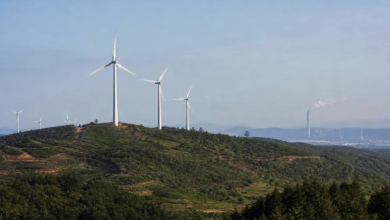
The Society for Mining, Metallurgy and Exploration estimates that a single 3-megawatt wind turbine requires:
- 4.7 tonnes of copper
- 335 tonnes of steel
- 3 tonnes of aluminium
- 2 tonnes of rare earth elements
- 1,200 tonnes of concrete
This illustrates how central copper is to clean power deployment.
In 2024 alone, the Global Wind Energy Council reported 117 gigawatts of new wind capacity installed worldwide — roughly 39,000 wind turbines of 3 MW each. This expansion required approximately 183,000 tonnes of copper in one year just for wind energy.
Meanwhile, the IEA estimates:
- Offshore wind uses ~8,000 kg of copper per MW
- Onshore wind uses ~2,900 kg per MW
- Solar PV uses over ~2,800 kg per MW
Beyond renewables, copper underpins EVs, charging infrastructure, batteries, buildings and national power grids.
As the world accelerates toward clean energy, global copper demand will surge for decades.
Climate Action Depends on Material Sustainability
The United Nations consistently warns that burning coal, oil and gas traps heat in the atmosphere, driving climate change. Renewable energy — once installed — generates electricity without greenhouse gas emissions, making it central to bending the emissions curve.
But if clean energy relies on ever-expanding primary mining alone, it risks:
- Environmental degradation
- Habitat destruction
- Resource insecurity
- Supply chain vulnerability
This is where recycling becomes a climate strategy, not just a waste solution.
Europe’s Wind Decommissioning Wave: A Circular Opportunity
By 2030, more than 50,000 wind turbines across Europe will reach end-of-life, according to the European Institute of Innovation & Technology.
Spain and Germany alone will each decommission roughly 16,000 turbines.
The European Commission estimates that every megawatt of wind power contains:
- 107–132 tonnes of steel
- 0.5–1.6 tonnes of aluminium
- 1–5 tonnes of copper
- 18–21 tonnes of iron
- significant chromium and other metals
These turbines represent a massive reservoir of recyclable materials.
Rather than letting this become waste, Europe is pushing a circular economy approach — recovering metals and reintegrating them into manufacturing.
Why This Matters for Pakistan
Pakistan faces two simultaneous crises:
- Soaring fossil fuel import bills
- Dangerous climate vulnerability
During FY2025 (July–March), Pakistan generated:
- 46.3% of electricity from thermal fuels
- 19.05% from nuclear
- 30.41% from hydropower
- Only 4.24% from non-hydro renewables
Meanwhile, petroleum imports exceeded:
- USD 8.4 billion in FY2025 (July–March)
- USD 8.44 billion in FY2024 (July–March)
That’s over USD 16.8 billion in less than two years.
If this continues, Pakistan could spend:
- USD 80+ billion in a decade
- USD 160+ billion in twenty years
This trajectory is economically unsustainable.
Recycling as an Industrial and Climate Strategy
Copper is infinitely recyclable without losing performance.
According to the International Copper Association:
- Recycling copper cuts CO₂ emissions by 65%
- Saves 85% of energy compared to primary production
- The EU already meets 44% of copper demand through recycling
For Pakistan, this presents enormous potential:
✔ Reduce import dependency
✔ Build circular manufacturing industries
✔ Create green jobs
✔ Strengthen climate resilience
✔ Secure critical minerals
A Strategic Partnership with the European Union
Pakistan could collaborate with the EU to:
- Import decommissioned wind turbine components
- Assess reuse potential in local wind corridors
- Establish advanced recycling facilities
- Recover copper, steel, aluminium and rare metals
- Integrate circular economy supply chains
This would:
- Boost exports
- Strengthen development cooperation
- Lower raw material costs
- Build climate-resilient industry
The Vision: A Circular Clean Energy Economy
A truly resilient Pakistan must:
- Rapidly scale solar, wind and biomass power
- Phase out fossil fuel dependence
- Build recycling into clean energy infrastructure
- Treat critical minerals as strategic assets
Renewable electricity should power Pakistan — and circular recycling should sustain it.
Conclusion: Climate Action Begins with Smart Materials
The renewable transition is not only about installing solar panels and wind turbines. It is about building a sustainable material system that supports clean energy for generations.
By prioritising copper recycling and circular clean energy infrastructure, Pakistan can:
Cut emissions
Save billions in imports
Build future industries
Strengthen energy security
Protect the environment
The choice is clear — and the opportunity is enormous.