
Weaponising Water Crisis: 7 Alarming Truths Behind India’s Breach of the Indus Waters Treaty
Weaponising Water has triggered a dangerous crisis as India’s breach of the Indus Waters Treaty raises humanitarian, legal, and geopolitical alarms across South Asia.
Weaponising Water is no longer a theoretical concern—it is an unfolding reality in South Asia. The deliberate manipulation of shared river systems threatens not only diplomatic relations but also human survival itself. As tensions escalate between India and Pakistan, the Indus Waters Treaty—once hailed as a triumph of international cooperation—now faces its most severe challenge.
Water is not merely a natural resource; it is the foundation of food security, energy production, public health, and social stability. When access to water becomes a strategic tool, the consequences ripple far beyond borders.
Understanding the Indus Waters Treaty
Signed in 1960 under the auspices of the World Bank, the Indus Waters Treaty (IWT) governs the distribution of the Indus River system between India and Pakistan. It allocates the eastern rivers (Ravi, Beas, Sutlej) to India and the western rivers (Indus, Jhelum, Chenab) to Pakistan.
For more than six decades, the treaty survived wars, military standoffs, and political upheavals—making it one of the world’s most durable water-sharing agreements.
External reference: https://www.worldbank.org/en/region/sar/brief/indus-waters-treaty
Weaponising Water: A Dangerous Precedent
Recent developments have shaken this foundation. Pakistan has accused India of abrupt and unilateral manipulation of Chenab River flows, allegedly without prior notification or data sharing—an explicit violation of treaty protocols.
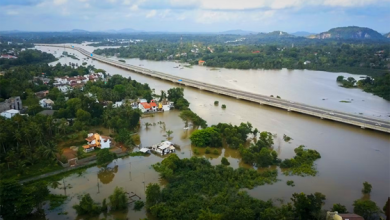
This form of weaponising water transforms a shared natural resource into a coercive tool. Sudden fluctuations in water flows disrupt irrigation cycles, damage crops, and endanger millions who rely on predictable water access.
Such actions challenge not only Pakistan’s water security but also the integrity of international treaty law.
India’s Actions and the Legal Fallout
India’s assertion that it has placed treaty cooperation “in abeyance” has alarmed legal experts worldwide. The Indus Waters Treaty contains no provision for unilateral suspension—a fact reaffirmed by international legal scholars and arbitration bodies.
The Permanent Court of Arbitration (PCA) has previously clarified that dispute-resolution mechanisms cannot be bypassed unilaterally. By attempting to reinterpret or freeze obligations, India risks undermining the very legal order that protects shared natural resources globally.
External Resource: https://pca-cpa.org/en/cases/155/
Pakistan’s Vulnerability as a Lower Riparian State
Pakistan’s dependence on the Indus Basin is profound:
- Over 80% of agriculture depends on Indus waters
- Nearly 90% of food production relies on irrigation
- Millions of rural livelihoods depend on predictable river flows
As a lower riparian country, Pakistan is inherently vulnerable. Even temporary disruptions during critical crop cycles can trigger food insecurity, inflation, and social instability.
This imbalance is precisely why the treaty includes strict transparency and data-sharing obligations—now under strain.
Humanitarian and Environmental Consequences
Weaponising water is not merely a diplomatic offense; it is a humanitarian threat.
According to UN human rights experts, access to water is inseparable from the rights to life, food, health, and dignity. Any deliberate interference violates international human rights law.
External Reference:https://www.ohchr.org/en/water-and-sanitation
Climate change compounds this danger. Shrinking glaciers, erratic monsoons, and rising temperatures already stress the Indus system. Weaponisation magnifies these risks exponentially.
Climate Change and the Weaponisation of Rivers
India has argued that climate change necessitates a rethinking of the treaty. While climate pressures are real, experts agree they demand more cooperation—not less.
Unilateral action in a climate-stressed region transforms rivers into geopolitical flashpoints. Modernising the treaty is possible, but only through mutual consent, transparency, and international mediation.
Weaponising water in a warming world is not adaptation—it is destabilisation.
Regional Stability at Stake
The Indus dispute extends beyond bilateral tensions. If a powerful upstream state can override treaty obligations, global water governance weakens everywhere—from the Nile to the Mekong.
This sets a dangerous precedent where power replaces law.
Pakistan’s response has remained measured: advocating dialogue, legal remedies, and institutional engagement rather than retaliation. This restraint underscores its commitment to stability rather than escalation.
The Path Forward: Law, Dialogue, and Cooperation
The solution lies not in coercion but in recommitment—to treaties, to international law, and to shared humanity.
Key steps forward include:
- Restoring full treaty mechanisms
- Independent technical assessments
- Climate-adaptive cooperation frameworks
- Third-party facilitation where necessary
The Indus Waters Treaty has survived wars. It must not fall victim to political brinkmanship.
Conclusion: Water Must Never Become a Weapon
At its core, weaponising water represents a moral and legal failure. It erodes trust, endangers civilians, and destabilises entire regions. The international community’s response is clear: treaties cannot be suspended at will, and water must never be used as leverage.
The Indus River is not a battlefield. It is a lifeline.
Respecting law, humanity, and cooperation is the only path toward sustainable peace in South Asia.