
The Approaching Climate Emergency: Suggestions For Worldwide Dependability And Flexibility
A worldwide temperature alteration and climate change are two huge marks of ecological change that are firmly connected. As well as affecting the climate, they likewise represent earnest social emergencies that worsen imbalance in various aspects.
To handle these issues, comprehensive methodologies are expected, with an emphasis on friendly consideration, value, and equity notwithstanding ecological preservation drives. Subsequently, managing the intricacy of climate change and advancing a manageable future for all require an extensive procedure that considers the natural and social aspects. The probability that Earth will pass a problematic boundary for an Earth-wide temperature boost sooner rather than later is extremely high, undoubtedly inside the following decade. To prevent this direction from deteriorating, countries need to move rapidly and radically away from utilizing petroleum products. The typical temperature of Earth has expanded by around 1.1 degrees Celsius starting from the start of the modern period. It is extremely vital for created countries to cooperate to decrease ozone harming substance discharges.
This will require a critical decrease of about half by 2030 and a total end of carbon dioxide discharges from the air by the mid 2050s. The best existential danger to our planet is the threatening apparition of climate change. The termination of hundreds of thousands of species, extreme yield and fishery disappointments, and the pulverization of whole communities are undeniably anticipated by the inability to decrease ozone depleting substance discharges coming about because of the copying of petroleum products. Since rising ocean levels and more serious weather conditions are being brought about by a dangerous atmospheric devation, gauges propose that the region covered by our country’s floodplains could increment by around 45% constantly 2100.
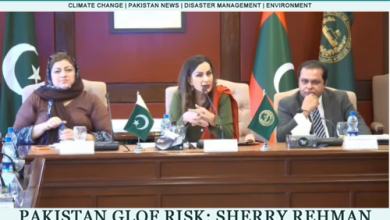
Yet, where will the important cash come from, particularly for countries like Pakistan, which are confronting various challenges like extreme climate, outside shocks, and mounting public obligation? This is the urgent inquiry. The monetary gauge, as made sense of On the planet Bank’s 2022 Country Climate and Improvement Report for Pakistan, is faltering and underscores this predicament. By 2030, the report extends an enormous prerequisite of roughly $348 billion. This funding is desperate for flexibility as well as for laying out a supportable way inside a system that adjusts to climate change. At the same time, the mix of occasional downpours and icy mass retreat throughout the mid year heatwaves revamps the design of individuals lives, changing social and financial conditions. Though, individuals are plunged into a continuous fight to revamp with versatility, even as they manage the obliteration brought about by climate change, which keeps on representing a danger to their strength.
Pakistan has encountered an expansion in normal temperature throughout the course of recent years, around 0.3 degrees Celsius each ten years. The worldwide normal for a similar period was around 0.2 degrees Celsius each 10 years, yet this pace of warming is higher. As per a modest approximation, it is normal that Pakistan’s temperatures will climb by around 1.0 degrees Celsius by 2030, beginning in the year 2000. There could be several millions additional individuals noticeable to possibly deadly circumstances like intensity waves, water shortage, and seaside inundation because of the distinction between a 1.5-degree Celsius rise and a 2-degree Celsius increment. While irreversible misfortune is expected in case of a 2-degree Celsius warming, grave environments like coral reefs and summer Cold ocean ice might endure an unnatural weather change of 1.5 degrees Celsius.
In any case, it is vital that Pakistan’s sprinkle designs don’t show a steady pattern. In the mean time, in Pakistan, temperatures have climbed to up to this point unheard-of levels for a very long time, with no less than one record high of 53°C (127.4°F). Pakistan has started to lead the pack in making a public transformation plan, understanding the criticalness of the circumstance and meaning to make a thorough, broad methodology upheld by an adaptable structure of devices. Against the scenery of inaction with respect to the global community, this strategic exertion intends to safeguard the populace from the exasperating impacts of heatwaves. It stresses the requirement for early activity to safeguard the country from the looming progress into a “red planet” that is anticipated for the mid year of 2024.
Finally, the extreme absence of assets has caused a lot of torment, particularly in places like Pakistan. It is fundamental that well off countries and global associations offer huge help to address this emergency. Industrialized countries have an ethical constraint to battle an unnatural weather change by giving guide to non-industrial countries to upgrade general wellbeing crisis readiness. We can cooperate to make a future that is more maintainable and strong.