

World Bank Urges Pakistan to Broaden Tax Base: 5 Critical Reforms to Avert a Deepening Economic Crisis
World Bank urges Pakistan to broaden tax base, reform subsidies, and confront a worsening water crisis, warning that delays could intensify fiscal and climate risks.
World Bank urges Pakistan to broaden tax base as part of urgent structural reforms needed to stabilize the country’s economy, address deepening water scarcity, and fix long-standing subsidy inefficiencies, according to its latest South Asia Development Update.
The report delivers a stark warning: without decisive action on taxation, water management, and energy pricing, Pakistan faces escalating fiscal pressure, environmental degradation, and social vulnerability — especially in the face of intensifying climate shocks.
Pakistan’s Narrow Tax Base and Revenue Challenges
The World Bank notes that Pakistan continues to rely on a dangerously narrow tax base, with a small proportion of citizens and sectors contributing to national revenues. Despite repeated reform pledges, tax collection remains low compared to regional peers.
According to the report, expanding the tax base — rather than increasing rates on existing taxpayers — is essential for:
- Improving fiscal sustainability
- Reducing dependence on external borrowing
- Creating room for climate and social spending
External resource: World Bank – Pakistan Economic Update
Pollution Taxes and Sustainable Revenue Generation
In a notable shift, the World Bank urges Pakistan to explore revenue generation by discouraging pollution, calling environmental taxation a “dual-benefit policy.”
Such measures could:
- Reduce industrial and urban pollution
- Generate new, predictable revenue streams
- Support climate adaptation funding
The report highlights global examples where carbon pricing and pollution levies have helped governments fund social protection while incentivizing cleaner production.
Water Crisis: Pakistan Among World’s Most Water-Scarce Nations
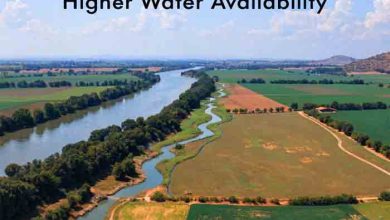
One of the most alarming findings of the report concerns water security. The World Bank warns that groundwater levels across South Asia are falling rapidly, with Pakistan ranking among the most water-stressed countries globally.
Key drivers include:
- Inefficient flood irrigation systems
- Outdated farming techniques
- Unregulated groundwater extraction
External link: UN Water – Global Water Scarcity
Modern Irrigation Reforms Show Promising Results
Despite grim warnings, the report offers hopeful evidence from Punjab, where modern irrigation reforms have delivered tangible results.
According to the World Bank:
- Water usage dropped by 57 percent
- Crop yields increased by 14 to 31 percent
- Farmers saw improved efficiency and income stability
These pilot projects demonstrate that technology-driven agriculture can play a crucial role in resolving Pakistan’s water crisis while strengthening food security.
Energy Subsidy Reforms and BISP Integration
On energy policy, the World Bank welcomed Pakistan’s recent steps to link electricity and gas subsidies with the Benazir Income Support Programme (BISP).
This reform aims to:
- Prevent subsidy leakage to wealthy consumers
- Protect low-income households
- Improve transparency and targeting
The report describes this move as a critical breakthrough in correcting decades of inefficient energy pricing.
External link: Benazir Income Support Programme
Tackling Circular Debt Through Smarter Subsidies
Pakistan’s energy sector continues to suffer from massive circular debt, driven by under-priced electricity, transmission losses, and poor recovery.
The World Bank recommends:
- Gradually phasing out untargeted fuel subsidies
- Redirecting savings to social protection
- Improving governance of energy utilities
Such measures could significantly reduce fiscal strain while preserving affordability for vulnerable populations.
Climate Risk Facility for Flood-Hit Small Businesses
Recognizing Pakistan’s extreme climate vulnerability, the World Bank also revealed plans to establish a climate risk facility aimed at supporting small and medium enterprises (SMEs) affected by floods.
This facility would:
- Provide rapid financial relief
- Reduce post-disaster business closures
- Strengthen economic resilience in flood-prone regions
External link: World Bank Climate Finance
Policy Implications for Pakistan’s Economic Stability
Taken together, the report underscores that tax reform, water management, subsidy rationalization, and climate resilience are deeply interconnected.
The World Bank urges Pakistan to:
- Broaden the tax base instead of raising rates
- Use environmental taxation strategically
- Scale up modern irrigation nationwide
- Protect the poor through targeted subsidies
Failure to act, the report warns, could intensify debt distress, water shortages, and climate-induced poverty.
Conclusion: Reform or Risk a Deepening Crisis
As the World Bank urges Pakistan to broaden tax base, the message is unmistakable: incremental changes are no longer enough.
With water scarcity worsening, fiscal buffers shrinking, and climate shocks accelerating, Pakistan stands at a critical crossroads. The reforms outlined in the report offer a credible pathway toward stability — but only if implemented decisively and transparently.
The choice is clear: bold reform today or deeper crisis tomorrow.