
Water Terrorism: Tessori Condemns India’s Hostile Release of Floodwaters into Pakistan
Sindh Governor Kamran Tessori condemned India’s release of floodwaters into Pakistan as “water terrorism,” urging the United Nations to take notice of India’s inhuman actions endangering millions.
Water terrorism has once again emerged as a flashpoint between Pakistan and India. On Wednesday, Sindh Governor Kamran Khan Tessori condemned India’s deliberate release of excessive water from its overflowing dams into Pakistani rivers, calling it an act of “open hostility.”
The governor warned that such actions not only endanger millions of lives but also worsen the already devastating flood crisis across Pakistan. Tessori appealed to the United Nations (UN) to take urgent notice of what he described as India’s “inhuman actions.”
Tessori’s Strong Condemnation
Speaking at Governor House Karachi alongside senior MQM-P leader Anees Qaimkhani, Tessori said India’s reckless water release has escalated Pakistan’s flood emergency.
“India’s water terrorism has caused flooding in the Chenab and Ravi rivers, and its impact will soon be felt at Kotri Barrage in Sindh,” Tessori stated.
He emphasized that the act was not accidental but intentional, describing it as a tool of aggression aimed at destabilizing Pakistan. According to him, Prime Minister Narendra Modi has already lost the “moral war” in the region through such hostile policies.
Impact of India’s Water Release on Pakistan
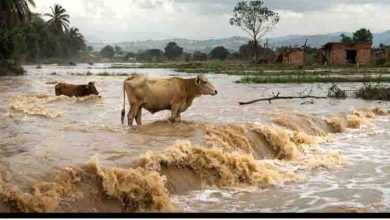
Pakistan is already suffering from torrential rains and severe floods that have claimed hundreds of lives, displaced thousands of families, and destroyed vast stretches of agricultural land. India’s sudden release of excess dam water has aggravated:
-
Flood levels in Chenab and Ravi rivers
-
Rising danger at Kotri Barrage in Sindh
-
Destruction of villages, homes, and crops downstream
-
Increased risk to already vulnerable populations
This escalation has turned a natural disaster into a man-made catastrophe, fueling accusations of water terrorism.
UN’s Role in Addressing Water Terrorism
Tessori urged the United Nations to intervene and hold India accountable.
He stressed that deliberate manipulation of water resources during peak floods amounts to a violation of international humanitarian law and threatens regional peace.
Experts argue that water should be treated as a shared humanitarian resource, not as a weapon of conflict. Global organizations like the UN Water, World Bank, and UNDP have previously advocated for cooperative management of transboundary rivers.
Read more about UN Water’s mission
Flood Devastation Across Pakistan
The monsoon floods in Pakistan have already:
-
Claimed hundreds of lives
-
Left thousands injured
-
Destroyed tens of thousands of homes
-
Submerged critical infrastructure, including roads and schools
Tessori warned that India’s release of dam water will worsen the crisis, putting millions more at risk.
Calls for Unity and Humanitarian Aid
Tessori urged religious scholars, philanthropists, and the public to unite in supporting flood victims.
-
He appealed for special prayers for affected families.
-
He called on wealthy individuals to extend immediate assistance.
-
He reassured that government institutions and people of Pakistan stand united against water terrorism.
This unity, he stressed, is essential to withstand both the natural and political dimensions of the disaster.
India-Pakistan Water Politics and Indus Treaty
The conflict over shared rivers between India and Pakistan is not new. The Indus Waters Treaty (1960) governs river water distribution, but frequent disputes have strained relations.
India has been accused of using water as a geopolitical weapon, while Pakistan sees it as a threat to its food security, economy, and survival.
-
In 2019, India threatened to divert waters after Pulwama tensions.
-
In 2023, India sought to modify the Indus Waters Treaty unilaterally.
-
Now, accusations of water terrorism resurface amid floods.
Related reading: Indus Waters Treaty Explained
For Pakistan, water is not just about agriculture but about national security.
Conclusion: Global Responsibility Against Water Terrorism
The crisis highlights how climate change, floods, and political hostility can combine into a humanitarian disaster. Tessori’s call to the United Nations reflects Pakistan’s demand for global recognition of water terrorism as a threat to peace.
Unless managed with fairness and cooperation, South Asia risks plunging into deeper conflicts over water—a resource that should unite, not divide.
Pakistan’s resilience depends on unity, humanitarian support, and international advocacy. The world must recognize water terrorism as a crime against humanity and take urgent steps to prevent its recurrence.