
Small Dams Vital for Enhancing Water Resilience, Combating Climate Change Impact: Experts
Institute of Regional Studies (IRS) in collaboration with the Human Development Foundation (HDF) a roundtable discussion on Enhancing Water Resilience
- Institute of Regional Studies (IRS) in collaboration with the Human Development Foundation (HDF) a roundtable discussion on Enhancing Water Resilience
Islamabad: Small dams in Pakistan are highly important for enhancing water resilience and combating climate change impact, experts expressed these remarks during a roundtable discussion hosted by the Institute of Regional Studies (IRS) in collaboration with the Human Development Foundation (HDF) at Islamabad.
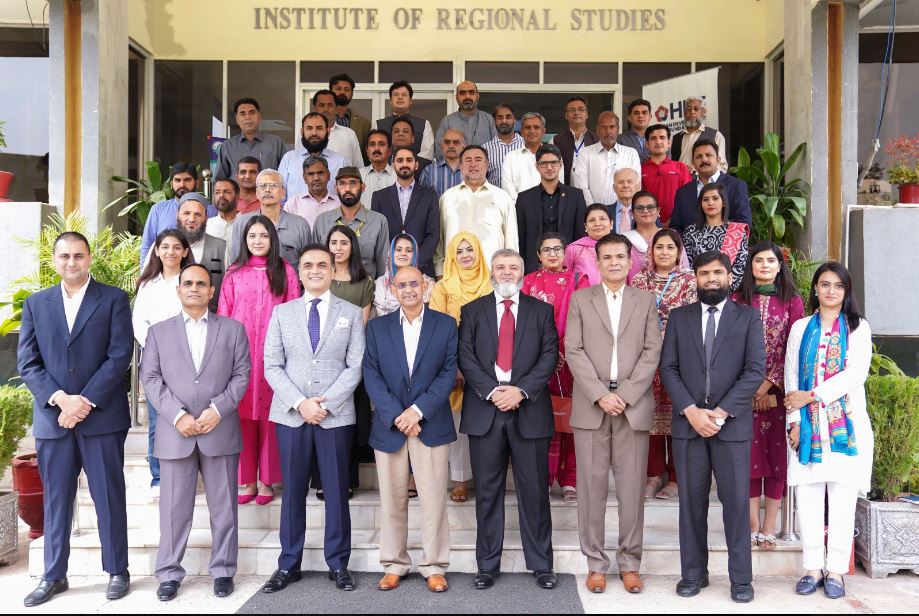
The event brought together field experts and relevant stakeholders to discuss the pressing challenges of climate change and sustainable development with a special focus on Soon Valley, District Khushab.
Mehboob ul-Haq, CEO. HDF, in his opening remarks, commented that it was through our collective efforts that we could chart a clear path towards a more resilient and sustainable future through the construction of small dams.
He reflected on HDF’s projects in Soon Valley to establish a climate-resilient smart community including the construction of Afaf Dam, cultivation of olive, peach, and blueberries as well as pioneering the use of smokeless stoves that run on biomass pellet fuel.
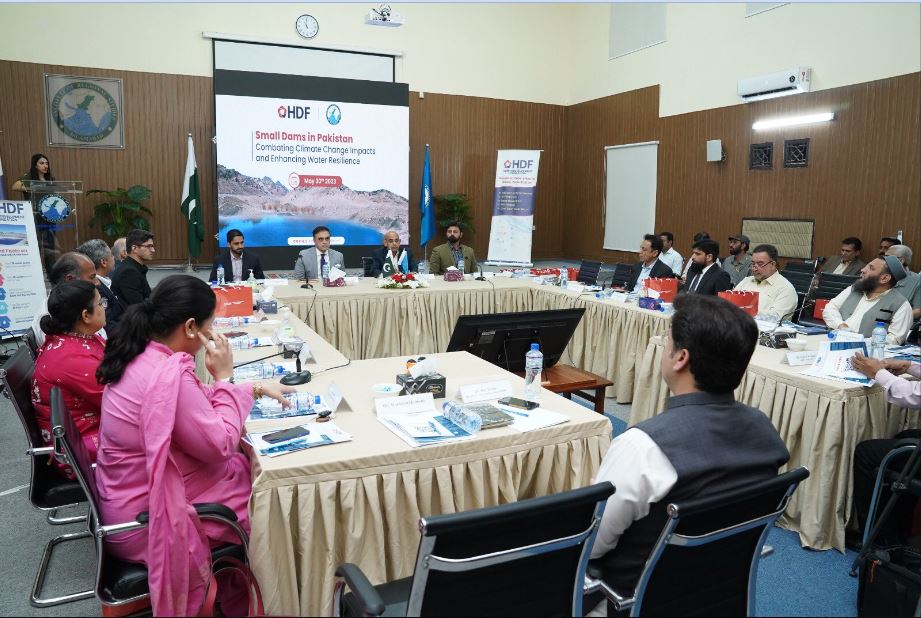
Asim Jamal from the International Union for Conservation of Nature (IUCN) pointed out the need for the plantation of crops that require less water and offer maximum economic benefits for the local communities. Selina Irfan from Climate Chain Consulting suggested taking a bottom-up approach rather than a top-down one, contending that community engagement lied at the heart of all development initiatives and had to be registered as such.
The conservation of wetlands, biodiversity, and the overall ecosystem at the Ramsar sites in Soon Valley was also stressed upon, exploring the significance of undertaking eco-tourism initiatives in the region. Experts agreed that a strong public-private partnership was imperative for sustainable community building in the country. The speakers emphasised the sustainability of interventions taken in this regard as well as the engagement of the community in development projects.
The panelists shared insights and expertise on these transformational initiatives. In his closing remarks, Nadeem Riyaz, President, of IRS, commented that no government was capable of doing everything on its own and that we needed to join hands together to make Pakistan a prosperous country.