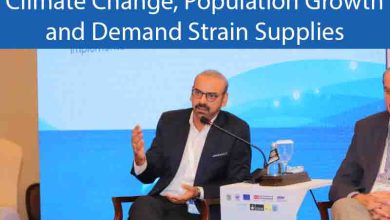

Unlocking Billions for Climate Action: Minister Calls for Public-Private Partnerships at CFA Pakistan Launch
At the CFA Pakistan launch in Islamabad, Minister Musadik Malik urges public-private collaboration to unlock climate investment for low-carbon and resilient development.
Pakistan took a significant step toward mobilizing climate investment with the official launch of the Climate Finance Accelerator (CFA) Pakistan in Islamabad, an initiative aimed at bridging the gap between climate-smart projects and global investors.
Attending the ceremony, Federal Minister for Climate Change and Environmental Coordination Dr. Musadik Malik emphasized that Pakistan’s climate future depends heavily on robust collaboration between the public sector, private businesses, and development partners.
The initiative comes at a critical moment, as Pakistan faces escalating climate risks including floods, droughts, water scarcity, and energy insecurity — all of which threaten economic stability and livelihoods.
Public-Private Partnerships: The Engine of Climate Solutions
Addressing government officials, entrepreneurs, and international partners, Dr. Malik stressed that public-private partnerships (PPPs) are essential to unlocking the scale of finance needed to combat climate change.
“Pakistan faces complex climate challenges, and public-private partnerships are essential to unlock resources, technical expertise, and innovation that can transform these challenges into opportunities for growth,” he stated.
The minister highlighted that government policies alone cannot deliver climate resilience without private sector capital, technological innovation, and entrepreneurial energy.
Climate Finance at the Core of National Development
Dr. Malik framed climate investment not as an environmental luxury, but as a strategic economic necessity.
He explained that accelerating funding for:
- Renewable energy projects
- Climate-resilient infrastructure
- Sustainable agriculture
- Waste management systems
is critical for achieving Pakistan’s low-carbon development targets while creating green jobs and boosting economic growth.
With climate disasters costing Pakistan billions of dollars annually, proactive investment is increasingly viewed as a form of economic risk management.
Youth and Startups as Climate Change Innovators
A major focus of the minister’s speech was the transformative role of youth-led enterprises and climate startups.
Pakistan’s young population, he noted, holds immense potential to:
Develop clean technologies
Build climate-resilient businesses
Drive innovation in energy and agriculture
Create sustainable employment
By providing mentorship, technical assistance, and investor access, CFA Pakistan aims to convert promising ideas into commercially viable climate solutions.
How the Climate Finance Accelerator Operates
The Climate Finance Accelerator Pakistan functions as a deal-oriented platform that strengthens the investment readiness of climate projects.
Its support includes:
✔ Financial structuring guidance
✔ Bankability assessments
✔ Risk mitigation strategies
✔ Gender and social inclusion frameworks
✔ Direct engagement with investors
Since its launch in 2022, CFA Pakistan has already:
Supported 22 climate projects
Mobilized nearly US$40 million in investment
Covered renewable energy, transport, agriculture, and waste sectors
Priority Sectors Driving Climate Transformation
CFA Pakistan’s latest Call for Proposals targets high-impact sectors, including:
| Sector | Climate Impact |
|---|---|
| Renewable Energy | Cuts emissions, improves energy security |
| Transport | Reduces pollution & fuel dependence |
| Waste Management | Lowers methane emissions |
| Agriculture | Boosts resilience & food security |
| Forestry & Land Use | Enhances carbon sinks |
Eligible businesses must have:
At least 3 years of operations
Minimum investment requirement of US$4 million
Selected projects receive five months of pro bono technical support to enhance investment readiness.
UK Government’s Role in Climate Finance Mobilization
The CFA is funded by the UK Government through its International Climate Finance programme, reflecting the UK’s commitment to supporting climate resilience in vulnerable countries like Pakistan.
Sam Waldock, Development Director at the British High Commission Islamabad, emphasized that:
- Private sector capital is critical to closing Pakistan’s climate financing gap
- De-risking investments is key to attracting global investors
- Partnerships can accelerate scalable climate solutions
The programme is implemented in Pakistan by DAI, with global delivery support from PwC UK.
Bridging Pakistan’s Massive Climate Financing Gap
Experts estimate Pakistan requires billions of dollars annually to meet its climate adaptation and mitigation needs.
Current challenges include:
Limited private sector participation
High investment risks perception
Weak project bankability
Regulatory complexities
CFA Pakistan directly addresses these barriers by:
Strengthening project design
Improving financial credibility
Connecting projects to investors
Climate Investment as a Green Growth Strategy
Beyond environmental protection, climate finance offers:
Job creation
Infrastructure development
Energy security
Agricultural resilience
Dr. Malik stressed that climate investment should be viewed as a driver of inclusive economic growth, not merely a climate obligation.
The Way Forward: Turning Risk into Opportunity
Concluding the event, Dr. Malik urged all stakeholders — government bodies, private enterprises, investors, and development partners — to work collectively to transform Pakistan’s climate challenges into development opportunities.
“With coordinated action and innovative solutions, Pakistan can turn climate challenges into opportunities for communities and the nation at large.”
Final Takeaway: Climate Finance Is Pakistan’s Resilience Lifeline
The launch of CFA Pakistan represents a strategic shift toward market-driven climate solutions — combining policy support, private capital, and innovation.
If scaled effectively, such initiatives can:
Strengthen climate resilience
Accelerate low-carbon development
Attract international investment
Build sustainable livelihoods
For Pakistan, climate finance is no longer optional — it is central to national survival and prosperity.