
#COP27: Combating Global Water Crisis by Using AI,API, Applications
#COP27: Combating Global Water Crisis by Using AI, API, Applications
Fresh water is a scarce resource, and it’s getting scarcer year by year. This water scarcity seems the worst of all problems out world is facing today. Theses water crisis must not take backseat as regards the agenda for global development. From a lack of freshwater in urban areas to droughts in Pakistan and India to contaminants around the world, the water related-problems are leading, in many ways, our homes, our agri-farms, and our water systems in diverse troubles, low agri-production and food shortages. But some science and technology are offering solutions in making our water system sustainable by using artificial intelligence, digital tools, APIs, a data mining, applications and machine learning.
AI technology can; support to find sustainable water solutions with the power of the cloud; unlock innovations to address tough issues of water scarcity; and help for climate Actions in various forms, formats and races and regions. Numerous science organizations, scientists, volunteers and startups have come forward with numerous innovative to help the global community solve the environmental, climate change and water challenges.
For instance, #Microsoft launched AI for Earth in 2017. Over its five-year span, this program has empowered individuals and organizations to develop innovative solutions to monitor, model, and ultimately manage Earth’s natural systems through grants, technology, and access to data. Under the AI for Earth initiative, AI technology and cloud software are being used to solve global #environmental challenges like #Climate, #Agriculture, #Biodiversity, and #Water by awarding grants to support projects. Azure compute credit grants provided the researchers, scientists and organizations with Azure credits worth $5,000, $10,000, or $15,000, depending on their project scope, to start using Azure AI tools and cloud computing with existing labeled dataset to combat the environmental and climate and water scarcity challenges. So far, Azure Project has supported over 950 projects located all around the world, and more than 50 strategic partners are working with Azure that has deployed over 20 impactful solutions worldwide.
Moreover, besides funding projects, several research publications (ADB,2020) have suggested and emphasized the need for digital transformation in water distribution operations through the use of artificial intelligence, which can help enhance water service delivery, reduce costs, and address unaccounted-for-water problems, the world is facing today.
For industrial usage of AI aimed for water purification, Amir Barati Farimani, assistant professor at Carnegie Mellon University, in Mechanical Engineering Department, is using AI to provide the world with drinking water. He is investigating new possibilities in water purification by using AI agents in the desalination process. Barati Farimani and his team have researched using artificial intelligence (AI) agents to design an improved method in a week that would likely take decades. In their project, the AI agent helps to decide which atoms should be sequentially removed from this graphene membrane, creating the most efficient geometry of a pore for the desalination process.
Another milestone research project taking place in North America, where Mr Gaffoor at Waterloo’s Department of Environmental Engineering, has co-founded an innovative AI project, EMAGIN, which builds artificial intelligence-supported software to help water utility systems become more efficient and resilient, and it is bringing “a measurable impact on society.” The co-founder of EMAGIN says “I’m very passionate to see our local utilities improve their efficiency for our communities. I’d like to see us grow in our own backyard.” Now, #EMAGIN is working with several US-based food and beverage companies and a few Canadian municipalities to conserve water.
Professor Junhong Chen, having molecular engineering background at the University of #Chicago and the lead water strategist at UChicago-affiliated Argonne National Laboratory, is using AI to address many of our global water crises in some surprising ways. He is using machine learning and electric plants to tackle drinking water challenge, wastewater treatment, removing contaminants, recovering energy containing the wastewater and adding better energy footprint.
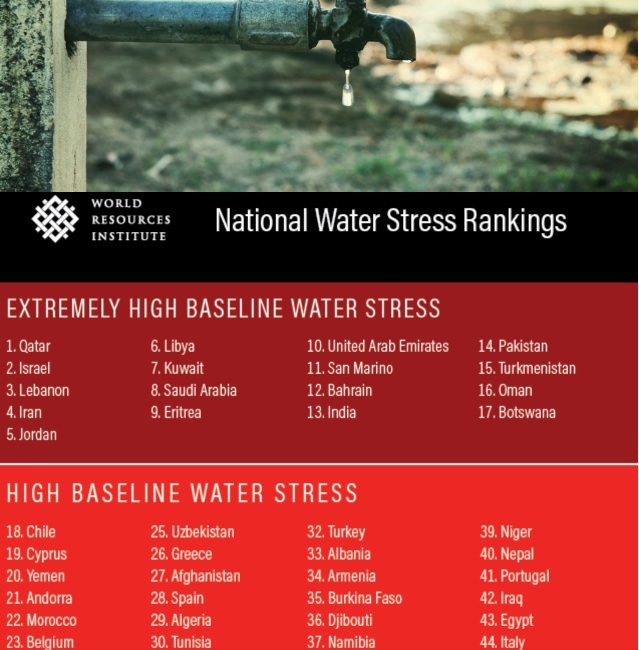
Some 17 countries, home to one-quarter of the world’s population, face ‘extremely high’ levels of baseline water stress, where irrigated agriculture, industries and municipalities withdraw more than 80% of their available water supply on average every year, according to reports of World Resources Institute.
Artificial Intelligence is being used into every sector for the good, making lives easier, efficient and better. AI offers abundance of the benefits the water industry. As the facts show Water is the most essential natural resource for human life but water is scare source. There is only 2.5% of the earth’s water which is freshwater. And, out of the total, only 0.5% is available freshwater, hence ringing an alarm for the need to conserve and manage this natural resource better.
The constantly a narrowing gap between supply and demand of water is leaving countries vulnerable to droughts, heat-waves, and deleting water sources are pushing more and more communities face their own “Day Zeros” or other versions of water crises.
These facts and reports show that water crisis in world are as real and alarming for California as it is for Karachi in Pakistan- wherein some one third of the country is hit by disastrous rains-, others are hit by droughts, thereby making the availability of fresh drinking water acute and scarce.
Here comes the marvelous role of AI into play. Artificial Intelligence has the potential to help purify, distribute and manage the existing water resources; water wells, public tanks, canals, rivers, streams, dams and artificial lakes as a valuable strategic measure to conserve water sources in a more efficient manner, and to cater the water needs of rapid urbanization, and rising population.
Asia is the place where 29 billion cubic meters of water is wasted through leakages which is enough water for 150 million people. AI technology can enable to stop these leakages. In fact, just a drop of water leakage is equal to 11,000 liters of water wasted every year. Thus, it becomes absolutely vital to work on water conservation by using AI technology and other digital tools including APIs and applications.
These facts on water scarcity, and AI projects are silver line for the water –related organizations facing water storages, distribution issues, and water leakage to use AI-based solutions to combat and fix the challenge, either challenges is detecting sources of contamination in the pipeline, or improving the water quality.
Against such a gloomy backdrop, let’s take an optimistic look at how artificial intelligence can play an important role in tackling water leakages, water quality management, smarter water distribution, transparent communication, and more water savings for the future generations.
Here comes the responsibility and support for water conservation initiatives. First, the invisible hand of the free market should come forward to bring power and potential of AI technologies into the mainstream. Secondly, government subsidies and incentives, public and private sector investments should encourage startups projects using AI for water conservation like AZ grants
Besides, AI for Water should be part of CSR initiatives that can bring relief to water-stressed areas, and humanity before this scare resources drives them ‘Day Zero’ events like the one that happened in Cape Town, South Africa.
By M.A,
#COP27, #WaterCrisis, #ClimateChange, #Environment