
Pakistan Vows to Protect Its Agricultural Heartland from Water Weaponization: A Grave Warning to the World
Pakistan water weaponization concerns take center stage at the UN as Islamabad warns that India’s suspension of the Indus Waters Treaty threatens regional peace, food security, and millions of livelihoods.
Pakistan water weaponization has emerged as a defining diplomatic flashpoint at the United Nations, as Islamabad warned that unilateral actions on shared rivers could destabilize South Asia and devastate millions of lives. Speaking at the UN Security Council (UNSC) in New York, Pakistan issued a stark warning that suspending cooperation under the Indus Waters Treaty (IWT) risks transforming water into a geopolitical weapon.
The appeal reflects Pakistan’s growing concern that water security—once governed by international cooperation—is increasingly being entangled with political coercion.
A Forceful Appeal at the United Nations Security Council
During an open debate at the UNSC, Pakistan’s Permanent Representative to the United Nations, Ambassador Asim Iftikhar Ahmad, condemned India’s unilateral suspension of the 1960 Indus Waters Treaty. He described the move as a “blatant breach of international obligations” and warned that it endangers lives across Pakistan’s fertile plains.
Ahmad emphasized that treaty compliance is a cornerstone of the international legal order, urging the global community to resist actions that undermine established norms governing shared natural resources.
“Water must unite nations, not divide them,” he stressed, warning that coercive hydro-political measures threaten peace.
Indus Waters Treaty: Backbone of Regional Stability
The Indus Waters Treaty, brokered by the World Bank, has long been regarded as one of the world’s most successful transboundary water-sharing agreements. It allocates the eastern rivers (Ravi, Beas, Sutlej) to India and the western rivers (Indus, Jhelum, Chenab) to Pakistan.
Despite wars and political crises, the treaty survived for over six decades—until now.
External reference: World Bank – Indus Waters Treaty
Pakistan argues that suspending treaty mechanisms undermines not only bilateral trust but also the credibility of international mediation frameworks.
Water Weaponization and the Threat to Pakistan’s Agriculture
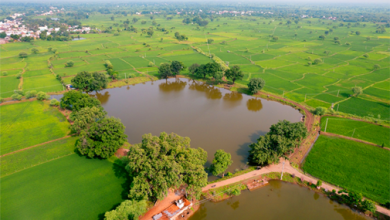
At the heart of Pakistan water weaponization fears lies the country’s agricultural heartland, which depends heavily on Indus Basin waters. According to Pakistani officials, halting treaty cooperation could lead to:
- Severe irrigation shortages
- Declining crop yields
- Food insecurity for millions
- Long-term desertification of fertile plains
Ambassador Zulfiqar Ali, speaking during Pakistan’s right of reply, warned that manipulating river flows amounts to weaponizing water, a tactic that could trigger humanitarian and ecological crises.
Agriculture contributes nearly one-quarter of Pakistan’s GDP and employs a large portion of the rural population, making water disruption a direct threat to national stability.
India’s Position and Conditional Treaty Suspension
India’s Ambassador to the UN, Parvathaneni Harish, defended New Delhi’s stance by asserting that the treaty would remain in abeyance until Pakistan “credibly and irrevocably” ends what India describes as support for cross-border terrorism.
Harish rejected portrayals of India’s actions as hydro-aggression, framing them instead as a response to broader regional security concerns. He also disputed narratives suggesting Pakistan emerged victorious from the May 10 military confrontation, emphasizing that India’s concerns extend beyond water-sharing.
Pakistan’s Legal and Moral Rebuttal
Pakistan strongly rejected India’s conditionality, arguing that international treaties cannot be suspended unilaterally or linked to unrelated political disputes.
Ambassador Ahmad recalled last year’s conflict, calling India’s actions an unprovoked breach of international law, and reiterated Pakistan’s inherent right to self-defense under Article 51 of the UN Charter.
External reference: United Nations Charter – Article 51
He warned that allowing such precedents would weaken global legal frameworks governing shared rivers, from the Nile to the Mekong.
Kashmir, Governance, and Regional Instability
In its right of reply, Pakistan also criticized India’s internal governance, accusing New Delhi of pursuing majoritarian policies that marginalize religious minorities. Islamabad further argued that India’s actions divert attention from its continued occupation of Jammu and Kashmir, which Pakistan identifies as the root cause of instability in South Asia.
According to Pakistan, unresolved political disputes—when combined with water coercion—create a volatile mix that threatens regional peace.
Why Water Security Is a Global Concern
Experts warn that Pakistan water weaponization is not an isolated issue. Climate change, population growth, and glacier melt are intensifying competition over freshwater worldwide.
The UN Water framework recognizes access to water as a fundamental human right, cautioning against its use as a political tool.
External reference: UN Water – Water and Peace
If left unchallenged, unilateral actions could erode decades of progress in cooperative water governance.
International Law and the Future of Transboundary Rivers
International legal experts argue that treaties like the IWT are designed to withstand political shocks. Suspending them sets a dangerous precedent that could destabilize other transboundary river agreements across Asia and Africa.
Pakistan has urged the international community to reaffirm that water-sharing agreements must remain insulated from political disputes, emphasizing that sustainable peace depends on cooperation, not coercion.
Conclusion: A Test for the Global Order
Pakistan water weaponization concerns represent more than a bilateral dispute—they are a critical test for the international legal order. As climate stress intensifies global water scarcity, the world faces a choice: uphold cooperative frameworks or allow water to become a tool of pressure.
Pakistan’s message at the UNSC was unequivocal—weaponizing water threatens humanity itself. Whether the global community heeds this warning may shape the future of water diplomacy for generations to come.