
Strengthening Agri Trade Ties between Pakistan & Uzbekistan: 7 Powerful Breakthroughs for Regional Food Exports
Agri Trade Ties between Pakistan & Uzbekistan marks a powerful breakthrough in potato and citrus exports, unlocking new regional trade routes and agricultural cooperation.
Strengthening Agri Trade Ties between Pakistan & Uzbekistan has emerged as a positive and strategic breakthrough for regional food security, export diversification, and bilateral economic cooperation. A high-level meeting held at the Ministry of National Food Security & Research (MNFS&R), Islamabad, reflects a renewed commitment by both countries to overcome trade bottlenecks and unlock the full potential of agricultural exports—particularly potatoes, citrus, pomegranates, and grapes.
The meeting was chaired by Mr. Amir Mohyuddin, Federal Secretary, MNFS&R, and attended by a delegation from Uzbekistan’s Quarantine & Plant Protection Department, led by Mr. Ibrohim Ergashev. The discussions highlighted opportunities, challenges, and future collaboration frameworks that could significantly reshape agri trade dynamics between the two nations.
Pakistan–Uzbekistan Agri Trade: A Growing Partnership
Strengthening Agri Trade Ties between Pakistan & Uzbekistan aligns with Pakistan’s broader strategy of expanding agricultural exports to Central Asia. Uzbekistan has rapidly emerged as a key market, driven by its rising food demand and limited domestic yields. Pakistan’s geographic position, fertile land, and seasonal advantage make it a natural supplier of fresh produce.
Export Potential of Pakistani Potatoes and Citrus
Mr. Amir Mohyuddin emphasized Pakistan’s strong export capacity in potatoes and citrus fruits. Pakistan produces surplus potatoes with consistent quality standards, while citrus—particularly kinnow—remains a flagship export with growing demand in Central Asia.
Pakistan’s citrus season offers Uzbekistan access to fresh fruit during a crucial supply gap, making timely trade facilitation essential.
Rising Trade Trends over the Last Two Years
A key highlight of the meeting was the steady increase in agri exports between Pakistan and Uzbekistan over the past two years. This growth demonstrates improving trust, market compatibility, and logistical coordination—clear indicators that Strengthening Agri Trade Ties between Pakistan & Uzbekistan is already delivering results.
Alternate Trade Routes and Regional Connectivity
To address logistical disruptions, Pakistan has identified an alternate trade route via Iran, ensuring uninterrupted movement of agricultural goods. This route is expected to reduce delays, minimize spoilage, and enhance exporter confidence—especially during peak citrus export months.
Such connectivity is vital for sustaining Strengthening Agri Trade Ties between Pakistan & Uzbekistan amid regional transit challenges.
Citrus Export Window: A Critical Concern
Mr. Amir Mohyuddin raised serious concerns over delays in import permit issuance by Uzbek authorities. He stressed that Pakistan’s citrus export window is time-sensitive, and administrative delays could result in missed opportunities and financial losses.
In response, the Uzbek delegation acknowledged the issue and committed to swift action.
Uzbekistan’s Perspective on Agricultural Imports
Mr. Ibrohim Ergashev provided valuable insights into Uzbekistan’s import requirements, noting that:
- Uzbekistan is one of the largest importers of Pakistani potatoes
- Demand for high-quality citrus is steadily increasing
- Pakistan remains a preferred supplier due to consistency and price competitiveness
He assured that an urgent meeting with the Director General, DPP, would be convened to resolve citrus-related concerns.
Pakistan’s Competitive Yield Advantage
One of the most striking revelations was Pakistan’s exceptional yield performance. According to Mr. Ergashev:
- Pakistan produces 50–60 tons per hectare
- Uzbekistan’s average yield stands at around 20 tons per hectare
This significant difference gives Pakistan a powerful competitive advantage, reinforcing the importance of Strengthening Agri Trade Ties between Pakistan & Uzbekistan.
Research Collaboration and Technology Exchange
The Uzbek delegation expressed strong interest in collaboration between PARC (Pakistan Agricultural Research Council) and Uzbekistan’s research institutions. Joint research could improve seed quality, pest resistance, and climate resilience—critical factors in sustainable agriculture.
Processing Units Visit and Value Addition
Mr. Ergashev also briefed participants on an upcoming visit of the Uzbek delegation to Pakistan’s citrus and potato processing units. This visit aims to explore value-added opportunities, packaging standards, and post-harvest technologies.
Export Protocols Signing: A Milestone Achievement
At the conclusion of the meeting, both sides witnessed a historic export protocols signing ceremony for pomegranates and grapes. This landmark agreement expands the trade basket and symbolizes growing mutual trust.
Formation of a Joint Working Group
To ensure continuity and swift problem resolution, it was agreed to establish a Joint Working Group. This platform will address:
- Trade facilitation issues
- Quarantine and certification challenges
- Market access expansion
This step institutionalizes Strengthening Agri Trade Ties between Pakistan & Uzbekistan for long-term success.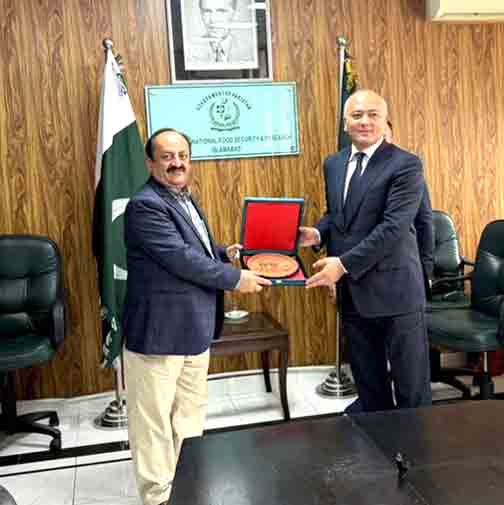
Strategic Outlook for Future Cooperation
The Islamabad meeting marks a positive turning point in Pakistan–Uzbekistan relations. With improved logistics, research collaboration, and policy coordination, both countries are well-positioned to scale up agricultural trade sustainably.
As regional food demand rises and climate pressures intensify, Strengthening Agri Trade Ties between Pakistan & Uzbekistan is not just an economic necessity—it is a strategic imperative for shared prosperity.