

Water shortage prompts clashes, Pakistan cautions at UNSC
UNITED NATIONS: In an UN Security Council banter on climate and water shortage, Pakistan has by and by stressed the requirement for severe adherence to the Indus Water Deal.
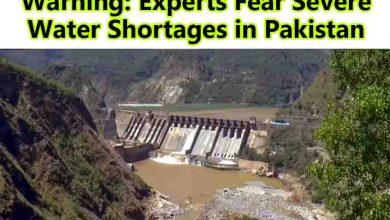
“Expanding water interest, combined with climate change influences, makes the potential for trans-boundary water debates in a few regions of the planet,” cautioned Pakistan’s UN emissary Munir Akram while tending to the council on Tuesday.
“Pakistan connects high need to the severe execution of the Indus Water Deal and expects to revitalize the Indus Stream bowl,” he said.
The Indus Water Deal is a 1960 water-dividing understanding among Pakistan and India, worked with by the World Bank. It assigns the waters of the Indus Waterway framework between the two countries.
Ambassador Akram brought up that the Indus bowl was the biggest bordering water system framework internationally, giving food security to more than 225 million individuals. To revitalize this water body, Pakistan has launched the complex Living Indus project.
Looking at softening ice sheets in Pakistan’s northern regions, he expressed that those were the biggest store of water, aside from the Northern and Southern ice covers.
“Outrageous temperatures are dissolving these ice sheets at a disturbing rate, and this, along with heavier storms, prompts monstrous floods, similar to the amazing floods which crushed Pakistan in 2022, causing harm more than $30 billion,” he cautioned.
Clashes on the ascent
Ambassador Akram then, at that point, cautioned the worldwide community that shortage and climate-incited catastrophes could prompt between state and intra-state clashes.
The UNSC is presently holding an undeniable level discussion on the effect of climate and food weakness on the support of worldwide harmony and security.
The Pakistani emissary encouraged the UNSC to assume a more huge part by authoritatively embracing vows made on climate change and maintainable turn of events, changing over them into compulsory responsibilities for part countries.
Ambassador Akram likewise underlined the rising disagreements regarding water at different levels, abuse of agrarian and creature pastures by psychological militant gatherings, and the rising grinding between adjoining seaside countries over fisheries and fishing freedoms.
Accentuating the interconnectedness of climate change and clashes, that’s what the ambassador noticed “climate change and food uncertainty are developing and compounding between state and intra-state clashes”.
He cautioned that disagreements about water — at the state, sub-public, and neighborhood community levels – were rising, and contending cases to rural and creature pastures were being taken advantage of by fear based oppressor gatherings and groups of thugs.
Ambassador Akram forewarned against ‘securitising’ the climate and improvement plan, accentuating that shortage was the main driver of contentions, and reasonable advancement is the best method for struggle counteraction.
He featured key choices made at COP 28, including graphing a pathway for a fair and evenhanded energy change, settling on focuses for the Worldwide Objective on Variation (GGA), and operationalising the Misfortune and Harm Fund.
The Pakistani emissary, nonetheless, communicated worry over the absence of progress in lessening outflows and giving sufficient climate finance. He underlined the requirement for created countries to lessen discharges by somewhere around 43% by 2030, in accordance with the guideline of CBDR and particular limits.
Moreover, he focused on the requirement for preparing the assessed $1.5 trillion yearly speculation for a change to ‘clean energy’, which stays a huge test.
Notwithstanding the commitments, both public and confidential interests in supportable framework in agricultural nations miss the mark, with the $100 billion yearly climate finance responsibility unfulfilled.
Ambassador Akram cautioned that unless the responsibilities made at COP28 and different conferences were carried out, accomplishing climate objectives and the Maintainable Advancement Objectives (SDGs) would turn out to be exceptionally difficult.
In an eminent proposition, Munir Akram recommended that the UNSC could contribute fundamentally to both climate and improvement objectives by supporting the responsibilities made on climate change and maintainable turn of events, changing them into restricting commitments.