
Pakistan’s Greatest Security Threat: 7 Shocking Truths About Water Crisis
Pakistan’s greatest security threat is water, not war. With falling supplies, climate shocks, and mismanaged agriculture, the country faces a survival crisis threatening food, energy, and stability. Learn the shocking truths and solutions.
Pakistan’s greatest security threat is water, not war. This stark reality defines the country’s present and future. With a population of 255 million today—expected to rise to 380 million by 2050—Pakistan is already officially water-scarce. By global standards, it is edging toward absolute scarcity, a stage where life, agriculture, and stability itself come under existential threat.
For decades, politicians, technocrats, and media commentators have reduced this complex survival crisis to a sterile debate about dams. But dams are not a strategy—they are a distraction. Without regulation, reform, and integrated planning, Pakistan risks famine, social unrest, and national collapse.
Falling Per Capita Water Availability
Pakistan’s water availability has plunged dramatically:
- 1990s: ~1,700 cubic meters per person
- 2021: ~1,107 cubic meters
- 2025: ~860 cubic meters (current estimate)
This is well below the UN water scarcity threshold of 1,000 cubic meters—and alarmingly close to absolute scarcity at 500 cubic meters.
What does this mean?
- Lahore’s groundwater is falling nearly 1 meter annually.
- Sindh’s aquifers are contaminated by saline intrusion.
- Reservoirs are shrinking.
- Food insecurity is worsening.
Water insecurity is not an abstract concept—it is an unfolding disaster with real impacts on health, food, and stability.
The Dam Debate: A Dangerous Distraction
Public debate remains locked on whether to build more dams. While reservoirs have their place, they cannot address the deeper failures:
- Population growth: 5 million more people every year (a new Lahore every 3 years).
- Unregulated groundwater use: Aquifers are being mined unsustainably.
- Outdated irrigation: Wastage exceeds 50%.
- Weak governance: Mismanagement persists across provinces.
Obsessing over dams while ignoring systemic failures is like treating cancer with aspirin.
Agriculture’s Unsustainable Water Use
Over 90% of Pakistan’s freshwater is consumed by farming, yet irrigation remains highly inefficient:
- Flood irrigation wastes up to 60% of water.
- Canal efficiency is below 40% in Punjab and Sindh.
- Farmers mine groundwater without regulation.
Worse, crop patterns betray national priorities.
- Pakistan exports sugarcane and rice (the thirstiest crops).
- Pakistan imports wheat (the staple food of the poor).
- In the past 5 years, \$4.5 billion was spent on wheat imports.
- The 2024–25 food import bill hit \$8.14 billion.
This is economic suicide for an agricultural nation.
Urban Water Mismanagement and Health Risks
The crisis is not rural alone. Urban centers face collapse:
- Karachi loses over 30% of piped water to leaks and theft.
- Water tanker mafias sell stolen water at 10x official rates.
- Lahore’s aquifer sinks 1 meter annually.
- Studies show up to 50% of urban water samples are unsafe—contaminated with E. coli, arsenic, and pathogens.
The result:
- Millions of diarrheal cases yearly.
- Thousands of child deaths.
- Billions lost in productivity.
This is the human face of hydraulic mismanagement.
Climate Change and the Indus Basin Crisis
Pakistan is among the 10 most climate-vulnerable nations.
The Indus Basin—fed by glaciers and monsoons—is destabilizing:
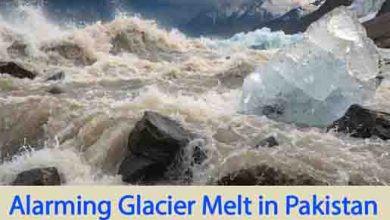
- Glaciers retreating rapidly.
- Erratic monsoons: devastating floods and droughts.
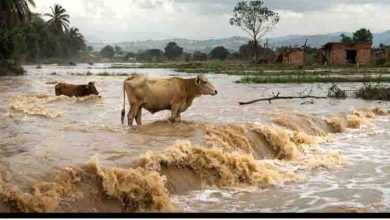
- 2010 floods: 20 million displaced.
- 2022 floods: one-third of the country submerged, 33 million affected, \$30 billion in damages.
This is not the future—it is the present reality.
Provincial Tensions and the Federal Fault Line
Water scarcity fuels inter-provincial mistrust:
- Sindh accuses Punjab of stealing flows at Guddu and Kotri.
- KP resents federal control over Bhasha.
- Balochistan suffers chronic neglect.
Even the 1991 Water Accord is contested today. Without transparent data and trust, cooperation will collapse.
Why India Is Not the Real Threat
Politicians often blame India for manipulating Western rivers under the Indus Waters Treaty. Yet facts matter:
- India has built no large storage dams on Chenab or Jhelum.
- Hydropower projects remain within treaty limits.
- The real problem is domestic mismanagement—not external sabotage.
While India and China modernized canal lining and watershed management, Pakistan squandered decades in sterile debates.
The Way Forward: A National Survival Strategy
To address Pakistan’s greatest security threat is water, bold reforms are needed:
- National Commission on Water, Food, and Energy Security – a federal–provincial body accountable to parliament.
- Population control – curb unsustainable growth.
- Agriculture reform – phase out flood irrigation, reduce sugarcane, promote wheat and pulses.
- Urban water regulation – crackdown on tanker mafias, fix leaks, monitor quality.
- Integrated planning – link water with energy and food strategies.
- Fiscal realism – incremental reforms over unaffordable mega-projects.
National security today is not about tanks or jets. A nation that cannot feed its people or provide safe drinking water cannot survive.
Conclusion: Treating Water as National Security
Since independence in 1947, Pakistan has faced many external challenges. Yet today, the collapse of the water system is the gravest threat of all.
Water is not just a development issue—it is the backbone of security, economic resilience, and national survival.
The choice is clear: either move beyond the “dams or no dams” debate and adopt an integrated survival strategy—or face the consequences of famine, unrest, and collapse.
The time for statesmanship is now. Pakistan’s greatest security threat is water, not war—and the nation’s future depends on recognizing this truth.