
2025 FELLOWSHIPS AT VOICE OF WATER
Climate Change

Islamabad Demands Urgent, Predictable Climate Financing to Safeguard Its Future

Pakistan calls for predictable climate financing at COP30 side event, urging grant‑based support to address loss and damage, debt distress, and protect vulnerable children.

Predictable climate financing has emerged as a powerful demand from Pakistan during COP30 in Belém, Brazil. At a high‑level side event titled “Operationalising Loss and Damage: Financing Resilience and Recovery in Vulnerable Countries,” Islamabad made an impassioned appeal for grant-based, rapid, and reliable funding to help climate‑vulnerable nations recover and build resilience.


Pakistan’s Plea at COP30

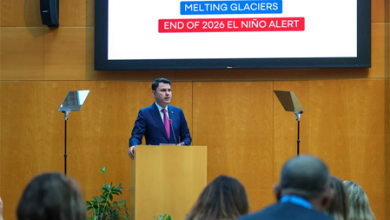
Pakistan’s government, through its Ministry of Climate Change and UNICEF, organized this critical side event to elevate the voice of vulnerable nations. Climate Change Secretary Aisha Humera Moriani underscored that, despite contributing less than 1% to global greenhouse gas emissions, Pakistan is bearing the brunt of intensifying climate shocks. She recalled the catastrophic floods of 2022 and 2025, which displaced millions, devastated infrastructure, and inflicted multi‑billion‑dollar economic losses.

Moriani stressed that these “recurring disasters in developing countries underscore the disproportionate climate burden placed on nations that played almost no role in heating the planet.” Her keynote sent a clear and urgent message: predictability in climate financing is non‑negotiable if developing nations are to build a sustainable and resilient future.


Why Predictable Climate Financing Matters

Predictable climate financing is more than a buzzphrase — it is a lifeline. Without dependable, grant-based support, vulnerable countries are forced into short‑term solutions, patch‑work recovery, and repeated borrowing. At COP30, panelists emphasized that new, additional, and concessional funding must be transformational, not fleeting.

When financing is uncertain or tied to onerous conditions, recovery becomes fragile. Countries may rebuild roads today, only to have them washed away tomorrow. Concessional, predictable funding ensures that nations can plan long-term, build resilient infrastructure, and invest in social systems without plunging deeper into debt.


Debt Emergency and Repeated Disasters

Event participants warned that repeated climate shocks are pushing nations like Pakistan into a debt emergency. The side event highlighted how many vulnerable economies are borrowing simply to rebuild, in the absence of sufficient grant-based support. This cycle of borrowing undermines development gains and traps countries in a dangerous spiral of reconstruction and indebtedness.

Fiscal space in these countries is already constrained. When governments must divert resources to rebuild every few years, they cannot invest sufficiently in health, education, or sustainable growth. Predictable climate financing could break this cycle by providing the resources needed to build back better and avoid repeated financial crises.


Protecting the Most Vulnerable: Children

A central and powerful theme of the COP30 side event was the impact on children. Panelists highlighted that almost half of Pakistan’s population is under 18 — and it is this young generation that is bearing the greatest burden of climate stress.

Disasters don’t just destroy infrastructure; they erode the futures of children by disrupting nutrition, education, health, and mental wellbeing. Climate shocks can lead to schools being closed, families losing their homes, and children facing food insecurity. As Secretary Moriani poignantly said, “climate disasters … are robbing a generation of its right to safety and opportunity.”

This makes predictable climate financing not only an economic necessity but a moral imperative — to protect children’s rights and secure equitable development.


Operationalising Loss and Damage Mechanisms

The side event at COP30 served as a forum to strategize how to operationalise the global Loss and Damage mechanism. Representatives from the newly established Fund for Responding to Loss and Damage (FRLD) joined government officials, development partners, and experts to discuss systems for resilience and recovery.

Panelists underlined critical reforms such as:

  • Simplified application procedures: to make it easier for vulnerable countries to access funding.
  • Faster disbursement: because delays in funding worsen vulnerability.
  • Flexible financial windows: recognizing that one size does not fit all when it comes to climate impacts.

These proposals reflect calls from the Barbados Implementation Modalities (BIM), which aim to streamline support and ensure that funding reaches those most in need.


Glacial Melting, Desertification, and Slow‑Onset Events

The COP30 dialogue also addressed the importance of funding not just for sudden disasters but for slow-onset events like glacial melt, desertification, and sea level rise. These phenomena cause long-term harm, eroding livelihoods and worsening vulnerability over years or decades.

Panelists stressed that conventional disaster finance often overlooks these gradual but devastating processes. Without dedicated financial mechanisms that understand and account for slow-onset risks, communities remain exposed and underprepared.

Pakistan reaffirmed its commitment to working with the United Nations and international partners to craft an equitable framework for climate recovery — one that recognizes both acute disasters and chronic, creeping change.


Pakistan’s Proposals Under FRLD

According to a spokesperson from the Ministry of Climate Change, Muhammad Saleem Shaikh, Pakistan is preparing two proposals for the FRLD’s initial funding cycle. These proposals aim to rebuild critical social infrastructure and enhance resilience across key sectors:

  1. Agriculture – Enhancing climate-smart farming to protect livelihoods.
  2. Community Systems and Water Resources – Strengthening water management, community networks, and local institutions.

Shaikh emphasized that these proposals reflect Pakistan’s proactive approach: rather than just seeking relief, Islamabad is pushing for long-term resilience and adaptive capacity.


A Call for Climate Justice

Underlying Pakistan’s appeal is a broader demand for climate justice. The Ministry of Climate Change made it clear that funding must be guided by the principles of Common but Differentiated Responsibilities and Respective Capabilities (CBDR-RC). In short: those who have contributed most to climate change must step up.

“Climate justice demands immediate access. Our people cannot wait,” the ministry emphasized. The message is direct: rhetoric is not enough. Developed nations and multilateral institutions must translate their commitments into tangible, grant-based funding — quickly and reliably.


Conclusion

Pakistan’s urgent call for predictable climate financing at COP30 is a powerful reminder that climate change is not just an environmental issue — it is deeply entwined with justice, development, and debt. As Climate Change Secretary Aisha Humera Moriani and other leaders made clear, countries that have done the least to warm the planet are suffering disproportionately, rebuilding again and again with little support.

The establishment of the Fund for Responding to Loss and Damage offers hope, but only if it is backed by new, additional, and concessional resources, streamlined systems, and a commitment to equity. For Pakistan, and many vulnerable nations, predictable climate financing is not just a policy demand — it is a lifeline for survival, recovery, and a more resilient future.


Internal Links :

VOW Desk

The Voice of Water: news media dedicated for water conservation.
Back to top button