
One District’s Water Tale: How Nawabshah Is Paying the Price for Pakistan’s Water Neglect
contaminated drinking water in Sindh, waterborne diseases in Pakistan, XDR typhoid outbreak, clean water infrastructure Pakistan
The Nawabshah district — officially known as Shaheed Benazirabad — is facing a catastrophic water crisis that exposes deep failures in Pakistan’s public health governance.
Recent assessments reveal that 93 percent of water supply schemes in the district fail to meet basic health standards, pushing thousands of families — especially children — into daily exposure to contaminated drinking water.
This is not mismanagement. It is systemic abandonment.
With a population of nearly 1.8 million people, Nawabshah has become a case study in how unsafe water transforms poverty into mass disease.
When Drinking Water Becomes a Health Hazard
Between 70 and 74 percent of drinking water samples across the district are unsafe for human use.
Common contaminants include:
- E. coli bacteria
- Heavy metals
- Excessive sulfates
- Agricultural pesticides
Health authorities routinely warn residents against consuming tap and groundwater — a grim reality in a region where alternatives are financially impossible for most families.
A Preventable Tragedy Turning Into National Shame
Pakistan already ranks among the world’s worst countries for access to safe water and sanitation. But the crisis in central Sindh is particularly severe.
Water contamination is now linked to:
- Half of all diseases nationwide
- Around 40% of total deaths
- Nearly 94,000 waterborne deaths annually
- 56% of victims being children under five
Clean water — the most basic public health intervention — has become a luxury.
How Nawabshah Helped Fuel a Global Health Threat
Nawabshah’s proximity to Hyderabad placed it dangerously close to the epicenter of Pakistan’s extensively drug-resistant (XDR) typhoid outbreak.
From 2016 to 2021:
- Sindh reported over 5,700 confirmed XDR typhoid cases (excluding Karachi)
- Nearly 70% were concentrated in Hyderabad district
- 57% of typhoid samples nationwide showed drug resistance
Once easily curable, typhoid has now spread internationally — reaching the United States, United Kingdom, Canada, Australia, and Denmark.
What began as a sanitation failure has evolved into a global antimicrobial resistance threat.
Corporate Profits vs Public Health Reality
The global hygiene industry is booming — yet Pakistan’s poorest communities remain trapped in disease.
Major brands such as Unilever and Reckitt Benckiser dominate soap and detergent markets.
But according to national surveys:
- Nearly half of Pakistani households lack a handwashing facility with soap
Product innovation cannot replace clean water infrastructure.
Public health is not a consumer market problem — it is a governance failure.
Collapsing Infrastructure in Shaheed Benazirabad
The district’s municipal system oversees:
- 19 union committees
- Water supply networks
- Drainage systems
- Waste management
Yet it operates with:
- Deteriorating sewage lines
- Minimal water treatment capacity
- Contaminated groundwater (up to 80% saline in canal zones)
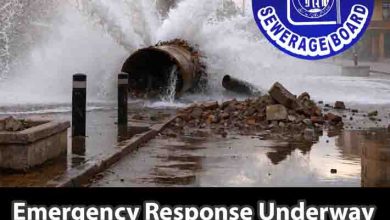
Emergency orders are issued regularly — but emergency measures cannot repair decades of neglect.
Hospitals Treating the Consequences, Not the Cause
Facilities like People’s Medical University Hospital serve as major referral centers — but no hospital can outpace contaminated water.
Common illnesses across Nawabshah include:
- Gastroenteritis
- Diarrhea
- Typhoid
- Hepatitis
- Kidney disorders
- Chronic skin diseases
Medicine treats symptoms. Clean water prevents disease.
What Global Health Data Confirms
According to the World Health Organization:
- Unsafe water and sanitation cause 74 million disability-adjusted life years annually
- Around 2.5% of global disease burden
Meanwhile, the Centers for Disease Control and Prevention reports:
- 2.3 billion people lack basic handwashing facilities
- 670 million have none at all
Simple hygiene interventions could cut diarrheal diseases by 30 percent.
The Economic Cost of Dirty Water
In Pakistan alone:
- WASH-related illnesses caused 32 million lost workdays
- Economic losses reached Rs116 billion in one year
This excludes:
- Lost education
- Stunted childhood development
- Long-term poverty cycles
Water contamination is not just a health crisis — it is a development killer.
The Myth of “No Resources”
Pakistan finds billions for:
- Motorways
- Prestige projects
- Military expansion
- Political patronage
But not for safe drinking water.
The crisis is not about money.
It is about priorities.
What Nawabshah Urgently Needs
Immediate Actions
Water treatment plants
Separate sewage and water pipelines
Universal handwashing access
Community health education
Medium-Term Reforms
Regulatory enforcement
Municipal accountability
Disease surveillance capacity
Long-Term Survival
Literacy investment
Agricultural contamination control
Public health–first governance
A Warning the World Should Not Ignore
The XDR typhoid outbreak in Sindh offers a preview of what happens when sanitation collapses:
- Resistant diseases thrive
- Healthcare systems fail
- Infections cross borders
No country is insulated from pathogens born in neglect.
Final Word
Nawabshah’s children are dying not from natural disaster — but from political choices.
The technology exists.
The solutions are known.
What is missing is accountability.
When future generations judge Pakistan’s development, they will not count highways or monuments. They will ask whether the nation protected its most vulnerable citizens.
Right now, Nawabshah stands as evidence that it did not.