
Looming Lint Crisis Sparks National Alarm as Cotton Sector Collapses
The looming lint crisis in Pakistan has triggered a steep 30% drop in cotton arrivals, threatening the textile economy and millions of livelihoods.
The looming lint crisis in Pakistan has become a stark reflection of the country’s deteriorating agricultural foundation. According to the Pakistan Cotton Ginners Association (PCGA), cotton arrivals have plummeted by 30% year-on-year, falling from 844,257 bales in 2024 to a mere 593,821 bales as of July 31, 2025.
This isn’t just an agricultural problem. Cotton is the lifeblood of Pakistan’s economy, feeding a textile sector that constitutes over 50% of the country’s exports. The implications are massive—stretching from rural farmers to urban garment factories, and ultimately, to national GDP.
Punjab’s Solitary Rise Amid National Collapse
In a sea of despair, Punjab stands as a rare success story. Despite national-level setbacks, the province saw a modest increase in its cotton output. Favorable conditions in South Punjab districts like Bahawalpur, Rahim Yar Khan, and Multan contributed to this unexpected growth.
But even Punjab’s data is under scrutiny. The Punjab Crop Reporting Service claims 609,000 bales were produced—twice the figure reported by the PCGA. Such discrepancies only add to confusion and fuel mistrust among stakeholders.
Sindh’s Catastrophic Fall in Cotton Output
Sindh, once a dominant cotton-producing region, is now facing economic and agricultural devastation. Cotton output has collapsed by 47%, with Sanghar showing a 44% drop and Nawabshah plummeting 77%. Even more shockingly, Khairpur and Sukkur recorded zero bales.
The situation in Sindh reveals a regional disaster in motion—one that’s being largely ignored at the national level.
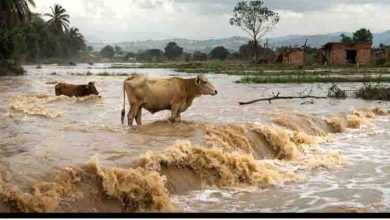
Alt Text: Looming Lint Crisis in Sindh’s cotton fields
Data Discrepancies and Institutional Confusion
The data mismatch between PCGA and provincial government reports has triggered concerns over transparency and accountability. With Punjab government figures being twice as optimistic, and Sindh’s collapse virtually unrecorded by local departments, the cotton crisis is becoming a battle of narratives.
Stakeholders are unsure whose data to trust—and without trust, policy direction is impossible.
Why Cotton Production Is Failing
The reasons for the looming lint crisis are both natural and man-made. Here’s a breakdown:
-
Extreme weather events, including prolonged drought and unexpected rains.
-
Pest infestations, particularly whiteflies and pink bollworms.
-
Water scarcity affecting major canals and tube wells.
-
Policy failures and bureaucratic inertia.
-
Lack of access to quality seeds and modern agricultural techniques.
-
Rising input costs without corresponding support mechanisms.
In essence, cotton farming is no longer viable for thousands of small and medium-scale farmers.
Policy Gaps and Lack of Modernization
One glaring issue is the 18% sales tax on raw cotton, which severely undermines farmers’ profits in both good and bad years. In a struggling economy, this kind of taxation is counterproductive.
Moreover, affordable credit is virtually absent. Small farmers—who form the backbone of cotton production—are unable to buy high-quality seeds or adopt modern practices.
Adoption of climate-resilient seeds is still negligible, and water-efficient drip irrigation systems are available to only a privileged few. Without these inputs, expecting a revival is wishful thinking.
The Urgent Need for a National Cotton Revival Strategy
If Pakistan wishes to salvage its textile-dominated economy, a comprehensive cotton revival policy is urgently needed. Key recommendations include:
-
Immediate withdrawal of the 18% sales tax on raw cotton.
-
Public-private partnerships to promote research on pest-resistant and drought-tolerant seed varieties.
-
Subsidized credit and input support for small and medium farmers.
-
Establishment of a National Cotton Board to streamline data, coordinate efforts, and monitor progress.
-
Digital platforms for farmers to receive real-time weather, pest, and crop advisory.
Without such reforms, Pakistan’s textile exports could shrink by billions, worsening its balance of payments crisis.
Conclusion: A Nation Unravelling One Bale at a Time
The looming lint crisis is not just a temporary shock—it is a systemic failure that threatens the very fabric of Pakistan’s economy. The collapse in cotton production, especially in key provinces like Sindh, reflects wider climate, governance, and economic failures.
If ignored, this crisis will leave a long-lasting stain on Pakistan’s agricultural history, destroy millions of livelihoods, and unravel its textile supremacy in South Asia.
Now is the time for action—not analysis paralysis. Stakeholders must rally to revive this once-thriving industry before it’s too late.