
Green Goals, Grey Gaps: The Harsh Reality of Pakistan’s Climate Promises
Pakistan’s Climate Promises face harsh realities amid global inaction. Despite bold green goals, the country struggles with floods, heatwaves, and fragile climate resilience. Discover the truth behind Pakistan’s climate crisis and justice call.
Pakistan’s Climate Promises face a reality both urgent and unjust. The nation contributes less than 0.9% to global carbon emissions but endures some of the world’s worst climate disasters. While powerful nations debate emission targets and financing frameworks, Pakistan’s people are already living through a daily climate crisis.
The 2022 floods were a brutal reminder of this imbalance—showing that climate change is not fair but profoundly unequal.
The 2022 Floods: A Costly Climate Catastrophe
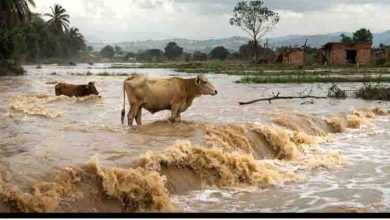
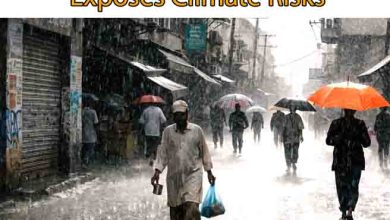
In 2022, Pakistan experienced a climate disaster of historic proportions. Torrential monsoon rains—three times higher than the national average—submerged one-third of the country. Over 33 million people were affected, with losses exceeding $30 billion.
Entire villages vanished, farmlands drowned, and vital infrastructure—schools, roads, hospitals—collapsed under water. The human cost went beyond economics; it shattered lives and communities.
Outbreaks of cholera, malaria, and dengue followed, worsening public health. Two years later, recovery remains painfully incomplete. Families in Sindh and Balochistan are still rebuilding, often without international support.
Heatwaves and Droughts: Pakistan’s Climate Extremes
If the floods were devastating, the following year’s heatwaves were merciless. In cities like Jacobabad, temperatures soared to 51°C, making it one of the hottest places on Earth. Outdoor work became impossible, threatening livelihoods across agricultural and construction sectors.
This cycle of floods and droughts defines Pakistan’s new climate normal. Each year, wheat, rice, and cotton crops—critical to food security—face destruction from either excessive water or scorching heat. This volatility has placed enormous pressure on Pakistan’s fragile economy and poor communities.
Melting Glaciers: The Silent Threat to Water Security
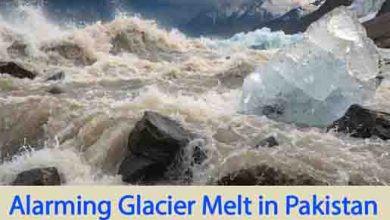
Beyond the plains, a silent climate catastrophe unfolds in the north. Pakistan’s 7,000+ Himalayan and Karakoram glaciers—the world’s largest outside the poles—are melting rapidly.
They feed the Indus River system, the lifeline for 220 million people. Accelerating melt rates are triggering glacial lake outburst floods (GLOFs), destroying villages in Gilgit-Baltistan and Chitral.
In the long term, this threatens water availability, agriculture, and hydropower generation—raising the specter of a severe water crisis within decades.
Pollution, Poverty, and Inequality
Pakistan’s air quality ranks among the worst globally. Cities like Lahore and Karachi now experience toxic smog for months. According to IQAir’s Global Air Quality Report, Lahore has often topped the list of the world’s most polluted cities.
Rivers, too, are choking with industrial waste, sewage, and pesticides. Pollution worsens poverty as clean water, arable land, and healthy air become luxuries. For women and children in rural Sindh and Balochistan, walking miles for safe drinking water has become routine.
This deepens the climate justice divide—the poorest Pakistanis, who contribute least to emissions, pay the highest price for global inaction.
Pakistan’s Green Goals vs. Grey Gaps
Pakistan has articulated ambitious plans under frameworks such as Vision 2050, the 5Es Framework, and its Nationally Determined Contributions (NDCs) under the Paris Agreement.
The goals include:
- 60% renewable energy by 2030
- 10 Billion Tree Tsunami Programme
- 50% carbon emission reduction target
However, the reality tells a harder truth. These green goals face grey gaps in funding, governance, and political will.
Despite high-profile participation in COP29 (Baku) and preparations for COP30 (Brazil), tangible progress on adaptation and resilience is slow. The Loss and Damage Fund, advocated by Pakistan, remains underfunded and poorly operationalized.
The estimated annual adaptation cost of $7–14 billion far exceeds Pakistan’s fiscal capacity, particularly amid debt distress and inflation.
The Global Injustice: Who Pays the Price?
Climate change is no longer an environmental issue—it’s an issue of justice. The Global North continues to emit disproportionately while the Global South, including Pakistan, bears the brunt.
This is not about sympathy—it’s about accountability. The principle of Common but Differentiated Responsibilities (CBDR) must move from rhetoric to reality.
Developed nations must:
- Contribute fairly to the Loss and Damage Fund
- Provide climate financing and technology transfer
- Support countries like Pakistan in building resilience
Without such action, the climate discourse remains hollow—another series of broken promises dressed as progress.
What Pakistan Must Do Now
While global justice is essential, Pakistan must act locally to reduce its vulnerabilities. Priorities should include:
- Investing in climate-resilient infrastructure
- Strengthening disaster preparedness at provincial levels
- Expanding renewable energy projects to reduce dependence on imported fuels
- Supporting community-led adaptation programs in flood and drought zones
Internal coordination is equally vital. Climate change must not remain confined to the Ministry of Climate Change—it demands a whole-of-government approach involving health, agriculture, and planning ministries.
Conclusion: From Promises to Justice
The story of Pakistan’s Climate Promises is not just one of vulnerability—it’s one of resilience. Despite devastation, communities rebuild, replant, and resist.
But resilience has its limits. Without justice, funding, and global solidarity, even the strongest nations falter.
If fairness truly exists in global climate dialogue, it must start here—with Pakistan. The time for pledges has passed; the time for accountability, equity, and urgent action has arrived.