
From Ambition to Action: Climate Finance Key to Pakistan’s Green Future
Experts say Pakistan must improve climate finance coordination and investment pipelines to turn climate commitments into practical action and sustainable growth.
Climate change has emerged as one of the most significant economic risks facing countries across the globe. Environmental, social, and geopolitical pressures are increasingly interconnected, influencing global economic stability and shaping investment patterns.
For countries like Pakistan, which is among the most vulnerable nations to climate impacts, these challenges have profound implications for economic resilience, sustainable development, and long-term financial stability.
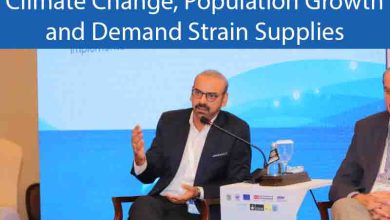
These issues were central to discussions at the 4th Pakistan Climate Conference, organised by the Overseas Investors Chamber of Commerce and Industry in Karachi last month.
The conference brought together policymakers, climate experts, development partners, and representatives from the private sector to examine how Pakistan can transform climate commitments into practical and scalable solutions.
Global Climate Finance Gap
One of the key themes highlighted during the discussions was the global imbalance between available capital and the financial resources needed to address climate change and sustainable development challenges.
Experts noted that global wealth is estimated at nearly $477 trillion, yet the annual financing gap to achieve the United Nations Sustainable Development Goals stands at around $4.2 trillion.
In theory, allocating less than one percent of global wealth annually could bridge this gap.
Similarly, developing countries require approximately $2.4 trillion annually to fulfil their commitments under the Paris Agreement on Climate Change, particularly their Nationally Determined Contributions (NDCs) aimed at reducing greenhouse gas emissions and strengthening climate resilience.
These figures highlight a critical reality: the world does not necessarily lack capital; rather, it faces challenges in mobilising and directing investment effectively.
Pakistan’s Climate Finance Landscape
For Pakistan, the challenge of mobilising climate finance is particularly complex.
Climate finance flows through multiple channels, including:
- Multilateral development banks
- International financial institutions
- Global climate funds
- Impact investors
- Domestic financial institutions
Government institutions in Pakistan have also begun developing policy frameworks aimed at guiding sustainable and green investments.
However, despite these efforts, experts at the conference emphasised that Pakistan’s climate finance ecosystem remains fragmented.
Various financial institutions operate with different mandates, risk tolerances, and timelines. As a result, financing tools, investment flows, and technical support mechanisms often operate independently rather than in coordination.
Challenges for Climate Projects
For businesses and project developers, this fragmentation creates several practical challenges.
Multiple entry points, inconsistent standards, and mismatched financing structures make it difficult for otherwise viable climate projects to attract sufficient investment.
As a result, many climate initiatives struggle to move beyond small-scale pilot projects and achieve the scale needed to generate meaningful environmental and economic impact.
Experts believe addressing these structural barriers will be essential for Pakistan to translate climate ambition into tangible action.
Building Coordinated Investment Pipelines
One of the key recommendations emerging from the conference was the need to move beyond isolated climate projects toward programmatic investment pipelines.
Instead of funding individual projects separately, policymakers and investors should focus on aggregating similar projects across sectors.
These sectors include:
- Renewable energy development
- Energy efficiency improvements
- Climate-smart agriculture
- Climate-resilient infrastructure
Creating larger, standardised investment portfolios could make climate projects more attractive to institutional investors and international financing institutions.
Such an approach would also enable projects to achieve greater scale and impact.
Risk-Sharing in Climate Investments
Another important recommendation discussed at the conference involved shifting the global climate finance model from risk avoidance to risk sharing.
Public institutions and development finance organisations can play a crucial role in reducing early-stage investment risks.
This can be achieved through financial tools such as:
- Guarantees
- Blended finance structures
- Risk-sharing mechanisms
- Climate insurance solutions
Once early risks are mitigated, private investors are typically far more willing to participate and provide large-scale financing.
This approach has already proven successful in several international climate investment programmes.
Importance of Climate Data and Transparency
Conference participants also emphasised the growing importance of climate-related data and disclosure frameworks.
Rather than being viewed solely as regulatory compliance requirements, climate disclosures can serve as powerful tools for attracting investment.
Transparent climate reporting, credible sustainability standards, and robust environmental data can significantly increase investor confidence.
For global investors evaluating opportunities in emerging markets, reliable sustainability information often plays a decisive role in investment decisions.
Opportunities for Pakistan’s Economy
Strengthening climate finance systems could bring significant economic benefits to Pakistan.
Investments in key sectors such as renewable energy, sustainable agriculture, water management, and resilient infrastructure offer opportunities not only for environmental protection but also for economic modernisation.
Such investments could help create new industries, generate employment opportunities, and strengthen the country’s long-term economic resilience.
Experts note that climate-friendly infrastructure and green technologies will likely play a central role in future economic development worldwide.
Role of the Private Sector
The private sector is expected to play a vital role in Pakistan’s transition toward a more sustainable economic model.
Several leading companies operating in the country have already begun investing in sustainability initiatives.
These initiatives include:
- Adoption of renewable energy solutions
- Improving resource efficiency
- Implementing circular economy practices
- Reducing industrial emissions
With supportive policies and better access to climate finance, these initiatives could expand significantly in the coming years.
Importance of Policy Dialogue
Platforms such as the Pakistan Climate Conference organised by the Overseas Investors Chamber of Commerce and Industry provide an important space for dialogue and collaboration.
By bringing together policymakers, financial institutions, development partners, and business leaders, such platforms help align priorities and identify practical strategies for climate action.
Experts believe that stronger coordination between these stakeholders will be essential for accelerating climate investments in Pakistan.
From Climate Ambition to Climate Action
Pakistan faces significant climate risks, including floods, water scarcity, and extreme weather events.
At the same time, the country has an opportunity to build a more resilient and sustainable economic model.
Improving coordination among financial institutions, strengthening risk-sharing mechanisms, and developing scalable investment pipelines could enable Pakistan to move from climate ambition to concrete climate action.
The global capital required to address climate change already exists. Policy frameworks are gradually evolving.
The next crucial step is ensuring these financial resources and institutional mechanisms work together effectively to deliver real results on the ground.