
Strategic Leap: World Bank Partnership Priorities With Pakistan’s Climate Minister
The article explores the World Bank Partnership Priorities with Pakistan’s climate minister, detailing a bold 10-year framework aimed at reducing stunting, boosting climate resilience and accelerating development.
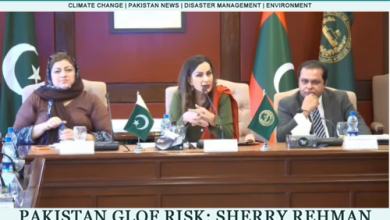
World Bank Partnership Priorities were at the heart of a consequential meeting in Islamabad between Pakistan’s Minister for Climate Change and Environmental Coordination, Musadik Malik, and a delegation from the World Bank led by country director Melormaa Amgaabazar.
In this ground-breaking engagement, the focus on aligning climate, development and macro-economic stability signals a potential turning point for Pakistan.
Right at the beginning, the focus keyword World Bank Partnership Priorities sets the tone for the coverage, which explores how this bold agenda could reshape Pakistan’s climate and development trajectory.
What Are the World Bank Partnership Priorities?
The World Bank Partnership Priorities refer to the six key thematic areas laid out in the bank’s latest decade-long engagement plan for Pakistan, the Country Partnership Framework (FY26‑FY35) (CPF). (World Bank)
These areas are:
- Reduced child stunting
- Climate resilience
- Private sector development
- Education (learning poverty)
- Population management
- Energy sector reform
This shift represents a strategic departure from short-term, fragmented financing towards large-scale, sustained investment in core national priorities.
Pakistan’s Macroeconomic and Project Implementation Challenges
Minister Malik emphasised that Pakistan faces not just macroeconomic instability and high inflationary pressures, but also tactical hurdles in project implementation — delays, low skill content, lack of scalability, and cost inefficiencies.
He underscored that many current development efforts are “high-budget but low-skill, lacking scalability and cost-efficiency”.
These implementation gaps undermine impact, particularly when development funds get diverted from their intended sectors — such as education, women’s empowerment, population welfare and health — thereby creating long-term systemic inefficiencies.
By flagging these issues, the Minister sought to align the World Bank Partnership Priorities with Pakistan’s urgent needs for strategic clarity and sustainable delivery.
Key Priorities Discussed in the Meeting
4.1 Stunting Reduction
Under the Partnership Priorities, a major focus is on reducing child stunting — a persistent challenge in Pakistan’s human capital development. The CPF documents note this as a critical outcome and cross-cutting with water, sanitation, nutrition and education. (World Bank)
The Minister stressed that re-directing development funds away from sectors like health and population welfare jeopardises such outcomes.
4.2 Climate Resilience
Climate resilience is another core pillar of the World Bank Partnership Priorities. Pakistan is among the most climate-vulnerable countries globally. The CPF’s Outcome 3 is “Increased resilience to climate change” — with specific targets of reaching tens of millions of people with strengthened food, nutrition and climate risk resilience. (World Bank)
In the meeting, the delegation and Minister discussed how tactical delays in project implementation reduce the impact of climate-resilient investments and how better strategic clarity can help.
4.3 Private Sector Development & Education
The conversation covered private sector development and education as part of the Partnership Priorities. The Minister argued that many high-budget projects fail to embed skill development or scalability, undermining private sector linkages and productive outcomes.
Education and learning poverty reduction are also highlighted in the CPF as a major outcome. (World Bank)
4.4 Population Management & Energy Reform
The sixth key area, energy sector reform, addresses Pakistan’s cost-inefficient energy mix, air quality issues and the need to mobilise private investment. The Population Management priority ties into health, welfare and demographic resilience.
During the meeting, both sides agreed on enhancing coordination to align ongoing projects with these thematic priorities.
The 10-Year Country Partnership Framework (FY26–FY35)
The World Bank Partnership Priorities are embedded within the CPF which spans a decade, making it Pakistan’s first long-term country partnership of this sort. (Dawn)
Key elements of the CPF include:
- A shift away from short-term adjustment programmes towards sustained, larger investments. (World Bank)
- Anchoring around six outcomes (see above) that address Pakistan’s human capital crisis, climate vulnerability and structural economic issues. (World Bank)
- A business-planning approach with rolling plans and performance reviews (e.g., a Performance & Learning Review in FY30). (World Bank)
- The expectation of mobilising US$30-40 billion of World Bank Group financing over the decade. (World Bank)
In the meeting, Minister Malik and the World Bank delegation discussed ongoing and prospective projects under this framework and committed to enhancing coordination to ensure effective delivery and alignment with Pakistan’s climate and development priorities.
Strategic Clarity and Implementation Hurdles
One of the critical messages from the meeting is the need for strategic clarity. The Minister emphasised that simply allocating budget is not enough: projects must be scalable, sustainable, and cost-efficient — delivering large-scale benefits rather than isolated gains.
He pointed out that diverting funds from key sectors like education, women empowerment, population welfare and health weakens the national development architecture and undermines systemic progress.
The World Bank Partnership Priorities align well with this logic: by focusing on fewer but higher-impact outcomes, the partnership can avoid fragmentation and deliver more meaningful results. The challenge remains: translating strategic clarity into operational excellence, timely implementation, and measurable impact.
Why This Partnership Matters for Pakistan’s Climate Agenda
For Pakistan, caught at the crossroads of climate vulnerability, economic instability and development shortfalls, the alignment with World Bank Partnership Priorities offers a strong framework for transformative change.
- On climate resilience: Aligning investment with the CPF means Pakistan can access global financing, technical assistance and capacity building to strengthen resilience against floods, heatwaves and glacier melt.
- On development: Priorities like stunting reduction, education improvement and private sector development can lift human capital and create jobs — thereby contributing to macroeconomic stability.
- On governance: Emphasising strategic clarity, high skill-content, scalability and cost-efficiency can help improve accountability, minimise waste and enhance results in project delivery.
In sum, this partnership offers Pakistan an opportunity to pivot from reactive, fragmented interventions to proactive, strategic investment — anchored by the World Bank Partnership Priorities.
Conclusion
The meeting between Pakistan’s climate minister and the World Bank delegation marks a pivotal moment for the country’s future. By placing World Bank Partnership Priorities at the core of the discussion, both sides signalled a commitment to deeper, longer-term collaboration rooted in strategic clarity, efficient delivery and sustainable impact.
As Pakistan embarks on the FY26–FY35 partnership journey, the real test will be in turning bold strategies into tangible outcomes: fewer stunted children, stronger climate resilience, better education, a vibrant private sector and a cleaner energy future.
If implemented effectively, this engagement could redefine not only Pakistan’s climate and development trajectory but also deliver the kind of large-scale benefits that Minister Malik emphasised — scalable, sustainable, and people-centred.
Internal Link Suggestion:
External Resource :
– Country Partnership Framework for Pakistan (FY26-FY35) – World Bank (World Bank)
– Issue brief on the CPF-2026-2035 by ISSI – ISSI (issi.org.pk)