
IMF-at 80: need for critical and profound change
Making it part of the arrangement, not the issue
The International Money related Fund (IMF), which appeared around the finish of The Second Great War turned 80. The justification behind its development was basically to give it an oversight job with the goal that countries couldn’t control homegrown monetary standards, as various countries did during the Economic crisis of the early 20s of the 1930s, by which they debased their monetary standards to give positive driving force to trades. Notwithstanding the oversight job, the IMF was mandated to give equilibrium of installments (BoP) backing to part countries to address these fundamental irregular characteristics.
Featuring the verifiable parts of how it appeared, an as of late delivered report ‘The Bretton Woods organizations at 80: towards a greater, better and more comprehensive worldwide financial administration design’ by Boston University’s ‘Worldwide Development Strategy Center’ brought up ‘July 2024 imprints the 80th commemoration of the Bretton Woods Understanding that laid out the post The Second Great War multilateral monetary request.
The understanding, came to at the Mount Washington Lodging in Bretton Woods, New Hampshire in 1944, prompted the foundation of the Bretton Woods establishments, the International Money related Fund (IMF) and the International Bank for Reproduction and Development (IBRD), the antecedent to the World Bank, the two of which in their ongoing structures “stay at the focal point of worldwide monetary administration today”… While the first understanding likewise believed exchange to be a key point of support, proposing the International Exchange Association (ITO), progress towards a multilateral association overseeing worldwide exchange took significantly longer. Meanwhile, a handful of countries joined the General Settlement on Levies and Exchange (GATT) in 1947, which would ultimately give the construction and type of the World Exchange Association (WTO), laid out in 1995.’
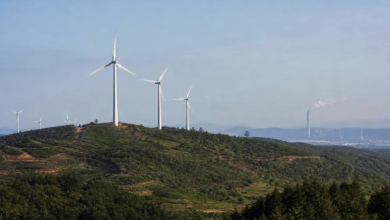
As far as climate change related monetary help, there has been an idea of a yearly climate change related SDR arrangement by the IMF for exceptionally climate weak countries; which incorporates Pakistan, as the country is among the main ten most climate tested countries. Likewise, the IMF ought to get rid of its famous ‘overcharge strategy’, which is a ‘junk expense’ assessed late reimbursements by acquiring countries, given the generally frail financial space circumstance confronting emerging nations, in general, following Coronavirus pandemic, and the quick unfolding climate change emergency.
Besides, the IMF gave help to needful part countries based on program conditionalities; where the extent of such help expanded impressively both after the separation of the USSR, where various countries acquired autonomy, and additionally given the intrinsic defects of the actual program pushing countries to make want more and more programs. Thus, the ‘Washington Agreement’s premise of IMF programs, which is exceptionally shifted towards a neoliberal strategy point of view, has not permitted supported macroeconomic steadiness, and monetary development for beneficiary countries, principally as a result of over-accentuation on total demand press approaches, or at the end of the day accentuation on training of over-board somberness approaches, rather than much-required adjusted approach on both total demand-, and total crush arrangements.
The other issue has been the administration of the actual IMF, by which assignment of assets, and dynamic blessings the rich, high level countries who offer more assets to the IMF. A similar Report brought up in such manner ‘For the IMF and the World Bank, a critical rebalancing of casting a ballot power should be supplemented by fundamental administration changes to guarantee more voice and portrayal for EMDEs [emerging business sector and creating economies].’ All things considered, each part country ought to be given equivalent voice regarding casting a ballot. Also, rather than making portion of assets based on ‘amount sharing’ recipe, monetary assignment ought to be made on need premise. For example, improved portion of extraordinary drawing privileges (SDRs) directly following the Coronavirus 18 pandemic in August 2021, and based on ‘standard sharing’ equation, implied that countries, which as of now have more than adequate monetary space got the majority of the distribution of $650 billion, while it ought to have been the alternate way round given a lot higher financial, and obligation reimbursement necessities of emerging nations.
One more issue with the IMF, and which is in accordance with the by and large powerless multilateral soul worldwide, when the quick unfolding climate change emergency, and the probability of ‘Pandemicene’ peculiarity require substantially more climate finance gave to the countries, alongside setting up more productive obligation rebuilding structure. Noted market analyst, Barry Eichengreen, called attention to in his new article ‘Unlocking IMF change’ in such manner ‘First, the IMF ought to give its individuals customary yearly assignments of its in-house monetary instrument, exceptional drawing freedoms.
This would give an option in contrast to the US dollar as a wellspring of worldwide liquidity while likewise resolving the issue of ongoing worldwide uneven characters. Second, the IMF needs to improve at arranging obligation restructurings for low-pay countries. Its most recent endeavor, the fairly grandly named Normal Structure for Obligation Medicines, has missed the mark. The Fund needs to push harder for participation from China’s administration and monetary foundations, which are unfamiliar with the obligations of a sovereign loan boss. It ought to help changes to accelerate restructurings and embrace drives to get serious about holdout leasers.’
As far as climate change related monetary help, there has been an idea of a yearly climate change related SDR arrangement by the IMF for profoundly climate weak countries; which incorporates Pakistan, as the country is among the main ten most climate tested countries. Likewise, the IMF ought to get rid of its famous ‘overcharge strategy’, which is a ‘junk expense’ assessed late reimbursements by getting countries, given the all around frail financial space circumstance confronting emerging nations, in general, directly following Coronavirus pandemic, and the quick unfolding climate change emergency.