
Devastating Lessons from Climate Change and Floods: 7 Critical Warnings for Pakistan
Pakistan faces devastating impacts from climate change and floods, with monsoon disasters destroying crops, homes, and cities. Learn the urgent lessons Pakistan must adopt to survive future climate shocks.
Climate Change and Floods have once again devastated Pakistan in August 2025, killing over 400 people and destroying thousands of homes in Khyber Pakhtunkhwa, Gilgit-Baltistan, Kashmir, and Karachi. The shocking scale of destruction highlights Pakistan’s extreme vulnerability to climate change, despite contributing less than 1% of global greenhouse gas emissions.
From submerged villages to paralyzed megacities, these disasters reveal how unprepared Pakistan remains. Nearly one-third of the country was underwater, crops were ruined, and millions face food insecurity.
This crisis raises one pressing question: What lessons must Pakistan learn to prevent another national tragedy?
What is Driving the Floods in Pakistan?
Several interlinked factors worsen the impact of climate change and floods in Pakistan:
- Unplanned urbanization and encroachments on natural drainage.
- Poor river management and lack of flood zoning.
- Deforestation, with forest cover shrinking from 3.78 million hectares in 1992 to just 3.09 million hectares in 2025, the lowest in South Asia.
- Inadequate infrastructure that collapses under torrential rain.
This dangerous mix explains why thousands of houses in Khyber Pakhtunkhwa and Karachi collapsed under record rainfall.
World Bank Report on Flood Risks
The Human and Economic Toll
The Buner district of Khyber Pakhtunkhwa saw over 200 deaths, while more than 4,000 homes were destroyed nationwide.
Economically, the situation is dire:
- Nearly 50% of Pakistan’s crops were damaged.
- Food prices have already skyrocketed.
- Public infrastructure, including schools and bridges, lies in ruins.
Pakistan, already in financial distress, faces a climate survival crisis unless urgent reforms are implemented.
Urban Flooding in Karachi
Even Pakistan’s financial hub Karachi was paralyzed by the floods.
Why?
- Karachi produces over 20,000 tons of solid waste daily, much of which clogs storm drains (nullahs).
- Encroachments block natural waterways.
- Lack of investment in modern urban drainage systems.
As urban planner Arif Hasan once said, “Rapid and uncontrolled urbanization has turned Karachi into a flood-prone city.”
Internal Link: Read our analysis on Karachi’s Water Crisis.
Glacier Melting and Northern Risks
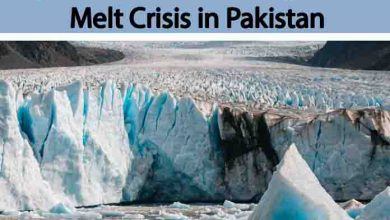
The Himalayan glaciers in Gilgit-Baltistan and Khyber Pakhtunkhwa are melting at alarming rates. According to the UNDP:
- Over 3,000 glacial lakes have formed.
- 33 lakes are at risk of bursting, threatening 7 million people.
Pakistan’s northern region is often called the “third pole” because it holds the world’s largest ice reserves outside the Arctic and Antarctic. With rising temperatures, glacial lake outburst floods (GLOFs) are now a critical danger.
Lessons from China’s Success
After the 1998 floods, China launched massive reforms:
- 66 million hectares of forests planted.
- Forest coverage increased to 25% of land.
- Creation of “sponge cities” designed to absorb rainwater.
- Restoration of wetlands and rivers.
Result: Flood peaks reduced by up to 30%.
Pakistan must adopt similar survival strategies by restoring wetlands, increasing forest cover, and investing in climate-resilient cities.
Measures and Interventions for Pakistan
Structural Solutions
- Build and maintain drainage systems and reservoirs.
- Invest in permeable pavements and rain gardens in cities.
- Enforce river zoning to stop construction on floodplains.
Non-Structural Solutions
- Develop early warning systems for floods.
- Strengthen disaster preparedness and community awareness.
- Launch afforestation campaigns nationwide.
The Climate Crisis and Governance Gap
The real challenge is weak governance. Without strong climate policies, Pakistan will remain trapped in a cycle of disaster.
Urgent actions needed:
- Strict enforcement against illegal logging.
- Transparent use of climate finance.
- Proper urban planning and affordable housing schemes.
- Collaboration with local communities for reforestation and resilience building.
Experts warn that without reforms, Pakistan will continue to face recurrent floods, heatwaves, and droughts, threatening millions of lives.
Conclusion: Urgent Call to Action
The devastating floods of 2025 are not just natural disasters—they are a wake-up call.
If Pakistan fails to act:
- Millions more will lose their homes.
- Food insecurity will worsen.
- The economy will crumble under climate shocks.
But with bold reforms, green infrastructure, and strong governance, Pakistan can still turn the tide. The choice is clear: learn the lessons of climate change and floods—or face an unlivable future.
Internal Link Suggestion: Link to your article on Pakistan’s Agriculture and Climate Change.