
Global Discourse on Water Crisis in 2025
Climate Change is disrupting the natural water streams of Pakistan
-
Climate change is disrupting the natural water streams of Pakistan
- The highlights of emerging water crisis in Pakistan due to dissipating ice of the Himalayas and the increasing aridity of the Indus Basin
Global discourse on water is no longer a question of environmental sustainability but has shifted towards concerns of existential survival. Its imminence is seen evidently in Pakistan, a nation dependent on ancient glaciers, that are actively being disrupted by the progression of climate change. The year 2025 has become a benchmark for assessing whether policy frameworks like the National Adaptation Plan (NAP) can outpace the dissipating ice of the Himalayas and the increasing aridity of the Indus Basin.
The Threat Identified
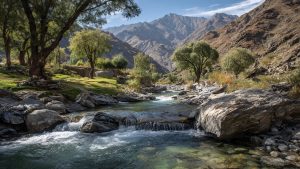
The Ministry of Climate Change and Environmental Coordination (MOCC) identifies the melting of the mountain glaciers as the primary threat to the nation’s water security as these glaciers feed the Indus River System that supports over 200 million people. According to the Prime Minister’s climate aide, Romina Khurshid Alam, climate change is disrupting the natural course of glacial melting, as a cycle of glacial lake outburst floods is followed by prolonged periods of drought. The challenge lies in the unpredictability of the water cycle. The World Bank has noted that water related disasters account for a significant portion of economic losses in developing countries; hence Pakistan’s GDP is linked to the stability of the Indus.
Pakistan’s Legislative Advancements
In response to these looming threats, the Government of Pakistan spent 2025 solidifying its legislative defense:”
- The National Adaptation Plan (NAP): NAP aims to gather collective ownership over climate risk as it was developed through a process of extensive consultation with federal and provincial stakeholders. It represents a shift towards a “just and resilient green transition.”
- The Living Indus Initiative: Developed jointly by the MOCC and the United Nations, this prospectus focuses on the ecological restoration of the Indus Basin by treating the river as a living entity. It aims to move beyond just traditional engineering, e.g. dams and canals, to more nature based solutions.
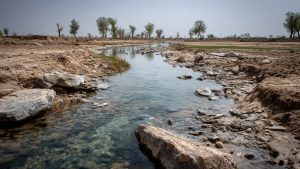
However, the success of the Living Indus is intertwined with cross-boundary and provincial cooperation. The government may be unwavering in its commitment to the Sustainable Development Goals, but the implementation of the Green Pakistan Upscaling Programme Phase-1 and its 125.18 billion rupee price tag burdens the country’s developing economy.
A Global Effort
At the UN’s Environmental Assembly in Nairobi, Pakistan demanded streamlined access to the Green Climate Fund for all vulnerable countries. The UK-Pakistan Green Compact was agreed upon in December 2025 at 35 million pounds aimed at strengthening climate resilience. Additionally, the Nationally Determined Contributions 3.0 represents a national consensus on a move towards a climate resilient economy. The IMF stresses the importance of water pricing reform for conservation. It provides an external viewpoint looking outside of green financing or frameworks, emphasising that infrastructure is futile without valuing water properly through proper tariffs long-term.
On the World Day to Combat Desertification and Drought, proposed a new plan as a part of the broader “Climate Change Investment Tracker” designed to ensure transparency in environmental fund allocation; the 300 Day National Plan intended to improve preparedness for natural disasters and even out the economic impacts. Senator Musadik Masood Malik emphasised the integration of “green skills” into the workforce in 2025, recognising that the water crisis is not just a hydrological problem as much as it is a human capital challenge.
UN Collaboration
Collaboration with the UN is a recurring theme in Pakistan’s solution frameworks regarding the water crisis. The Living Indus initiative acts as a localised manifestation of UN-Water’s global mandate to ensure the availability and sustainable management of water for all (SDG 6). Pakistan’s desire to align national policies with the UN framework shows its attempt to shift perspectives on the issue from a mere irrigation problem to a global ecological priority.
The Ministry of Climate Change asserts that water is the most vital source of life; its disruption will serve as the undoing of the social and economic fabric of the nation. To value water is to acknowledge that it is not an infinite source but a borrowed privilege. The implementation of this view is seen in Pakistan where the Indus is no longer being seen as a resource to be exploited, rather a “Living Indus” that we must nurture and restore, marking a psychological change in mindsets approaching this precarious issue.
For humanity to survive the 21st century, the Climate Resilient Pakistan vision must become a global standard. Currently we are a “reactive” species, only acting when floods enter our streets and droughts ravage our fields. We must transition to a “proactive” guardian of the water cycle. The solution is no longer simply shorter showers or turning off the tap when brushing your teeth. It is a systemic overhaul of how we finance, govern and view the water on our planet. If we fail to value the water in our glaciers today, we will be forced to live in a world where our descendants will not be as lucky to even have solutions to propose.