

CDA, EPA Vow Measures to Control Air Pollution in Islamabad
CDA takes measures include Carbon emission tests of vehicles, brick kilns to control air pollution in the transport sector.
-
Chairman CDA, DG EPA Review Measures for Smog prevention, Environmental Protection
- CDA takes measures include Carbon emission tests of vehicles, brick kilns to control air pollution in the transport sector.
Islamabad: Chairman CDA and DG EPA chaired a joint meeting on smog prevention and environmental protection in Islamabad, the capital city of Pakistan.
Member Engineering, Member Environment, DC Islamabad, DG Resources, EPA and relevant officers of CDA participated in the meeting.
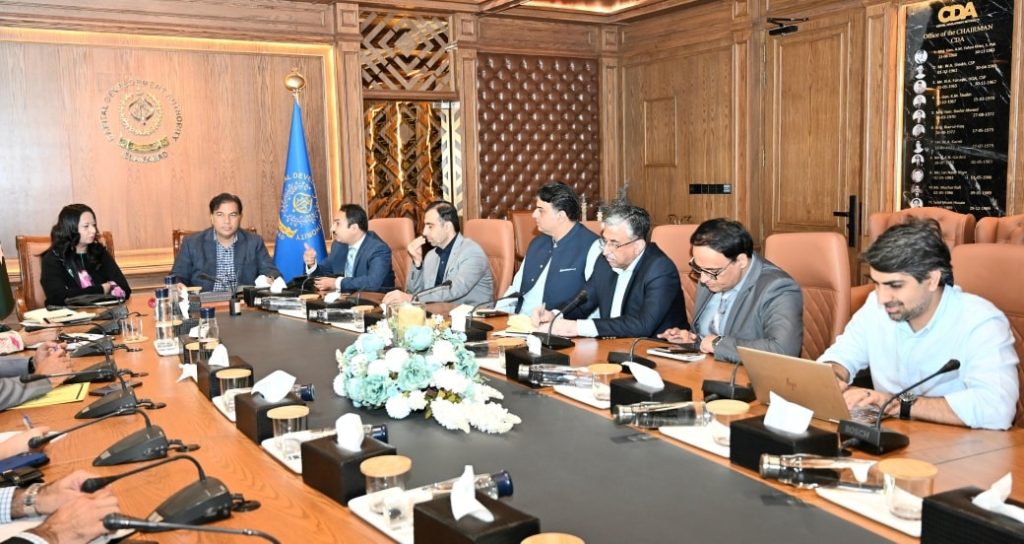
A number of measures were decided in the meeting regarding smog prevention, air pollution elimination and environmental protection in Islamabad.
Relevant institutions will jointly implement a comprehensive strategy in this regard, Chairman CDA.
As per the directives of the Prime Minister and the Federal Interior Minister, environmental protection, including reduction of smog and air pollution in Islamabad, is the top priority, said Chairman CDA.
Various measures are being taken regarding smog reduction in the transport sector, brick kilns and other industries in the city. Briefing the meeting of DC Islamabad.
Carbon emission tests of vehicles are being conducted to control air pollution in the transport sector.
Carbon test data of vehicles related to the transport sector is shared directly on the dashboard. Briefing underway
Five certified laboratories are working in the capital for carbon emission testing from vehicles according to EPA.
More check points should be set up in Islamabad for vehicle smoke emission testing, CDA Chairman directs
Similarly, discussions were held regarding controlling air pollution related to brick kilns and industries.
It has been made mandatory for all kilns and industries in the capital to switch to modern and friendly technology
A deadline of October 20 has been set for brick kilns to adopt modern zigzag technology.
Strict action will be taken against brick kilns that do not switch to zigzag technology after October 20 as per the law, he added.
Brick kilns that do not adopt modern technology, continuously violate and cause air pollution should be demolished as per the law, said CDA Chairman.
ICT administration in collaboration with Rawalpindi administration to Adopt a joint strategy against, Chairman CDA directed to relavant officials .
A station is working in Sector H-8 regarding the Air Quality Index, while plans are underway to install three to four new air quality monitoring stations, accoring to officials of EPA.
The meeting also decided to take measures related to the burning of garbage in the air and dust generated by development projects, among other important factors causing smog and air pollution.
A complete ban on burning garbage in the open air should be ensured and a case should be registered against those involved in it immediately as per the law, Muhammad Ali Randhawa directed.
To control the dust generated by development projects, water spraying arrangements should be ensured at the sites of all development projects stated Chairman CDA directed.
Ensure implementation of SOPs for mitigation measures listed in the EIA for all these projects, Muhammad Ali Randhawa directed.
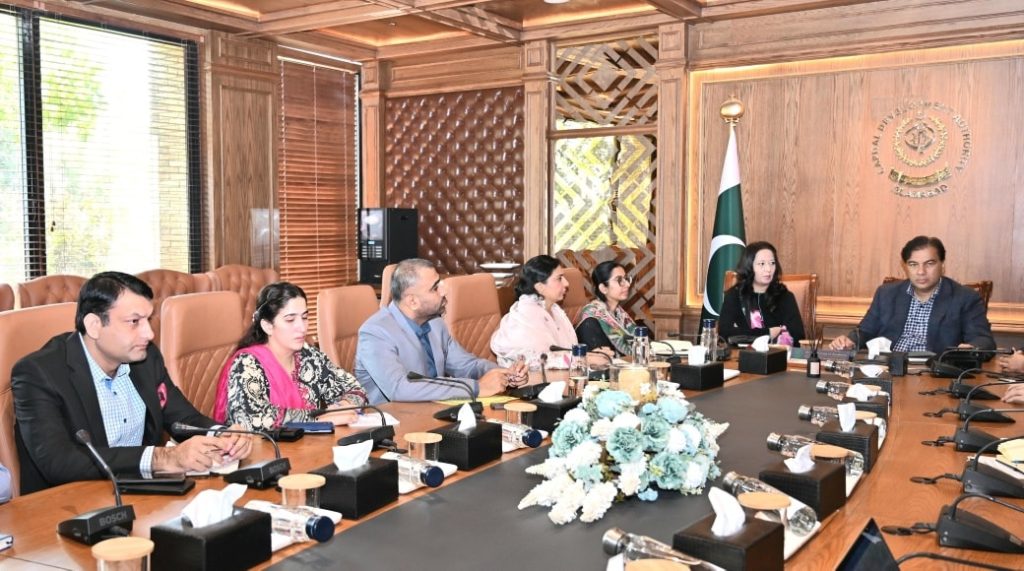
EPA, ICT and CDA should ensure effective coordination and harmony for smog prevention and environmental protection, Chairman CDA.
Pakistan’s capital, Islamabad is grappling with a growing smog crisis
As air pollution levels surge across Pakistan’s capital, Islamabad is grappling with a growing smog crisis that has prompted urgent government intervention and public health warnings.
Air Quality Plummets
According to the Pakistan Environmental Protection Agency (Pak-EPA), Islamabad’s Air Quality Index (AQI) reached **137** on Monday, categorizing the air as “Unhealthy for Sensitive Groups.” The concentration of **PM2.5 particles**—fine pollutants that penetrate deep into the lungs—was recorded at **50 µg/m³**, significantly exceeding the World Health Organization’s safe threshold of 15 µg/m³.
Government Crackdown on Pollution Sources
In response, the Ministry of Climate Change has announced a series of measures aimed at curbing emissions:
Brick Kilns Regulation:** All kilns in Islamabad and Rawalpindi must adopt zig-zag technology by **October 20, 2025**, or face closure. This method reduces coal consumption and lowers particulate emissions.
– **Vehicle Emissions Enforcement:** Starting **November 17**, traffic police will fine or impound vehicles emitting visible smoke. Mobile inspection units are being deployed to monitor compliance.
– **Expanded Monitoring Network:** Additional air quality monitoring stations are being installed to provide real-time data and improve transparency.
Health Advisory Issued
Medical experts warn that prolonged exposure to smog can exacerbate respiratory conditions such as asthma and bronchitis. Dr. Ayesha Malik, a pulmonologist at PIMS Hospital, advised residents to “limit outdoor activities, wear N95 masks, and use air purifiers indoors.”
Urban Planning and Long-Term Solutions
Environmentalists argue that Islamabad’s rapid urbanization and unchecked vehicular growth are key contributors to the crisis. “We need a shift toward green public transport and stricter industrial zoning,” said Ali Tauqeer Sheikh, a climate policy analyst.
Public Response and Awareness
Social media campaigns under hashtags like #CleanAirIslamabad and #SmogAlert are gaining traction, urging citizens to adopt eco-friendly practices and pressure authorities for sustainable reforms.
For real-time air quality updates**, residents can visit the [Pak-EPA website](https://www.environment.gov.pk) or use mobile apps like AirVisual and AQICN.