
akistan Condemns India’s Chenab Hydropower Project as a Grave Indus Waters Treaty Violation
Pakistan condemns India’s Chenab Hydropower Project as a dangerous violation of the Indus Waters Treaty, raising serious concerns over water security, regional peace, and international law.
Pakistan Condemns India’s Chenab Hydropower Project in the strongest terms, calling it a direct, deliberate, and dangerous violation of the internationally binding Indus Waters Treaty (IWT). The condemnation follows India’s approval of the Dulhasti Stage-II Hydropower Project on the Chenab River, a critical water source for Pakistan’s agriculture, energy security, and millions of livelihoods.
Senior political leaders, water experts, and strategic analysts have warned that this move threatens regional stability, undermines decades of water diplomacy, and risks turning water into a weapon in South Asia.
Background of the Indus Waters Treaty
The Indus Waters Treaty, signed in 1960 under World Bank mediation, is regarded as one of the world’s most successful transboundary water-sharing agreements. It allocates the eastern rivers (Ravi, Beas, Sutlej) to India and the western rivers (Indus, Jhelum, Chenab) to Pakistan.
Despite wars and political crises, the treaty has endured for over six decades—until now.
Learn more: World Bank – Indus Waters Treaty Overview
Pakistan Condemns India’s Chenab Hydropower Project
Pakistan condemns India’s Chenab Hydropower Project as an unlawful and unilateral action that violates treaty obligations. The approval of the Dulhasti Stage-II Hydropower Project has triggered alarm in Islamabad, as it grants India enhanced control over the Chenab’s water flow.
Pakistan argues that such control mechanisms allow India to manipulate water releases, particularly during critical agricultural seasons, threatening food security downstream.
Sherry Rehman’s Strong Warning
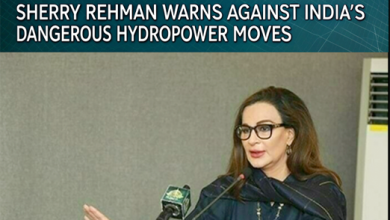
Senator Sherry Rehman, Vice President of the Pakistan Peoples Party (PPP), strongly criticized India’s move, calling it “water aggression” and a clear breach of international law.
She emphasized that:
- The Indus Waters Treaty cannot be suspended unilaterally
- Any violation undermines regional peace
- Water cannot be weaponized without consequences
“Water is Pakistan’s red line. Any attempt to control or disrupt it will be met with firm resistance,” she warned.
Strategic and Security Implications
Beyond legal concerns, the hydropower project raises serious strategic and security risks:
- Sudden water releases or withholding can destabilize downstream regions
- Pakistan’s irrigation-dependent economy faces severe threats
- National security planners fear weaponization of water flows
Senator Rehman highlighted unusual fluctuations in Chenab River flows as evidence of India’s coercive water behavior.
Water Is Pakistan’s Red Line
Pakistan’s leadership has reiterated that water security equals national security. Any attempt to dominate shared rivers is seen as an existential threat.
Experts warn that if unchecked, India’s actions could:
- Trigger humanitarian crises
- Intensify regional hostility
- Undermine South Asia’s fragile peace
This is why Pakistan has vowed to raise the issue at all international forums, including the United Nations and the World Bank.
Environmental and Agricultural Threats
Pakistan’s agriculture—employing over 40% of its workforce—depends heavily on consistent water flows from the Indus Basin.
Potential impacts include:
- Reduced crop yields
- Increased food insecurity
- Damage to ecosystems
- Loss of biodiversity
International Law and Treaty Violations
Under the Indus Waters Treaty, India must:
- Share project designs with Pakistan
- Allow neutral expert review
- Avoid altering natural river flows
Pakistan argues that the Dulhasti Stage-II project violates all three principles.
External reference: International Court of Justice – Water Disputes
What Comes Next? Diplomatic and Legal Options
Pakistan is expected to:
- Seek international arbitration
- Engage the World Bank as treaty guarantor
- Mobilize diplomatic pressure through multilateral forums
Experts warn that continued violations may erode one of the last functional confidence-building mechanisms between the two nuclear neighbors.
Conclusion
Pakistan condemns India’s Chenab Hydropower Project not as a political gesture, but as a matter of survival, sovereignty, and sustainability. The Indus Waters Treaty has long symbolized cooperation amid conflict—but its erosion could usher in a dangerous new era.
As climate change intensifies water scarcity, respecting international agreements is no longer optional—it is essential for peace.