
COP31’s Kurum Urges Leaders to Close Climate Finance Gap
COP31 President-Designate Murat Kurum calls for climate finance to match defence spending priority at the Istanbul Climate Finance Summit, as UNDP joins BRIDGE.
COP31 President-Designate Kurum Calls to Close Climate Finance “Chasm” at Istanbul Climate Finance Summit
Istanbul, September 4, 2026 — COP31 President-Designate Murat Kurum issued a powerful call to action to close the global climate finance “chasm,” urging world leaders to treat climate investment as a strategic security priority on par with defence spending. The appeal came on the first day of the Istanbul Climate Finance Summit (ICFS), which brought together private banks, international financial institutions, multilateral development banks, multilateral climate funds and other actors to raise ambition on climate finance ahead of COP31 in Antalya.
Background
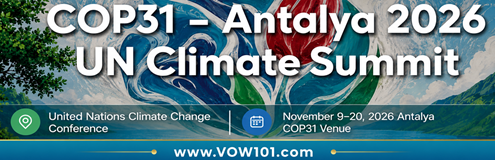
Finance has emerged as a central priority for COP31, the UN climate summit scheduled to take place from 9–20 November 2026 in Antalya, Türkiye. The COP31 Presidency has emphasized that climate finance plays a vital role both in rebuilding trust in the broader COP process and in delivering the concrete progress people around the world expect from international climate negotiations. The Istanbul Climate Finance Summit was designed as a dedicated space on the road to Antalya, focused on how financial actors can support the Presidency’s key priorities — from electrification to waste management, resilient cities, and oceans.
The Climate Finance “Chasm”
Speaking at the summit, Minister Kurum laid out the scale of the global financing gap: “Our climate finance needs stand at between $7.5 trillion and $9 trillion. Yet the world currently invests only around $1.9 trillion. I call that difference a chasm — and it is a chasm we must close.”
He argued that climate finance should no longer be treated as a cost, but recognized as a strategic investment made today to avert far greater economic and social losses tomorrow. Drawing a direct comparison to defence spending, Kurum said: “The world is redefining what security means. NATO countries have embarked on a major transformation that will see defence-related investment rise to as much as 5 per cent of GDP. We expect to see ambition on a similar scale when it comes to climate security.” He added that just as defence spending protects against future threats, “climate investment must be viewed through precisely the same strategic lens,” posing the question: “if we no longer have a safe world to live in, what purpose will all our spending to defend our countries serve?”
Kurum called on every world leader to commit greater resources to clean energy, electrification, resilient cities and green industry, urging a unified global resolve to accelerate the transformation. He further stated that COP “needs to become a place where we can seize the opportunities of climate action and produce concrete outcomes that address the real challenges people face,” stressing that “without finance, there is no implementation.”
UNDP Named Delivery Partner for BRIDGE
The summit also marked a major step toward operationalizing the Climate Implementation Bridge (BRIDGE), a flagship initiative of the COP31 Presidency, with the UN Development Programme (UNDP) announced as its delivery partner. BRIDGE is designed to close the gap between climate ambition and capital deployment by offering country-driven implementation support, helping nations translate their climate and development priorities into finance-ready project portfolios. UNDP’s role as delivery partner is intended to ensure that BRIDGE can leverage established delivery infrastructure across the UN system, enabling support to be provided quickly and effectively.
The Istanbul Declaration on Climate Implementation and Finance
During the afternoon session, the COP31 Presidency unveiled the Istanbul Declaration on Climate Implementation and Finance, signed by multilateral development banks, development finance institutions, climate funds, international organizations, UN entities, national and local governments, city networks, private sector representatives, institutional investors, commercial financial institutions, and philanthropic organizations.
Signatories welcomed BRIDGE, acknowledged the importance of the COP31 Presidency’s electrification target — increasing electricity’s share of global final energy consumption to 35 percent by 2035 — and committed to greater collaboration to drive faster, better-coordinated climate action. This collaboration spans enhanced institutional and technical support, integrated local urban financing facilities, technical assistance, capacity-building networks, and efforts to institutionalize coordination across COP31 and future Action Agendas, while leveraging regional and international financial centers to strengthen investment partnerships and capital mobilization.
Conclusion
The Istanbul Climate Finance Summit represents a significant early milestone on the road to COP31, translating the Presidency’s rhetorical urgency around closing the climate finance chasm into concrete institutional steps — from naming UNDP as BRIDGE’s delivery partner to securing broad-based commitment through the Istanbul Declaration. With climate finance needs estimated at up to $9 trillion against current investment of roughly $1.9 trillion, the coming months will test whether this heightened political language translates into the scaled-up capital mobilization that Kurum and the COP31 Presidency are demanding from world leaders ahead of Antalya.