
Alarming Pakistan Water Crisis Deepens: PM Declares Clean Water a Basic Human Right
Pakistan water crisis worsens as PM Shehbaz Sharif calls clean water a basic human right and President Zardari raises concerns over Indus Waters Treaty violations.
Pakistan water crisis has reached a critical point, with national leadership issuing urgent warnings about declining water availability and growing regional tensions. On the occasion of World Water Day, Prime Minister Shehbaz Sharif declared that access to clean water is a basic human right, while President Asif Ali Zardari strongly criticized India over violations of the Indus Waters Treaty.
The statements highlight both domestic challenges and geopolitical concerns surrounding Pakistan’s water security.
Pakistan Water Crisis Highlighted on World Water Day
The Pakistan water crisis was the central theme of this year’s World Water Day, observed under the theme “Water and Gender Equality: Where Water Flows, Equality Grows.”
Leaders emphasized that water scarcity is not only an environmental issue but also a matter of social justice, economic stability, and human dignity.
Pakistan is among the most water-stressed countries in the world, with declining per capita water availability posing serious risks to livelihoods and development.
PM Shehbaz Sharif Declares Clean Water a Human Right
Prime Minister Shehbaz Sharif stressed that the Pakistan water crisis threatens the well-being of millions.
“Clean water is a basic human right,” he said, highlighting the government’s commitment to ensuring equitable access to water resources.
He also emphasized the importance of women’s participation in water management, noting that inclusive decision-making is essential for sustainable solutions.
Declining Water Availability and Climate Impact
One of the most alarming aspects of the Pakistan water crisis is the sharp decline in water availability.
According to the Prime Minister:
- Per capita water availability has dropped from 5,260 cubic meters at independence to less than 1,000 cubic meters today
This decline is driven by:
- Climate change
- Erratic rainfall patterns
- Rapid glacier melting
- Population growth
These factors are intensifying water scarcity and increasing pressure on existing resources.
Major Government Projects to Address Water Scarcity
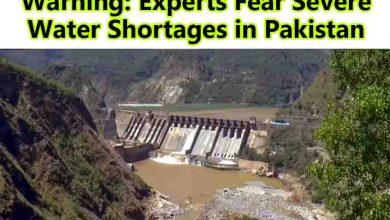
To tackle the Pakistan water crisis, the government is implementing large-scale infrastructure projects.
Key Projects:
- Diamer-Bhasha Dam
- Mohmand Dam
- Naulong Dam
- Nai Gaj Dam
In total, 18 dams are under construction to increase water storage capacity and ensure reliable supply.
Other initiatives include:
- Greater Karachi Water Supply Scheme (K-IV)
- Chiniot Dam for Faisalabad
- Kachhi Canal and Chashma Right Bank Canal
These projects aim to support agriculture, provide drinking water, and strengthen climate resilience.
Technology and Water Governance Reforms
Modern technology is playing a key role in addressing the Pakistan water crisis.
The Indus River System Authority is installing a nationwide telemetry system to monitor river flows in real time.
Benefits:
- Improved transparency in water distribution
- Reduced inter-provincial disputes
- Better resource management
The system is expected to be fully operational by 2027, marking a major step forward in water governance.
President Zardari Slams India Over IWT Violations
President Asif Ali Zardari strongly criticized India for its actions regarding the Indus Waters Treaty.
He described India’s suspension of treaty provisions as a “deliberate weaponization of shared water resources.”
According to the President, such actions:
- Disrupt data sharing
- Undermine agreed mechanisms
- Threaten food and economic security
He warned that these violations set a dangerous precedent for transboundary water management under international law.
Gender Inequality and Water Access
The Pakistan water crisis also has a significant gender dimension.
Both Prime Minister Shehbaz Sharif and President Asif Ali Zardari highlighted that women and girls bear the heaviest burden of water scarcity.
In many rural areas:
- Women spend hours fetching water
- Educational opportunities are lost
- Economic participation is limited
Ensuring gender equality in water management is essential for long-term sustainability.
Need for Conservation and Public Action
Addressing the Pakistan water crisis requires collective action from all segments of society.
President Asif Ali Zardari urged citizens to adopt water conservation practices, including:
- Rainwater harvesting
- Efficient water use
- Protection of natural resources
Sustainable water management is critical for agriculture, urban development, and environmental protection.
Conclusion
The worsening Pakistan water crisis presents a serious threat to the country’s future. From declining water availability and climate change impacts to regional tensions over shared resources, the challenges are complex and urgent.
Government initiatives, infrastructure projects, and technological advancements offer hope, but their success depends on effective implementation and public cooperation.
As emphasized by Prime Minister Shehbaz Sharif, ensuring access to clean water is not just a policy goal—it is a fundamental human right.
External Links
- United Nations: https://www.un.org