
From Paper to Action: The Missing Link in Pakistan’s Climate Change Response
Pakistan’s climate change response faces a critical implementation gap. Experts urge decentralisation and faster climate finance delivery.
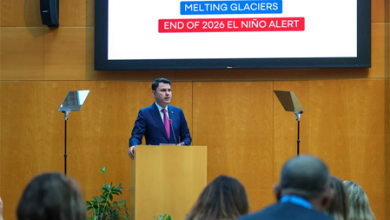
As Climate Week Karachi 2026 concluded on February 4, a strong and consistent message emerged from policymakers, climate experts, and community leaders: Pakistan can no longer afford business as usual in its climate change response.
The discussions repeatedly emphasised that adaptation and resilience must transition from policy documents and financial commitments into real, on-ground implementation. Climate resilience is no longer merely an environmental issue — it is now a socioeconomic imperative affecting livelihoods, infrastructure, and long-term economic stability.
Climate Change Is Already Here
Climate change in Pakistan is no longer a distant threat; it is a lived reality.
Rising global temperatures have accelerated glacier retreat in northern Pakistan. According to the United Nations Development Programme (UNDP), nearly 10,000 glaciers have receded in recent years. This has heightened the risks of glacial lake outburst floods (GLOFs) while simultaneously threatening long-term water availability.
Erratic rainfall patterns have further intensified vulnerability. The 2025 monsoon season displaced approximately 3.5 million people nationwide and left 1.6 million people in Sindh at risk of flooding, according to data compiled by the United Nations Office for the Coordination of Humanitarian Affairs (OCHA).
Heatwaves, urban flooding, prolonged droughts, and water stress are becoming recurring phenomena. The impacts are not isolated events but symptoms of systemic climate shifts.
The Rising Economic Cost of Inaction
The economic toll of climate change is mounting rapidly.
Sindh alone suffered estimated losses of Rs32.2 billion last year due to climate-related anomalies. These ranged from urban flooding and heatwaves to drought-induced agricultural losses in rural areas.
A UNDP policy paper titled Cost of Inaction on Climate Change estimates that unmitigated climate impacts could result in economic losses equivalent to nearly 20 percent of Sindh’s GDP. In contrast, proactive adaptation investments would cost roughly 2.5 percent of the province’s GDP — demonstrating that preventive action yields significant economic returns.
In simple terms, delayed climate action is not just environmentally risky; it is economically unsustainable.
Climate Finance in Pakistan: Progress on Paper
In recent years, Pakistan has made notable strides in mobilising climate finance.
In 2024, the government launched the National Climate Finance Strategy to streamline climate adaptation and mitigation funding while strengthening institutional transparency.
In 2025, Pakistan issued its first sovereign Green Sukuk, raising approximately Rs30 billion for climate-aligned investments. Green bonds were also introduced to fund environmentally sustainable initiatives.
On the international front, Pakistan secured more than $1.5 billion in climate finance, including:
- $1.4 billion under the IMF’s Resilience and Sustainability Facility
- Multiple commitments from the Green Climate Fund (GCF)
- $304.5 million in climate resilience projects signed with the Asian Development Bank (ADB)
- $102 million approved by the World Bank for the Resilient and Accessible Microfinance (RAM) Project
These financial flows reflect strong global recognition of Pakistan’s climate vulnerability.
However, mobilising funds is only half the equation.
The Implementation Gap
Despite substantial climate finance commitments, a profound gap remains between available resources and effective local-level implementation.
Climate funds often remain underutilised due to procedural bottlenecks, centralised control, limited project management capacity, and governance constraints.
For example, the GCF’s $37 million “Transforming the Indus Basin with Climate Resilient Agriculture and Water Management” project reportedly disbursed less than 45 percent of its allocated funds by its original completion timeline. The GCF has explicitly identified Pakistan’s absorption capacity as a constraint.
This disconnect between financing and execution highlights a systemic weakness in Pakistan’s climate governance framework.
Sindh: Pakistan’s Climate Vulnerability Hotspot
Sindh stands out as one of Pakistan’s most climate-vulnerable regions due to its geographic exposure, high population density, and fragile infrastructure.
The World Bank has previously identified Sindh as a climate hotspot facing compounded risks from floods, droughts, and heatwaves.
Projects like the Sindh Coastal Resilience Sector Project aim to strengthen water resource management, restore nature-based defences, and enhance planning capacities in Thatta, Sujawal, and Badin districts.
Yet, even projects specifically designed for Sindh are negotiated and signed at the federal level before funds are disbursed. This layered approval system slows implementation and reduces provincial autonomy.
Centralisation: A Structural Barrier
One of the core weaknesses in Pakistan’s climate change response lies in the highly centralised structure of climate finance.
While provinces are responsible for key sectors such as:
- Water management
- Agriculture
- Urban development
- Disaster response
Climate funds are typically routed through federal ministries.
Research by the Consortium for Development Policy Research highlights that approval, restructuring, and disbursement authority largely reside at the federal level, while implementation responsibility lies with provinces.
This institutional mismatch creates delays, reduces flexibility, and weakens local responsiveness.
In short, provinces carry responsibility without direct control over resources.
Absorptive Capacity and Delayed Projects
Pakistan’s climate challenges are compounded by absorptive capacity constraints — the ability to effectively utilise approved funds.
The Sindh Resilience Project, launched in 2016 with World Bank support, was initially scheduled to conclude in 2021. As of 2024–2025, only about half of its planned sub-schemes have been completed.
Similarly, the Greater Karachi Bulk Water Supply Scheme (K-IV), designed to deliver 260 million gallons of water per day, remains only 60–65 percent complete despite being initiated in the early 2000s.
Budget execution data further illustrates the problem: out of Rs48.8 billion allocated to Sindh’s climate-related departments over a 15–16 year period, only Rs20.2 billion was actually spent.
Chronic underspending signals structural inefficiencies rather than funding shortages.
The Way Forward: Decentralised Climate Governance
To transform Pakistan’s climate change response from policy to practice, structural reforms are essential.
1. Decentralise Climate Finance Access
Provincial and municipal governments should have direct financing windows to international climate funds, reducing federal bottlenecks.
2. Strengthen Technical Capacity
Local governments need training in project design, procurement, monitoring, and evaluation.
3. Simplify Compliance and Approval Processes
Streamlined mechanisms can reduce delays in fund disbursement and project initiation.
4. Integrate Climate into Development Planning
Resilience must be embedded across sectors — infrastructure, agriculture, housing, and finance — rather than treated as a standalone initiative.
5. Improve Transparency and Monitoring
Digital tracking systems can enhance accountability and improve public trust.
Conclusion
Pakistan’s climate change response has entered a decisive phase. The country has successfully mobilised billions in domestic and international climate finance. Policies and strategies exist. Funding commitments are growing.
Yet climate resilience cannot be measured in approved budgets or signed agreements.
It is measured in functioning early warning systems, flood-protected communities, drought-resilient farms, climate-proof infrastructure, and empowered local governments.
Turning climate finance into real resilience requires political will, institutional reform, and a fundamental shift toward decentralised climate governance.
Without this transformation, climate action risks remaining visible only on paper — while vulnerable communities continue to bear the brunt of accelerating climate shocks.