Water as a Weapon: The Dangerous Escalation of an Old Conflict
Water as a Weapon is reshaping the India-Pakistan rivalry, intensifying tensions over the Indus Waters Treaty, Kashmir, and regional security.
Water as a Weapon is no longer a metaphor in South Asia’s geopolitical vocabulary; it is a growing reality shaping the fragile relationship between Pakistan and India. Since the partition of British India in 1947, hostility between the two nuclear-armed neighbours has evolved from conventional wars to covert operations—and now, increasingly, to control over rivers.
The lowering of the Union Jack in August 1947 did not conclude the tragedy of the subcontinent. It merely marked the beginning of a prolonged and turbulent rivalry between the newly independent states of Pakistan and India.
Origins of Conflict: Kashmir and the First War
The first major confrontation erupted over the disputed territory of Jammu and Kashmir in 1947–48. The issue was eventually referred to the United Nations, resulting in a ceasefire line that later became the Line of Control (LoC).
The unresolved dispute remains central to Indo-Pak relations. For deeper understanding of Kashmir’s geopolitical roots, visit the official website of the United Nations (link: https://www.un.org).
Wars of 1965 and 1971: The Deepening Divide
In 1965, full-scale war broke out once again. Fierce engagements across Punjab and Kashmir ended with the Tashkent Declaration, brokered by the Soviet Union.
However, peace proved fragile. The 1971 war marked the most painful chapter in Pakistan’s history, resulting in the creation of Bangladesh. India’s military intervention in support of the Mukti Bahini transformed internal unrest into a decisive conflict.
The trauma of 1971 continues to influence strategic thinking in Islamabad.
Siachen, Kargil, and the Nuclear Era
The rivalry extended to the icy heights of the Siachen Glacier in 1984. Known as the world’s highest battlefield, Siachen symbolised how even uninhabitable terrain could become strategic.
In 1999, the Kargil War reignited hostilities in Kashmir’s mountains. The conflict reminded the world that both nations now possessed nuclear weapons, heightening global concern.
Tensions flared again in 2019 after the Pulwama attack and subsequent airstrikes near Balakot. The crisis underscored how quickly escalation can occur.
Water as a Weapon in the Indus Basin
Water as a Weapon has gradually entered strategic discourse as control over river flows gains prominence. The Indus Basin irrigates nearly 80% of Pakistan’s cultivated land, making it the backbone of its agriculture and economy.
According to the World Bank (link: https://www.worldbank.org), Pakistan is among the most water-stressed countries globally.
When upstream infrastructure projects alter river flows, downstream anxieties intensify.
The Indus Waters Treaty: A Rare Success Story
Signed in 1960 with World Bank mediation, the Indus Waters Treaty allocated the eastern rivers—Ravi, Beas, Sutlej—to India, and the western rivers—Indus, Jhelum, Chenab—largely to Pakistan.
For decades, the treaty survived wars and crises. It has often been cited as a model of conflict management.
Read more about international water law at the Permanent Court of Arbitration (link: https://pca-cpa.org).
Hydroelectric Disputes: Legal and Technical Battles
Despite the treaty’s resilience, disagreements have emerged over projects such as:
- Baglihar Dam
- Kishanganga Dam
Pakistan has sought neutral expert reviews and arbitration, alleging treaty violations. India maintains compliance with technical provisions.
These disputes reflect deeper mistrust rather than mere engineering differences.
Shahpur Kandi Dam: The Latest Flashpoint
The Shahpur Kandi Dam on the Ravi River represents the latest concern.
Though the Ravi falls under India’s allocation, Pakistan fears diminished downstream flows. Reports indicate the dam will enhance irrigation in Kathua and Samba districts.
In a region already facing drought cycles, even marginal reductions matter.
Climate Change: Amplifying Water as a Weapon
Climate change compounds the crisis.
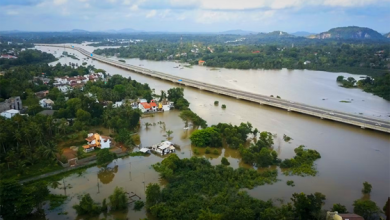
Glacial melt in the Himalayas threatens long-term river sustainability. Extreme floods and prolonged droughts disrupt predictable flows.
Pakistan’s per capita water availability has dropped dramatically since 1947. Population growth and limited reservoir capacity worsen vulnerability.
For climate data, consult the Intergovernmental Panel on Climate Change (link: https://www.ipcc.ch).
Internal Policy Response: Strengthening Resilience
Water as a Weapon cannot be countered solely through diplomacy. Pakistan must invest in:
- New reservoirs and dams
- Efficient irrigation systems
- Water conservation reforms
- Climate adaptation policies
(Internal link suggestion: Read our detailed analysis on Pakistan’s Water Scarcity Crisis.)
National resilience reduces external leverage.
Water as a Weapon: The Strategic Implications
Water as a Weapon represents a silent shift in South Asian geopolitics.
Unlike tanks or aircraft, dams do not roar. Yet their strategic impact can be equally profound. If mistrust prevails, every hydroelectric project will be viewed through a security lens.
The transformation of rivers into instruments of coercion risks destabilising not only bilateral relations but regional ecological balance.
The Path Forward
History from 1947 to 2026 reveals a rivalry that has changed form but not intensity.
From Kashmir to Kargil, from Siachen to Shahpur Kandi, the pattern persists.
Water as a Weapon may define the next phase unless cooperation prevails over confrontation.
Rivers are shared natural systems. They ignore political boundaries and bind communities together. Converting them into tools of pressure undermines regional stability.
Diplomacy, transparency, and adherence to treaty mechanisms remain essential.
Conclusion
Water as a Weapon is emerging as the new frontier of an old conflict between Pakistan and India. While wars of the past were fought with artillery and infantry, the conflicts of the future may revolve around reservoirs and river flows.
The Indus Waters Treaty remains a crucial safeguard. Its preservation requires good faith, legal clarity, and technical transparency.
South Asia stands at a crossroads: weaponise water and deepen hostility—or strengthen cooperation and secure shared prosperity.
The choice will shape the region’s future for generations.