
5 Powerful Breakthroughs as Chinese Agri Firm Partners With Universities to Modernize Pakistan’s Agriculture
Chinese agri firm partners with universities to modernize Pakistan’s agriculture through advanced seed technology, farmer training, and climate-resilient crops.
Chinese agri firm partners with universities to modernize Pakistan’s agriculture, marking a major step toward climate-resilient farming, improved crop productivity, and enhanced farmer skills across the country.
Amid rising temperatures, frequent floods, and surging food demand, this collaboration is introducing advanced cultivation techniques, cutting-edge seed technologies, and structured farmer education programs aimed at transforming Pakistan’s agricultural landscape.
Experts believe the initiative could significantly boost food security while helping farmers adapt to climate change.
Strategic China-Pakistan Agricultural Collaboration
The initiative is being led by Wuhan Qingfa Hesheng Seed Company Ltd, one of China’s leading agricultural seed enterprises.
Working in partnership with Pakistani universities, research institutes, and agribusinesses, the firm aims to:
- Upgrade farming skills
- Improve seed technology
- Enhance climate risk management
- Strengthen food supply chains
The program reflects growing agricultural cooperation between China and Pakistan, particularly in food security and climate adaptation.
Farmer Training at the Core of Modernization
According to Zhou Xusheng, Country Director of the company in Pakistan, education remains the foundation of agricultural transformation.
Rather than focusing solely on seed distribution, the firm prioritizes:
- Hands-on cultivation training
- Variety performance education
- Climate risk mitigation techniques
- Soil and water efficiency practices
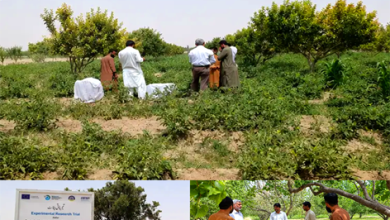
More than 100 field training sessions are conducted annually across Pakistan, equipping farmers with modern farming skills.
“Providing quality seed alone is not enough. Farmers must know how to use it effectively,” Zhou emphasized.
University Partnerships Driving Innovation
A major pillar of the initiative is academic collaboration, particularly with Huazhong Agricultural University, one of China’s leading agricultural science institutions.
Under the joint training program:
- 1,000 Pakistani agriculture graduates completed intensive courses in China
- Curriculum tailored to Pakistan’s seed technology needs
- Focus on modern crop breeding and climate-smart farming
Students received both classroom education and real-world exposure at China’s advanced agricultural zones.
Climate-Resilient Crops for a Warming Future
Climate change is already reshaping Pakistan’s farming conditions.
The country faces:
- Record-breaking heatwaves
- Increased flooding cycles
- Shifting growing seasons
- Soil degradation
To counter these risks, the company is developing heat-tolerant and flood-resilient crop varieties directly in Pakistan, rather than relying solely on Chinese trials.
This localized research approach ensures seeds are adapted to Pakistan’s specific environmental conditions.
External Resource: https://www.fao.org/climate-change
Women’s Empowerment in the Agricultural Value Chain
Beyond productivity, the program also prioritizes social inclusion.
The company is working with local authorities to increase women’s participation through:
- Family-based processing units
- Home-scale agricultural enterprises
- Nutrition-focused crop programs
These initiatives enable rural women to generate income while improving household food security — a key factor in sustainable rural development.
Technology Transfer Across the Production System
Trainees were introduced to modern agricultural supply chains through exposure at:
- China’s National Agricultural Parks
- High-Technology Farming Zones
- Fertilizer and seed manufacturing facilities
- Food processing industries
This holistic learning approach demonstrates how modern agriculture integrates:
Seed research
Precision farming
Supply chain efficiency
Market access
The goal is to replicate similar productivity systems in Pakistan.
External Resource: https://www.worldbank.org/en/topic/agriculture
Addressing Pakistan’s Rising Food Demand
With a population exceeding 242 million, Pakistan’s food consumption continues to rise rapidly.
The vegetable sector, in particular, faces:
- High daily demand
- Post-harvest losses
- Limited climate-resilient varieties
To bridge supply gaps, the company is introducing high-yield Chinese vegetable varieties tailored to Pakistan’s growing conditions.
This expansion aims to stabilize food prices while increasing farmer income.
Internal Link Example: https://vow101.com/news-on-climate-change-crisis-mitigation-action/
Long-Term Impact on Food Security
Experts say the collaboration could deliver long-term benefits including:
- Improved crop yields
- Reduced climate vulnerability
- Skilled farming workforce
- Enhanced rural livelihoods
- Stronger seed research ecosystem
By combining education, innovation, and climate science, the program supports Pakistan’s shift toward sustainable agriculture.
The Road Ahead for Sustainable Agriculture
As climate threats intensify, agricultural modernization is no longer optional — it is essential.
The China-Pakistan partnership demonstrates how:
- Knowledge transfer
- University collaboration
- Technology localization
- Farmer empowerment
can reshape food systems in developing countries.
If scaled nationwide, such programs could play a decisive role in securing Pakistan’s agricultural future.