
5 Urgent Warnings as Musadik Malik Climate Accountability Call Shakes ThinkFest 2026
Musadik Malik climate accountability message at ThinkFest 2026 highlights science diplomacy, climate justice, and global responsibility for vulnerable nations like Pakistan.
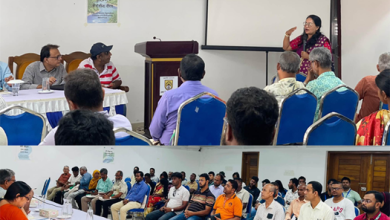
Musadik Malik climate accountability became the defining theme on the second day of ThinkFest 2026, as Pakistan’s Federal Minister for Climate Change delivered a powerful and urgent address in Lahore. Speaking at the Alhamra Arts Council, Dr. Musadik Malik reframed climate change not merely as an environmental issue—but as a deep failure of international cooperation, ethics, and justice.
His remarks resonated strongly with policymakers, researchers, students, and civil society leaders gathered at one of Pakistan’s most influential intellectual forums.
ThinkFest 2026 and the Rise of Science Diplomacy
The high-profile session, titled “From Lab to World Stage: The Power of Science Diplomacy,” explored how global scientific collaboration can reshape international climate action.
Dr. Malik argued that the era of isolated, inward-looking research must end. In its place, he proposed scientific diplomacy—a model where nations collaborate across political divides through shared research, innovation, and data-driven policymaking.
“Science is the only language that remains universal,” Malik told the audience.
This message aligned with growing global calls for evidence-based climate governance promoted by institutions such as the
External Link: UNFCCC Nations Framework Convention on Climate Change
External Link: IPCC Intergovernmental Panel on Climate Change
Why Climate Change Is a Failure of Global Cooperation
Musadik Malik climate accountability messaging focused heavily on global imbalance. He highlighted how climate change exposes the weaknesses of the current international system—where responsibility and consequences are unevenly distributed.
Despite decades of climate summits, pledges, and declarations, vulnerable countries continue to suffer disproportionately while major emitters delay meaningful action.
This, Malik argued, represents a systemic injustice, not a natural inevitability.
Pakistan’s Climate Vulnerability and Moral Argument
Pakistan contributes less than 1% of global carbon emissions, yet ranks among the most climate-vulnerable nations in the world. From devastating floods to prolonged heatwaves, climate impacts have already become a matter of survival.
Dr. Malik emphasized that for countries like Pakistan, scientific cooperation is not optional—it is existential.
Science as a Tool of Power—and Justice
One of the most striking elements of Malik’s speech was his framing of science as a form of power.
He argued that nations dominating scientific research and technological innovation also dominate global policy outcomes. Without equitable access to research collaboration, developing countries remain locked out of decision-making spaces.
Scientific diplomacy, Malik said, can rebalance this power by allowing shared ownership of knowledge, climate data, and solutions.
The Case for Holding High-Emitting Nations Accountable
Musadik Malik climate accountability arguments reached their sharpest point when he addressed financial responsibility.
“It is fundamentally wrong for profit to be privatized by the few while the climatic consequences are socialized among the many.”
He criticized the global economic system where carbon-heavy industries generate immense wealth for developed economies, while climate-related destruction is borne by poorer nations.
Malik called for a global accountability mechanism—one that links emissions history directly to financial responsibility, echoing long-standing demands under the Loss and Damage framework.
For reference:
External Link: World Bank
From Research Labs to Global Policy Tables
The minister urged scientists to move beyond academic silos and actively engage in diplomacy, policymaking, and international negotiations.
According to Malik, data alone is not enough. Ethical responsibility must guide how scientific findings are translated into global action.
This approach positions science not as a passive observer—but as a driver of global climate justice.
Audience Response and Pakistan’s Global Positioning
The session drew a packed audience and sustained applause, reflecting growing public appetite for stronger climate leadership.
Observers noted that Malik’s remarks positioned Pakistan as a moral and intellectual leader in climate justice debates—particularly among Global South nations seeking fairer climate governance structures.
ThinkFest 2026 thus became more than a cultural event; it became a platform for reshaping Pakistan’s climate diplomacy narrative.
Why Scientific Diplomacy Matters for the Future
As geopolitical tensions rise and climate risks intensify, scientific diplomacy offers a rare neutral ground for cooperation.
By promoting shared research initiatives, climate modeling, and innovation partnerships, countries can bypass political deadlock and focus on survival-driven collaboration.
Musadik Malik climate accountability messaging underscored that without this shift, global climate targets will remain aspirational rather than achievable.
Conclusion: A Defining Climate Justice Moment
Dr. Musadik Malik’s ThinkFest 2026 address marked a defining moment in Pakistan’s climate discourse. By linking science, power, and justice, he challenged the global community to rethink how responsibility is assigned—and how solutions are built.
His call was clear: climate change is not just a scientific crisis, but a moral test of international cooperation. And without accountability, diplomacy, and shared knowledge, the cost will continue to be paid by those least responsible.