

Pakistan Issues Stark Warning on Food Security as Climate Shocks Intensify at Berlin Forum
Pakistan food security climate shocks dominated discussions at the Berlin GFFA as officials warned that floods, droughts and heat extremes threaten the Indus-based food system and regional stability.
Pakistan food security climate shocks took center stage at the Global Forum for Food and Agriculture (GFFA) 2026 in Berlin, as Islamabad warned that intensifying floods, prolonged droughts, and extreme heat are rapidly undermining agricultural productivity and rural livelihoods.
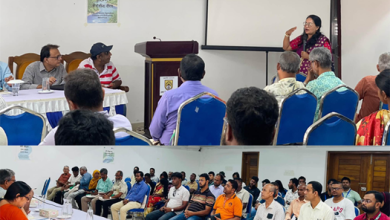
Speaking at the high-level international gathering, Federal Minister for National Food Security and Research Rana Tanveer Hussain described climate volatility as an existential threat to Pakistan’s food system, which depends heavily on climate-sensitive water resources.
Short-term weather extremes are now translating into long-term structural risks for food availability, affordability, and social stability.
Climate Extremes Disrupt Pakistan’s Agricultural Backbone
Pakistan’s agriculture sector employs nearly 40% of the workforce and contributes significantly to exports, food supply chains, and rural incomes. However, Pakistan food security climate shocks have repeatedly disrupted planting cycles, damaged standing crops, and destroyed irrigation infrastructure.
Recent years have seen:
- Devastating floods submerging millions of acres
- Severe droughts reducing canal flows
- Record-breaking heatwaves affecting crop yields
According to the Food and Agriculture Organization (FAO), climate volatility is now one of the leading drivers of food insecurity in South Asia.
Indus River System: Lifeline Under Pressure
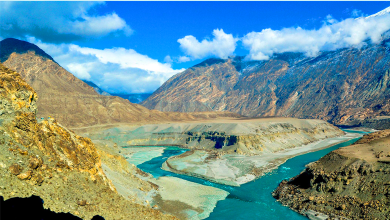
At the heart of Pakistan food security climate shocks lies the Indus River system, which supports agriculture, industry, and ecosystems for over 240 million people.
The Indus Basin irrigates nearly 80% of Pakistan’s farmland, making it one of the world’s most intensively managed river systems. Yet rising temperatures, glacial retreat, erratic monsoons, and groundwater depletion are placing unprecedented stress on this lifeline.
Without systemic water resilience, Pakistan’s food supply remains dangerously exposed.
Berlin GFFA 2026: Pakistan’s Call for Water Resilience
Addressing global policymakers and agricultural leaders in Berlin, Hussain emphasized that water security is inseparable from food security.
He warned that climate-induced water shocks are no longer isolated disasters but recurring systemic failures requiring urgent adaptation strategies.
Pakistan called for:
- Climate-resilient water governance
- Regional cooperation on shared basins
- Global climate finance for food systems
Transboundary Water Risks and the Indus Waters Treaty
A critical dimension of Pakistan food security climate shocks is transboundary water governance.
Hussain reaffirmed Pakistan’s commitment to international water law and described the Indus Waters Treaty (IWT) as a cornerstone of regional stability. He expressed serious concern over India’s April 2025 announcement to hold the treaty “in abeyance.”
Pakistan considers the Indus system a national lifeline, warning that unilateral actions could destabilize food security for millions.
External Link: World Bank about Indus Water Treaty
External Link: Indus Waters Treaty
Domestic Reforms to Counter Climate Shocks
To address Pakistan food security climate shocks, the government is implementing wide-ranging agricultural reforms focused on water efficiency and climate adaptation.
Key initiatives include:
- High-efficiency irrigation systems
- Laser land leveling
- Water-smart cropping patterns
These reforms aim to reduce water waste while improving productivity under increasingly hostile climate conditions.
Climate-Smart Agriculture and Seed Innovation
Pakistan is also scaling up climate-smart agriculture, including:
- Drought-tolerant wheat varieties
- Heat-resistant rice and maize seeds
- Precision farming technologies
Such innovations are critical to sustaining yields as climate thresholds are repeatedly breached.
External Link: CGIAR Climate-Smart Agriculture
Ecosystem-Based Solutions and Groundwater Stress
Beyond farms, Pakistan food security climate shocks are driving ecosystem degradation.
Watershed rehabilitation, reforestation, and groundwater recharge projects are being promoted to stabilize hydrological cycles. Excessive groundwater extraction—especially in Punjab and Sindh—has emerged as a silent crisis threatening long-term food security.
Nature-based solutions are increasingly viewed as cost-effective climate buffers.
Regional Stability, Food Security and Climate Diplomacy
Pakistan warned that food insecurity driven by climate shocks can escalate into regional instability, displacement, and conflict.
Water cooperation, particularly in shared river basins, was described as a peace-building necessity rather than a diplomatic option.
Climate stress, if unmanaged, risks turning food systems into geopolitical flashpoints.
International Cooperation for a Resilient Food Future
Concluding his address, Hussain stressed that Pakistan stands ready to work with international partners to transform water from a source of risk into a foundation for sustainable development.
Global solidarity, climate finance, and fair water governance are essential to safeguarding food systems in climate-vulnerable nations.
Pakistan food security climate shocks are not a distant warning—they are a present global challenge demanding urgent, coordinated action.