
WRAP Water Governance in Pakistan Drives Hopeful Environmental Accountability
Discover how WRAP water governance in Pakistan is empowering journalists, farmers, and communities through evidence-based reporting, innovation, and accountability.
WRAP water governance Pakistan has emerged as a powerful and hopeful model for strengthening environmental accountability, sustainable agriculture, and informed public discourse. Under the Foreign, Commonwealth & Development Office (FCDO)–funded Water Resource Accountability in Pakistan (WRAP) programme, the International Water Management Institute (IWMI) is redefining how data, journalism, and community engagement can drive climate resilience.
In a country facing intensifying water stress, climate volatility, and governance gaps, the role of informed environmental journalism has never been more critical.
Strengthening Environmental Journalism Through WRAP
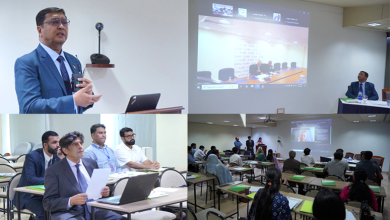
As part of its Environmental Journalists’ Quarterly Meeting (EJQM), IWMI hosted journalists from Karachi and Quetta, representing print, electronic, and digital platforms. This marked a strategic expansion beyond traditional media hubs like Islamabad and Lahore.
The initiative focuses on:
- Strengthening evidence-based reporting
- Enhancing journalists’ understanding of water governance
- Connecting media with on-ground climate solutions
- Supporting independent, credible storytelling
This engagement ensures that WRAP water governance in Pakistan reaches policymakers, farmers, civil society, and the general public through trusted media voices.
Islamabad Briefing: Building Accountability and Trust
The exposure visit began in Islamabad with a comprehensive briefing led by:
- Muhammad Ashraf, Country Representative Pakistan, IWMI
- Kanwal Waqar, Gender & Social Inclusion Specialist
The session explored:
- Water governance challenges in Pakistan
- Institutional accountability mechanisms
- WRAP’s policy-aligned interventions
- Gender-inclusive water management
This dialogue highlighted how data transparency and inclusive governance can strengthen national water security frameworks.
External Resource: International Water Management Institute (IWMI)
Chakwal Pilot: Smart Water Solutions in Action
The first field visit took journalists to Chakwal district in Punjab, where WRAP interventions are transforming agricultural decision-making.
Key Technologies Observed:
- Soil moisture sensors
- Flux towers
- CTD divers
These tools enable farmers to move away from guesswork toward data-driven irrigation practices.
Real Impact:
Women farmers shared how soil moisture sensors have:
- Reduced water wastage
- Lowered diesel and electricity costs
- Minimized over-irrigation
- Improved crop yields
This demonstrates how WRAP water governance Pakistan directly supports climate-smart agriculture.
Mansehra Innovation: Precision Irrigation and Equity
In Mansehra, Khyber Pakhtunkhwa, journalists observed another powerful example of WRAP’s impact.
Key Innovations:
- Precision irrigation systems for orchards
- Community-scale hydraulic ram pumps
These systems deliver water uphill without electricity, saving time and labor—especially for women and girls.
Community Benefits:
- Improved orchard productivity
- Reduced livestock stress
- Expanded small-scale vegetable farming
- Enhanced food security
This model reflects how technology, when combined with local knowledge, can drive inclusive development.
Women, Water, and Community Transformation
A recurring theme across both pilot districts was the central role of women.
Women farmers described how WRAP-supported tools have:
- Reduced daily labor burdens
- Increased decision-making power
- Improved household incomes
By centering gender inclusion, WRAP water governance in Pakistan ensures sustainability is both socially just and economically viable.
Why Independent Media Matters for Climate Accountability
By enabling firsthand observation, IWMI ensures journalists can independently verify and communicate impact. This strengthens:
- Public trust
- Policy dialogue
- Evidence-based advocacy
Environmental journalism becomes a bridge between grassroots realities and national decision-making.
External Resource: UK Foreign, Commonwealth & Development Office
Policy Impact and the Road Ahead
WRAP’s model aligns with Pakistan’s broader climate and water strategies, supporting:
- Integrated water resource management
- Climate adaptation planning
- Data-driven governance
The initiative also complements national climate frameworks and international commitments.
Conclusion: A Hopeful Path Forward
The WRAP programme demonstrates how evidence, inclusion, and accountability can reshape Pakistan’s water future. By empowering journalists, amplifying community voices, and showcasing practical solutions, WRAP water governance Pakistan is building a resilient pathway toward climate adaptation and sustainable development.
As environmental pressures intensify, such collaborative, transparent models offer not just solutions—but hope.