
CM Maryam reaches Brazil to attend global COP30 Conference — 7 Remarkable Positive Milestones for Punjab’s Climate Transition
CM Maryam reaches Brazil to attend global COP30 Conference where Punjab proposes breakthrough climate resilience, EV leadership & green ecosystems.
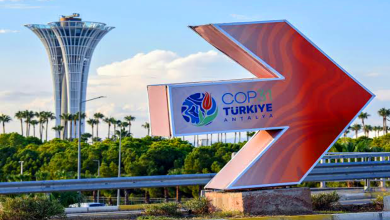
CM Maryam reaches Brazil to attend global COP30 Conference — and this global diplomatic moment is already being celebrated in climate governance circles worldwide. Her presence in Brazil at COP30 has immediately placed Punjab’s climate agenda directly inside the international conversation — not as a passive region affected by climate change — but as a province actively proposing transition, EV innovation, forest protection, youth-led sustainability and data-driven climate preparedness.
CM Maryam reaches Brazil to attend global COP30 Conference
Maryam Nawaz Sharif — elected as Punjab’s Chief Minister in 2024 — is attending COP30 in Brazil with Senior Provincial Minister Marriyum Aurangzeb, Education Minister Rana Sikandar Hayat and Local Government Minister Zeeshan Rafique. Her keynote will highlight measurable green transition pillars including:
- EV mass-adoption infrastructure
- green public transport in Punjab’s top 10 cities
- forest & wildlife conservation
- ecosystem restoration
- climate financing access
Why Punjab’s delegation matters
Punjab is 60%+ of Pakistan’s population.
Punjab is 54%+ of agriculture-based GDP contribution.
Punjab is urbanising at 3% per year.
Punjab daily generates ~19,000 tons of municipal waste.
This makes Punjab one of South Asia’s most consequential subnational climate actors.
If Punjab deploys EV fleets, shifts construction to low-carbon materials, and doubles forest cover — Pakistan’s national carbon inventory will shift mathematically.
Brazil COP30 agenda linking EV transition & forests
COP30 in Brazil is the first COP hosted inside a rainforest nation with direct Amazon stewardship.
This COP isn’t only about Paris Agreement compliance — this COP is about global green super-projects:
| Agenda Pillar | Relevance to Punjab |
|---|---|
| EV transition | Punjab EV policy roll-out 2025–2030 |
| Forest credits | Punjab community forestry projects |
| Climate Finance | MDB conversations |
| Hydromet Data | Monsoon preparedness |
Major climate commitments Punjab will propose
Punjab’s climate blueprint (as communicated in policy drafts) includes:
EV charging corridors on all motorways
Solar-powered schools (10,000 schools target)
500,000 trees per district for biodiversity
Provincial climate financing authority
Data-based flood forecasting neighbourhood cells
Pakistan’s climate vulnerability backdrop
Pakistan is global Top-10 climate vulnerability index nation.
Punjab’s monsoon patterns are transforming:
Earlier onset → higher intensity spikes → urban flooding.
COP30 gives Punjab a platform to:
- negotiate finance for adaptation
- negotiate green transport credit swaps
- negotiate direct access to loss & damage facility
International diplomacy at COP30
Maryam Nawaz Sharif’s diplomacy includes scheduled dialogues with:
- UNFCCC secretariat officials
- Green Climate Fund representatives
- Punjab’s new language is climate assertiveness — not climate victimhood.
What happens next after 21 November?
After she returns — Punjab cabinet will be expected to:
- move COP commitments into regulation
- translate EV pledges into line-item budgeting
- publish mountainous watershed resilience mapping
Punjab’s climate transition narrative shifts from “we need help” → “we are building enabling systems.”
This is geopolitically powerful.
Conclusion
CM Maryam reaches Brazil to attend global COP30 Conference — and this is not a symbolic arrival — this is structural political signalling.
Punjab is entering a new era of climate statecraft:
- EV momentum
- forest credit leverage
- youth climate education
- green investment diplomacy
- data-based adaptation
If Punjab implements even 40% of what is tabled — it will become South Asia’s first subnational climate transformation case study.