
Existential Issues Pakistan Faces: Urgent Transformative Warning from Finance Minister in 2025
Finance Minister Muhammad Aurangzeb warns that the existential issues Pakistan faces — population growth & climate change — are now urgent national threats requiring immediate adaptation, provincial coordination & deregulated agriculture markets.
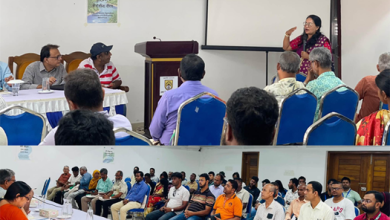
Existential issues Pakistan faces are now formally being categorised as top-tier national priorities — and not merely development concerns — by Pakistan’s financial leadership. On Wednesday, Finance Minister Muhammad Aurangzeb told the business community in Karachi that population growth and climate change are not “development problems” — they are existential.
The finance minister said clearly that economic challenges can be managed — but existential issues Pakistan faces are population expansion and climate stress — because they are foundational, structural and directly connected to human capability, food systems, agriculture competitiveness and long-term national survival.
This statement marks an important shift — because it is coming from the finance ministry — not just planning, social welfare or climate institutions.
Population — the First of the Existential Issues Pakistan Faces
Pakistan is now home to over 251 million+ people according to the World Bank — which lists population growth at 1.5% per year.
The 2023 Census showed something even more alarming: population jumped from 207.7 million in 2017 to 241.5 million in 2023 — an average growth of 2.55% per year — far beyond sustainable demographic benchmarks.
Aurangzeb made a powerful point:
“Population is not only about high-level numbers — it is child stunting, learning poverty, and girls out of school.”
These are existential issues Pakistan faces not because population is a “problem” — but because population growth is out-running state capability.
Population demography is out-running:
- education supply
- healthcare supply
- water supply
- food systems
- school absorption capacity
- job creation
When population growth outpaces institutional growth — the country produces poverty by default.
Climate Change — The Second Existential Issues Pakistan Faces
Aurangzeb also warned that climate change is not theoretical for Pakistan.
He highlighted what Pakistan always repeats globally: Pakistan emits less than 1% of global emissions — but is one of the most climate-hit nations in the world.
But here — he said something new.
“Only saying ‘we do not make emissions but have to adapt’ is not enough — demonstrate it.”
Pakistan already has funding streams.
Donors are already here.
Projects are already sanctioned.
“Use the Funding You Already Have” — The Hard Part
The fiscal comment matters — because the finance minister directly told stakeholders:
“We have funding. First utilise the funding we have.”
This statement essentially tells provinces and ministries:
Pakistan’s challenge is not lack of climate money.
Pakistan’s challenge is lack of climate execution.
And this is why climate is now central to existential issues Pakistan faces — because adaptation failure will destroy agriculture, exports, wheat security and rural livelihoods.
Wheat & Sugar Deregulation — Government Must Exit the Value Chain
When asked about wheat & sugar policy — Aurangzeb said deregulation is now a clear, defined & adopted direction.
Government should exit where possible.
Wheat is strategic because it is staple — but otherwise — it must also move to market-based pricing.
“Deregulation must be end-to-end” — not partial, he said.
Because partial deregulation collapses supply chains, distorts markets and creates black-market pricing.
The government launched Wheat Policy 2025-26 with minimum support price — especially because floods damaged wheat areas.
But structurally — over time — the state must step back.
Agriculture Export Losses — The Climate Damage is Real
Aurangzeb also confirmed that Pakistan lost export potential.
Rice — especially in Punjab — suffered climate damage.
Exports are still $3–4 billion — but the loss window is real.
This is where climate & population intersect — the core existential issues Pakistan faces:
- Pakistan’s food demand is rising due to population
- Pakistan’s food production is shrinking due to climate
National security literature calls this the “double trap”.
Policy Context — parliament wants demographic emergency
Last month — parliamentarians demanded that population explosion be declared a national emergency.
The Council of Islamic Ideology also endorsed birth spacing — and wants Ulema to deliver that message more aggressively.
This is crucial because — in Pakistan — religious framing matters.
This aligns with international best practice — where religious institutions help build trust and uptake.
Why Are These Existential Issues Pakistan Faces?
Aurangzeb clarified:
Economic issues can be solved “in a few years” — but population & climate are irreversible if ignored.
That is why he used the term “now, now”.
Conclusion — existential issues Pakistan faces must be addressed today
Pakistan’s finance architecture is now recognizing — at the highest economic forum level — that the greatest threats to GDP are not IMF payments or foreign exchange — but existential issues Pakistan faces:
- rapid population growth
- climate impacts on agriculture & food security
If this shift leads to real execution — not only policy speeches — then Pakistan will not only survive these existential shocks — it may even convert them into reform momentum and national resilience.