
Pakistan’s Climate Crisis: A Deadly Wake-Up Call and 7 Powerful Lessons from the 2025 Floods
Pakistan’s Climate Crisis is deepening as the 2025 floods devastate millions. Explore the urgent need for securitization, resilience, and national security integration to combat climate-induced disasters.
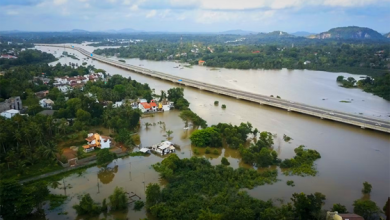
Pakistan’s Climate Crisis has once again reached catastrophic levels with the 2025 floods, proving that climate change is no longer an environmental concern but a full-scale national security threat. Since June, relentless cloudbursts and record-breaking monsoon rains — up to 80% above average in Punjab and Balochistan — have devastated communities.
- Over 900 fatalities
- 1,000+ injured
- 4.4 million people affected in Punjab alone
- 4,500+ villages submerged
- $ billions in agricultural and infrastructure losses
The floods have shaken national stability, with economists warning that GDP growth for 2025–2026 may slump to near zero, far below the targeted 3.6–4.2%. Agricultural collapse and surging food inflation are worsening public hardship.
A Legacy of Climate-Induced Disasters
Pakistan’s vulnerability to climate change is not new. History is filled with tragedies:
- 2010 Super Floods: Over 20 million displaced.
- 2022 Catastrophic Floods: One-third of the country submerged, 1,700+ dead, $30+ billion in damages.
- 2025 Flash Floods: A painful continuation of this cycle.
Each event is followed by pledges, global sympathy, and donor conferences. Yet, systemic reforms in planning, zoning, and infrastructure rarely materialize. The repetition highlights Pakistan’s failure to translate lessons into actionable resilience.
The Global Context: Climate Finance and Broken Promises
The climate justice debate remains central to Pakistan’s plight. Despite contributing less than 1% of global emissions, Pakistan ranks among the top 10 most climate-vulnerable nations.
At the International Conference on Climate Resilient Pakistan (Geneva, 2023), donors pledged $10.98 billion for post-2022 recovery. By April 2024, only $2.8 billion had been disbursed — much of it as loans, further sinking Pakistan into debt.
This highlights two harsh realities:
- Global commitments remain unfulfilled despite Paris Agreement pledges.
- Developing countries like Pakistan are trapped in fiscal and humanitarian crises.
(External reference: UN Climate Change)
National Vulnerabilities Amplifying the Crisis
Pakistan’s geographic and socio-political landscape multiplies climate risks:
- Flood-prone geography: River-fed plains and fragile mountain valleys.
- Deforestation and unchecked urban sprawl.
- Weak governance: Early warnings rarely lead to effective evacuations.
- Social inequality: Women-headed households, daily-wage laborers, and marginalized groups remain most vulnerable.
These internal weaknesses, combined with global under-delivery, perpetuate the vicious cycle of disaster–debt–displacement.
Securitization: Reframing Climate Change as a National Security Threat
The securitization of climate change means elevating it to the same level of priority as terrorism or defense threats. Pakistan’s National Security Policy (NSP) already acknowledges climate change as a non-traditional security risk, while the National Climate Change Policy (NCCP) outlines sectoral adaptation plans.
However, two key gaps persist:
- Implementation Weakness: NSP lacks resource allocation.
- Fragmentation: NCCP remains underfunded and poorly enforced across provinces.
Without bridging this gap, climate disasters will continue undermining Pakistan’s security, economy, and national integrity.
Smart Securitization: A Strategic Path Forward
To survive Pakistan’s Climate Crisis, securitization must go beyond rhetoric. A “smart securitization” strategy includes:
- Resilient Infrastructure: Reinforce roads, bridges, grids, and hospitals.
- Civil-Military Coordination: A national climate command linking civilian leadership with military logistics.
- Anticipatory Measures: Pre-approved cash transfers, micro-insurance, and rapid evacuation funding.
- Hyper-local Communication: Redundant, community-based alert systems.
- Rapid Post-Disaster Assessment: Tech-driven monitoring to accelerate aid and rebuilding.
By treating climate change as a battlefield, Pakistan can harness urgency and marshal resources to safeguard its future.
Conclusion: Turning Crisis into Resilience
The 2025 floods are not an anomaly — they are a warning of what lies ahead. For Pakistan, securitizing climate change is not a policy option but a survival imperative.
The choice is clear: continue the cycle of reaction and devastation, or reframe climate change as a national security challenge and take proactive steps.
Only through smart securitization, resilient governance, and genuine global climate justice can Pakistan break free from its tragic flood legacy and secure a livable future for its citizens.
PDF Link: https://epd.punjab.gov.pk/system/files/State%20of%20Environment%20Report%202025.pdf