Pakistan’s Flood Losses Trigger Grim Rs371bn Blow, GDP Growth Target Cut to 3.9% – IMF Briefed
Pakistan has informed the IMF about Rs371bn flood losses, slashing its GDP growth target to 3.9% for FY26. Learn how agriculture, infrastructure, and external financing are impacted.
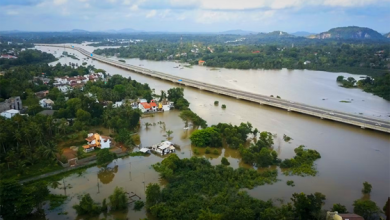
The recent floods in Pakistan have inflicted unprecedented losses, not just in financial terms but also in human tragedy. According to official figures presented to the IMF:
- 1,006 deaths and 1,063 injuries were reported.
- Over 12,500 houses damaged, leaving thousands displaced.
- 2,133 km of roads and 248 bridges destroyed.
- 3.26 million acres of crops wiped out.
- 1,098 schools and 128 healthcare facilities badly hit.
- 10,991 livestock lost and 1,291 commercial shops ruined.
The floods hit 52 districts nationwide, affecting 6.5 million people and displacing 2.5 million, raising alarms about food security and poverty escalation.
Economic Consequences of Flood Losses
The government has officially pegged total losses at Rs371 billion, which is already reshaping macroeconomic projections.
Agriculture Sector Blow
Agriculture—once targeted to grow at 4.5%—is now projected at 4.0%. Specific crop losses include:
- Cotton: Loss of 1.5–2 million bales, reducing production to 8–8.7 million bales.
- Wheat: Projected at 8.2–8.8 million tons, down from pre-flood estimates of 9.5 million tons.
- Sugarcane: Losses between 2.3–4.3 million tons, slashing production from 80 to 76–78 million tons.
- Maize: Reduction of 0.5–1.3 million tons.
Estimated agriculture sector losses = Rs155 billion, with Rs87 billion from key crops alone.
Industrial and Services Slowdown
- Industrial growth cut from 4.3% to 4.2%.
- Electricity, gas, and water supply dropped from 3.5% to 2.9%.
- Services sector slowed from 4% to 3.7%.
Province-Wise Breakdown of Flood Destruction
The floods left a highly uneven trail of destruction across provinces:
- KPK: 504 deaths, 3,222 houses damaged, 437 km of roads destroyed, and 5,467 livestock lost.
- Punjab: 304 deaths, 1,216 km of roads destroyed, 121 livestock lost.
- Sindh: 80 deaths, 281 houses damaged, and 235 livestock lost.
- Balochistan: 30 deaths, 5,086 houses damaged—the worst hit in housing.
- AJK: 201 km of roads destroyed and 94 bridges damaged.
- GB: 87 bridges destroyed, 1,260 houses damaged.
- ICT: 65 houses and three bridges damaged.
This province-wise disaster mapping underscores the nationwide scale of the catastrophe.
IMF Briefing on External Financing Needs
The Ministry of Finance outlined to the IMF that Pakistan requires $26 billion in external financing this fiscal year. Of this, $12 billion will be rolled over, with strong assurances from China.
The IMF was also told that Pakistan would gradually re-enter international capital markets, subject to two conditions:
- US Fed rate cuts improving investor appetite.
- Credit rating upgrade by at least one notch.
Bond Market Strategy: Panda and Eurobond Launch
Pakistan plans a two-pronged bond market strategy:
- Panda Bond: Expected launch in November 2025 in China, targeting $250–300 million.
- Eurobond: Planned for the last quarter of FY26, but dependent on international rating improvements and Fed monetary easing.
Meanwhile, Pakistan has already repaid $500 million Eurobond maturity in September 2025 and is preparing for another $1 billion repayment by April 2026.
Government’s Position and IMF Response
Finance Minister Muhammad Aurangzeb confirmed that no decision on new flood taxes has been taken, stressing that damage assessments will guide future fiscal adjustments.
In remarks to The News, he assured:
“Our resilience would work to overcome complexities on account of huge losses.”
The IMF delegation expressed satisfaction with Pakistan’s reform trajectory, though concerns remain over sustainability, disaster resilience, and food security.
Meanwhile, US investors are expected to explore rare earth and mineral opportunities in Pakistan, which could offer longer-term economic relief.
External and Internal Linking
- External Link: IMF Official Website
- External Link: World Bank – Pakistan Flood Recovery
- Internal Link: You can link this article to your previous one on Pakistan’s Climate Vulnerability
Conclusion: A Critical Test for Pakistan’s Economy
The Pakistan flood losses GDP growth trajectory highlights how natural disasters are now macroeconomic disruptors, not just humanitarian crises. With Rs371bn in damages, a downgraded GDP growth forecast of 3.9%, and urgent external financing needs, the country faces a stress test of resilience and financial strategy.
While the IMF and international partners remain cautiously optimistic, the real challenge for Pakistan lies in balancing recovery with economic stability—a task made harder by recurring climate shocks.
Yet, opportunities remain: with Chinese financing support, bond market re-entry, and US investment prospects, Pakistan could still navigate its way through the current turmoil—if resilience translates into actionable reforms.