

Disastrous Flood Damages in Pakistan: Preliminary Assessment to Be Completed in 10 Days, Says Ahsan Iqbal
Flood damages in Pakistan are under urgent review. Ahsan Iqbal announced that a preliminary assessment will be completed in 10 days with provincial collaboration.
Flood damages in Pakistan have once again emerged as a national tragedy, highlighting the country’s vulnerability to climate-induced disasters. Federal Minister for Planning, Development, and Special Initiatives, Ahsan Iqbal, confirmed that a preliminary assessment of the 2025 flood damages will be completed within 10 days. He stressed that close coordination with provincial governments is critical to ensure a comprehensive and transparent evaluation of the catastrophe.
This latest disaster underscores the urgent need for Pakistan to invest in climate resilience, disaster preparedness, and sustainable water management to reduce future risks.
Ahsan Iqbal’s Statement on Flood Assessment
During a high-level meeting of the Prime Minister’s Committee in Islamabad, chaired by Ahsan Iqbal, the government decided to finalize a preliminary assessment of flood damages within 10 days. The minister clarified that the complete assessment report will be prepared after waters recede, in partnership with provincial governments and relevant agencies.
Ahsan Iqbal emphasized that speculative reporting should be avoided. Instead, accurate data will be made available to the public once compiled. He also reassured that rehabilitation and relief operations are underway, coordinated between federal and provincial authorities.
Role of Provincial Governments in Damage Estimation
Provincial representatives attending the meeting highlighted that the true scale of destruction cannot be accurately measured until floodwaters recede. This position reflects the reality of Pakistan’s geographical and hydrological challenges.
The provinces will play a central role in:
- Conducting field surveys
- Gathering community-based damage reports
- Assessing losses to agriculture, housing, and infrastructure
- Coordinating resettlement strategies
This provincial-federal collaboration ensures that the final report reflects ground realities.
Media Responsibility and Transparency in Reporting
Ahsan Iqbal urged journalists and media outlets to avoid speculation and sensationalism regarding flood damages in Pakistan. He underlined the importance of accurate and transparent communication, noting that misinformation can worsen panic and hinder relief efforts.
The government has promised to release verified statistics once data collection is complete, maintaining credibility and transparency.
Rehabilitation and Relief Efforts in Flood-Affected Areas
Federal and provincial institutions are jointly carrying out relief operations, focusing on:
- Emergency shelters for displaced families
- Food and medical supplies
- Temporary repair of damaged roads and bridges
- Deployment of rescue teams in vulnerable districts
The National Disaster Management Authority (NDMA) and armed forces are actively engaged in rescue and rehabilitation missions. These operations highlight the state’s commitment to immediate humanitarian response, even while longer-term assessments are pending.
International Collaboration for Post-Disaster Needs Assessment
Ahsan Iqbal also announced that a comprehensive Post-Disaster Needs Assessment (PDNA) will be conducted in collaboration with international organizations. Such partnerships ensure:
- Independent verification of damages
- Access to global disaster recovery expertise
- Mobilization of international funding and climate finance
Past examples, such as the 2022 flood PDNA, demonstrate how joint assessments can attract billions in pledges for recovery and resilience projects.
Climate Change: The Root Cause of Recurring Floods
Flood damages in Pakistan are not isolated incidents but direct consequences of global climate change. The country faces:
- Rapid glacier melt due to rising temperatures
- Erratic monsoon patterns
- Increased frequency of floods and droughts
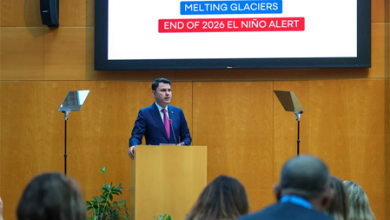
Ahsan Iqbal highlighted that Pakistan’s glaciers are melting at unprecedented rates, significantly raising flood risks. The government recognizes that adaptation and resilience-building must be at the heart of national planning.
For context, Pakistan ranks among the top 10 most climate-vulnerable countries globally (Germanwatch Climate Risk Index).
Geopolitical Context and India’s Role
Ahsan Iqbal criticized India for allegedly using the flood crisis for political point-scoring. He noted that climate disasters demand solidarity, not politics.
The Indus Waters Treaty and ongoing water disputes further complicate regional dynamics, as upstream interventions can impact downstream flood intensity. Pakistan’s policymakers argue that cooperative water management is critical in the face of shared climate risks.
(See related analysis: Indus Waters Treaty Challenges).
Government’s National Climate Response Plan
To address recurring climate disasters, the federal government is preparing a comprehensive national plan that includes:
- Investment in flood-resilient infrastructure
- Early warning systems for communities
- Expansion of green initiatives and reforestation
- Water storage and management projects
- Strengthening of disaster response institutions
This proactive planning aims to reduce Pakistan’s long-term vulnerability to floods, ensuring that tragedies of this scale are mitigated in the future.
Conclusion: Building a Resilient Pakistan
The ongoing assessment of flood damages in Pakistan marks the beginning of a critical recovery process. While the preliminary report will be available in just 10 days, the full scope of devastation will take longer to quantify.
By ensuring transparent reporting, coordinating with provinces, and engaging international partners, Pakistan hopes to secure the resources and strategies needed for sustainable recovery.
Ultimately, the floods of 2025 reinforce a sobering truth: climate change is no longer a distant threat but a present reality. Building resilience is no longer optional—it is a national survival priority.
Internal Links
- Pakistan’s Climate Vulnerability Report
- National Reforestation Efforts: Plant for Pakistan
- Karachi’s Water Crisis and Urban Infrastructure