
Pakistan Floods Force Mass Evacuations as Sikh Holy Shrine Submerged
Pakistan floods force over 200,000 evacuations as floodwaters submerge towns, farms, and the Kartarpur Sahib gurdwara. Learn how extreme monsoon rains devastated Punjab.
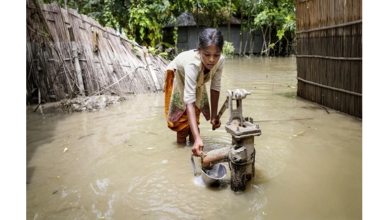
The Pakistan floods have unleashed a humanitarian crisis across Punjab province, forcing over 200,000 people to flee their homes. Entire towns and fertile farmlands were submerged under rising waters, leaving communities cut off and livelihoods destroyed.
According to the National Disaster Management Authority (NDMA), the flood situation reached exceptionally high levels in recent days as monsoon rains lashed northern and eastern regions. The overflow of rivers and water releases from India’s upstream dams worsened the scale of destruction.
More than 14,000 people were evacuated in Kasur, while nearly 90,000 residents were rescued in Bahawalnagar. In total, relief agencies have established dozens of temporary shelters in schools and community halls to house displaced families.
Sikh Holy Shrine Kartarpur Sahib Inundated
One of the most shocking visuals of the Pakistan floods came from Narowal, near the Indian border. Here, the Kartarpur Sahib gurdwara—one of Sikhism’s most revered shrines—was engulfed by floodwaters.
The shrine’s white domes and courtyard were almost completely submerged, with water also inundating the adjoining Kartarpur Corridor, a special visa-free zone for Sikh pilgrims.
This shrine holds immense spiritual significance, as it is the final resting place of Guru Nanak Dev Ji, the founder of Sikhism. The flooding has therefore not only created a humanitarian tragedy but also a cultural and religious one.
Impact on Border Regions: Wagah-Attari Ceremony Disrupted
Floodwaters did not spare symbolic sites either. At the Wagah-Attari border crossing, where the daily beating retreat ceremony is performed with patriotic fervor, soldiers were seen marching in ankle-deep water.
The flooding highlighted how border regions of both India and Pakistan are extremely vulnerable during peak monsoon events. Despite strained ties, India formally alerted Pakistan to the risk of downstream flooding—an unusual act of cooperation given the suspension of the Indus Waters Treaty.
Indian Punjab Also Reeling from Flood Devastation
The Indian state of Punjab also faced devastating floods. In a dramatic rescue, four young boys swept away near the border were saved by soldiers after clinging to a tree for hours.
Further north in Jammu, landslides and flash floods struck along the pilgrimage route to the Vaishno Devi shrine, killing at least 30 people and cutting off critical highways.
The shared disaster underscores how South Asia’s interconnected rivers and weather systems demand stronger regional cooperation—even when political relations remain tense.
Role of the Rivers Ravi, Chenab, and Sutlej
The NDMA warned that the Ravi, Chenab, and Sutlej rivers have risen to “extremely high” levels, carrying millions of cubic meters of water downstream. These rivers are lifelines for agriculture in Punjab but become agents of destruction when swollen by intense rainfall and dam releases.
Communities living near embankments and riverbanks were urged to move to higher ground immediately. Rescue boats patrolled submerged villages, bringing stranded families and their livestock to safety.
Pakistan Army and Relief Agencies Step In
The Pakistan Army deployed units across at least seven districts. Helicopters dropped food and medicine into cut-off villages, while engineers worked to reinforce embankments.
Schools and colleges were converted into emergency shelters, housing displaced families who lost their homes to the raging waters.
Despite these efforts, aid groups warned that many areas remain inaccessible, and the risk of disease outbreaks is growing as stagnant floodwater mixes with sewage.
Climate Change Making South Asian Floods Worse
Experts have repeatedly warned that climate change is making South Asia’s monsoons more intense and unpredictable. In fact, meteorologists noted that Sialkot recorded its heaviest 24-hour rainfall in nearly 50 years during this disaster.
Pakistan is among the world’s most climate-vulnerable nations, despite contributing less than 1% of global emissions. In 2022, catastrophic floods submerged one-third of the country, killed nearly 1,800 people, and caused $23 billion in damages.
Scientists emphasize that without urgent adaptation measures, such extreme disasters will only become more frequent and deadly.
For deeper insights on the link between climate change and floods, visit World Meteorological Organization.
Government Response and Future Outlook
Prime Minister Shehbaz Sharif announced federal support for flood-hit regions, prioritizing drainage and relief in Lahore, Sialkot, and Gujrat. He also warned that more rainfall is expected in the coming days, urging citizens to stay vigilant.
So far, Pakistan has reported over 800 flood-related deaths since late June, with half of them in August alone.
Looking ahead, the government plans to expand flood early-warning systems and strengthen river embankments. However, experts argue that without international climate finance, Pakistan cannot cope with the escalating costs of recovery.
For related analysis on Pakistan’s climate vulnerability, read our coverage of Pakistan’s Climate Crisis.
Conclusion
The Pakistan floods of 2025 have once again exposed the country’s fragile infrastructure, deepening humanitarian and cultural losses. From the inundation of Kartarpur Sahib gurdwara to mass evacuations across Punjab, the scale of devastation has left the nation reeling.
With climate change intensifying monsoon extremes, Pakistan faces a future where such disasters may no longer be exceptional but routine and recurring threats. The urgent need for adaptation, regional cooperation, and global climate justice has never been clearer.
Internal Link Example: Pakistan’s Climate Crisis
External Link Example: World Meteorological Organization