

7 Urgent Lessons from Floods: Climate Change, Food Security, and Agricultural Transformation in Pakistan
Floods and climate change threaten food security. Discover why Agricultural Transformation in Pakistan is now urgent to protect farmers, crops, and national resilience.
Agricultural Transformation in Pakistan has become an urgent national priority as floods, climate change, and food insecurity converge into a single existential challenge. As the country approaches Kissan Day and extends Salam Kissan to its farmers, this moment demands more than symbolic recognition—it requires decisive action to modernize farming systems and protect the backbone of Pakistan’s economy.
Farmers continue to show remarkable resilience despite mounting pressures. Yet resilience alone cannot offset the scale of climate-driven disruptions now threatening Pakistan’s food system.
Kissan Day and Salam Kissan: Honouring Farmers’ Resilience
Kissan Day is not merely ceremonial. It represents a national acknowledgment of farmers’ sacrifices and an opportunity to confront the structural vulnerabilities they face. The Salam Kissan initiative reinforces this message by amplifying farmer voices and highlighting the urgent need for policy reform, innovation, and investment.
Recognizing farmers without transforming the systems they depend on would be an empty gesture.
Floods as the New Normal for Pakistan’s Agriculture
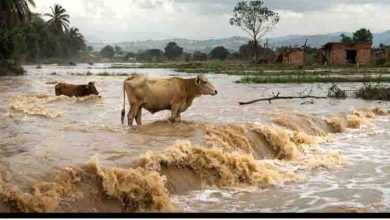
Pakistan’s agriculture sector stands at a critical turning point. The catastrophic floods of 2022 and 2025 revealed how climate change has transformed extreme weather into a recurring reality.
Millions of acres of cropland were submerged, irrigation systems destroyed, and farming communities displaced. These events exposed a sector still dependent on traditional methods, vulnerable infrastructure, and limited climate forecasting.
FAO Report 2025: A Stark Warning for Food Security
According to FAO’s The Impact of Disasters on Agriculture and Food Security 2025, floods are the single most destructive hazard globally, causing over USD 1.5 trillion in agricultural losses over the past three decades.
Pakistan is among the most severely affected countries. The report underscores that hydrometeorological hazards—floods, droughts, and heatwaves—are now responsible for the majority of global agricultural damage.
🔗 External Link:
FAO – The Impact of Disasters on Agriculture and Food Security 2025
Economic and Nutritional Costs of Climate Disasters
The FAO estimates USD 3.26 trillion in global agricultural losses between 1991 and 2023. For Pakistan—where nearly half the population depends on agriculture—such losses translate into:
- Volatile agrarian GDP
- Rising food prices
- Declining rural incomes
- Increased poverty and migration
Even more alarming is the nutritional impact. Disaster-related food losses reduce global food availability by 320 kcal per person per day—a devastating figure for Pakistan, where malnutrition already affects millions.
Why Traditional Farming Can No Longer Cope
Conventional farming practices cannot withstand the scale and frequency of climate shocks Pakistan now faces. Floods degrade soil health, destroy seed quality, disrupt supply chains, and undermine long-term productivity.
Without Agricultural Transformation in Pakistan, each climate event will deepen food insecurity and economic instability.
Technology as the Backbone of Agricultural Transformation
The FAO report emphasizes that modern agriculture must be technology-enabled. Key solutions include:
- Digital crop advisory systems
- Climate-informed early warning mechanisms
- Precision irrigation and water management
- AI-based risk monitoring
- Satellite imagery for soil and weather analysis
Countries that have embraced these tools now detect disasters faster, manage resources better, and stabilize yields despite climate volatility.
Private Sector Leadership: Fatima Fertilizer’s Role
Private-sector leadership has been instrumental in advancing Agricultural Transformation in Pakistan, particularly through organizations like Fatima Fertilizer.
As early as December 18, 2019, Fatima Fertilizer proposed Kissan Day, later recognized officially by the Federal Government. Its Salam Kissan initiative evolved into a nationwide movement advocating for farmer empowerment and systemic reform.
Empowering Farmers Through Digital and Climate-Smart Solutions
Fatima Fertilizer has invested heavily in modern farming solutions, including:
- Pivot irrigation systems
- High-tech tractors
- Satellite-based weather forecasting
- Soil moisture and nutrient assessment tools
Through 52 mega seminars annually, on-ground advisory teams train thousands of farmers in climate-smart practices like 4R Nutrient Stewardship.
Its products, Nitrophos and CAN, have demonstrated yield increases of over 10%, validated by wheat competitions where farmers achieved 93 district-level and 3 provincial-level top positions.
Women, Innovation, and Inclusive Agricultural Growth
Launched in 2022, Sarsabz Tabeer integrates women into Pakistan’s agricultural future through four pillars:
- Education
- Financial Aid
- Skill Development
- Health
By promoting food processing skills, Sarsabz Tabeer reduces post-harvest losses and creates sustainable rural livelihoods.
Digital platforms such as Sarsabz Pakistan App, FasalPay, and Grow Now Pay Later further expand access to real-time advisory services, inputs, and credit.
🔗 External Link:
UNDP Sustainable Development Goals Framework
The Way Forward for Pakistan’s Food Security
Fatima Fertilizer’s adoption of the UNDP SDG Impact Framework—a first for Pakistan’s private sector—demonstrates how sustainability and profitability can align.
Scaling such models nationally can transform Pakistan’s agrifood systems, protect farmers, and stabilize food supplies under worsening climate conditions.
Conclusion: Transformation Is No Longer Optional
Pakistan’s exposure to flood-induced agricultural damage is no longer temporary—it is structural. The FAO’s findings leave no room for complacency. Agricultural Transformation in Pakistan is no longer a choice but an absolute necessity.
By embracing technology-driven farming, empowering farmers through initiatives like Salam Kissan, Sarsabz Tabeer, and digital platforms, Pakistan can build a resilient, inclusive, and food-secure future.
As the nation celebrates Kissan Day, the true tribute to its farmers lies not in words, but in transformation.